








O.Carm
Celebrating At Home - The Presentation of the Lord
If Christ is the light, who are we?
(Luke 2:22-40)
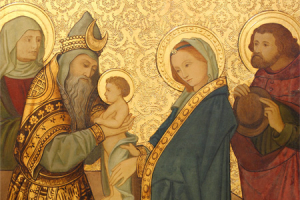
Today’s Gospel tells us the story of the presentation of Jesus in the Temple. During the presentation, two holy people, Simeon and Anna, witness to Jesus as the “light of the nations”. So, it is the Church’s custom to celebrate this feast with the blessing and lighting of candles - a reference to the Christmas theme of light.
The candles can serve as a reminder that Christ, our Light, is always present with us.
In the gospel, Luke presents Simeon as one who looks forward to the salvation promised by God through the prophets and who recognises that salvation in the child before him. Anna speaks about the child to all who were looking forward to the deliverance (salvation) of Jerusalem. Both proclaim Jesus as the ‘promised one of God’. Simeon describes Jesus as, ‘a light to enlighten the pagans, and the glory of your people Israel.’ If Christ is the Light, then who are we? The Gospels tell us not only who Jesus is, but who we are, too, as members of the Body of Christ, living and working under the reign of God’s grace.
Today’s feast draws our attention back to Christmas with its theme of light. It also draws our attention to wonder how we, as the Body of Christ here and now, might be Light for each other especially in the darkness of human experience.
- pdf Celebrating At Home - The Presentation of the Lord [PDF](2.87 MB)
- default Celebrating At Home - The Presentation of the Lord [ePub](2.61 MB)
- pdf Celebrando en Familia - La Presentación del Señor(553 KB)
- pdf Celebrando in Casa - Festa della Presentazione del Signore(550 KB)
- pdf Celebrando em família - A Apresentação do Senhor(550 KB)
Subscribe now to Carmel in the World 2025 Magazine!
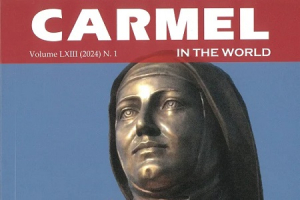
Carmel in the World Magazine Provides Carmelite Spirituality to Carmelite Family
Since the early 1960s the Order’s Carmel in the World magazine has been a valuable source of Carmelite spirituality to members of the Carmelite Family around the world. The magazine is published twice each year. Subscriptions are now being accepted for 2025.
Its articles focus on Carmel’s approach to living the Gospel and some of the major figures in the Order’s 800-year history. A typical issue will include articles about Mary, the spiritual life, as well as information about theological and pastoral topics. There is also a variety of articles on Carmelite saints and heroes.
The editorial board of the magazine meets annual to plan the issues. It is a publication of Edizioni Carmelitane in Rome. Each volume (1 year/two issues) contains approximately 160-200 pages. For the past several years the subscription rate has remained the same.
Subscriptions can easily be obtained through the Edizioni Carmelitane webstore (edizionicarmelitane.org) or through Carmelite offices in Australia (AUD$20), North America (US$15), Ireland (€11), and Great Britain (£9.50). To obtain the mailing address of the office nearest you, send a request to This email address is being protected from spambots. You need JavaScript enabled to view it..
Celebrating At Home - 3rd Sunday in Ordinary Time
Homecoming
(Luke 1:1-4, 4:14-21)
Homecomings can turn out to be very mixed events.
Initial warmth and welcome can turn, surprisingly quickly, to doubt, antagonism and rejection.
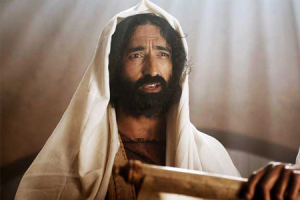
In the Gospels for this Sunday and next, Luke tells the story of Jesus’ visit to his hometown of Nazareth.
Before that story begins, however, the Church has included the very first lines of Luke’s Gospel in today’s reading. Here Luke explains, in classical literary fashion, what the purpose of his writings is: to offer an authentic and ordered account of the Christian movement, designed to give Theophilus firm reassurance about the things he has been taught.
After this introduction the first part of the story of Jesus’ homecoming follows. We will hear the second part in next week’s Gospel.
Following his temptation in the wilderness, Jesus returns to Galilee, the region in which he had grown up. He sets about teaching in the synagogues, winning many admirers.
Eventually, Jesus appears in his hometown of Nazareth and attends synagogue on the Sabbath as he usually did. He does the second reading of the synagogue service - the reading from the Prophets, in this case from the prophet Isaiah.
What Jesus reads out becomes and explanation of his mission and ministry. In the Spirit of the Lord, with which Jesus has been anointed, he will bring good news to the poor, liberty to captives, new sight to the blind, freedom to the downtrodden and proclaim a year of the Lord’s favour.
The essential good news that Jesus preaches and enacts is of God’s acceptance and welcome (not judgement) of the people who find themselves bound, trapped and afflicted.
Here Jesus sets the pattern not only for his own life and ministry, but also for those who would wish to follow him. We, too, anointed by the Spirit, are called to be God’s acceptance, welcome and freedom for all who are bound, trapped or afflicted in their lives.
In the broader context of Luke’s Gospel, this message is not to be reduced to metaphor. It is about giving real help for all who are struggling in one way or another with the concrete situations of their lives.
- pdf Celebrating At Home - 3rd Sunday in Ordinary Time [PDF](3.03 MB)
- default Celebrating At Home - 3rd Sunday in Ordinary Time [ePub](2.62 MB)
- pdf Celebrando en Familia - Tercer Domingo del Tiempo ordinario(839 KB)
- pdf Celebrando in Casa - III Domenica del Tempo ordinario(832 KB)
- pdf Celebrando em família - Terceiro Domingo Do Tempo Comum(831 KB)
Blessed Angelo Paoli, priest
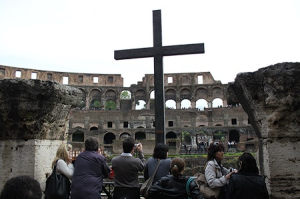
January 20th | Optional Memorial (Obligatory Memorial/Italian Provinces)
In a world known for its callous disregard for the poor and downtrodden, the example of Angelo Paoli is a refreshing breath of air. Angelo cared so well for his unfortunate brothers and sisters that he was known as “Father Charity” or “Father of the Poor.” Fortunately, he did more than just act as one kind individual he was an excellent motivator, who set many wheels of benevolence in motion at the dawn of the 18th century.
Read more ...
Religious Gathering for Young People Held in USA
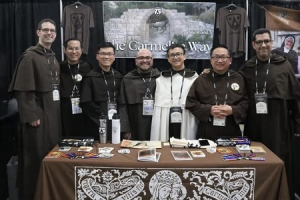
Religious Gathering for Young People in USA Has Tremendous Response
During the first days of 2025, annual SEEK conference held in Salt Lake City, Utah together with a satellite event in Washington, D.C. Members from both the Most Pure Heart of Mary (PCM) and St. Elias (SEL) provinces participated along with more than 17,000 young Catholic adults. This conference, led by the Fellowship of Catholic University Students (FOCUS), offers college students an opportunity to explore, grow in, and renew their faith. The SEEK experience demonstrates a vibrant revival among the younger generations of Catholics, serving as a powerful reminder: our faith is not merely a relic of the past but is a living, breathing force that continues to inspire and unite.
“In recent years, many people have expressed a fear that the Catholic faith is dying in the United States, pointing to the swiftly aging congregations of our Catholic parishes across the country. I am grateful to report that I have encountered a reason for hope that our Catholic Church will not fade away despite a future that is uncertain,” said the PCM vocation director, Michael Joyce.
It is in such moments, surrounded by thousands of like-minded individuals, that one can truly feel the heartbeat of a faith renewed. “These young faithful are not merely passive observers; they are active participants in a community that values connection, understanding, and spiritual growth. They are the torchbearers, carrying forward the light of their beliefs into a world that often seems darkened by doubt. Faith can adapt and thrive in contemporary society, embracing new forms of expression while remaining rooted in timeless truths. This resurgence among our youth is a testament to the enduring strength and relevance of the Catholic faith, offering hope and inspiration for the future,” he said.
While the clamor of the world may proclaim that faith is a folly, SEEK opens a divine doorway, whispering the reassurance, “you are not alone,” a message our Carmelite tradition proudly embraces. Perhaps this is why so many people stopped to ask about “The Carmelite Way” and what it means to “Listen to God’s voice in Silence, and act on God’s voice in the World.” Hundreds of years later, we still are driven from the din of the city and embark on a journey into the desert so that we may better hear and know the voice of God and be transformed by God’s love and mercy.
For five days, these vibrant souls absorbed the wisdom of esteemed speakers, like Arthur Brooks, a prolific writer and speaker, and Fr. Mike Schmitz, priest, speaker, author, and podcaster. They navigated “Mission Way” to connect with members of religious congregations and various Catholic organizations who were represented there. And they reveled in joyous nights filled with music, dance, song, fellowship and prayer. “I asked many who I spoke to, ‘What is the one thing you wish to carry with you a year from now?’ The resounding sentiment was that the most profound experience was not merely the words spoken, but the sheer joy of being amidst a multitude that shared their beliefs—a testament to the strength of the Catholic community,” Fr. Michael continued.
The seeds of this movement were sown 20 years ago in Denver when the original SEEK Conference emerged as a biannual gathering. Next year, the experience will unfold in three different locations in the United States.
Celebrating At Home - 2nd Sunday in Ordinary Time

The True Bridegroom
(John 2: 1-11)
Weddings are usually wonderful occasions. Family and friends come together to witness to and celebrate a couples’ love and commitment. The ritual is crowned with singing, dancing, eating and drinking. It has been so for centuries. In Jewish tradition a wedding could last for days, not hours.
It’s interesting that, in John’s Gospel, Jesus begins his ministry in the warm and homely setting of a village wedding in the same region in which Jesus had grown up. Mary, Jesus and his disciples have been invited.
Disaster strikes when the wine runs out. It’s not hard to imagine how acutely embarrassing and humiliating that would have been for the wedding couple and their families. From then on the wedding would have been remembered as, ‘the one when the wine ran out’.
Mary sees what has happened and mentions it to Jesus but he seems reluctant to do anything about it: ‘My hour,’ he says, ‘has not come yet.’ In John’s Gospel, Jesus’ hour will come on the cross, when he will reveal God as God truly is, through the sacrifice of divine love for the world.
Mary is not put off by Jesus’ reply. Perhaps she knows her Son better than he does himself at this point. ‘Do whatever he tells you,’ she says to the servants.
Even though his time had not yet come, Jesus acts with kindness and compassion, saving the couple from acute embarrassment and ensuring that the wedding celebration can continue with plenty of ‘the best wine’.
In telling this story, John is drawing on Old Testament themes which picture God as the ‘bridegroom’ of Israel. The bond of love between God and Israel was meant to be deep and enduring - like a marriage.
Such themes led to the expectation that the promised Messiah would restore this relationship.
In Jewish tradition it was the bridegroom’s responsibility to provide the wine for the wedding. In John’s story it is Jesus who ends up providing an abundance of the best wine, revealing Jesus as the divine bridegroom, come to take Israel back as bride. At the end of this Gospel passage, John tells us that Jesus’ action in turning the water into wine was the first of the signs he gave. In John’s Gospel there will be six more. All of them to do with healing, saving, restoring, feeding and giving life to human beings.
None are empty displays of Jesus’ power. The ‘glory’ of Jesus lies in revealing the God of love, especially in moments of real human need. The signs show that the power of love which comes from God is always at the service of human beings.
We, too, are called to allow the glory of God to shine out through us in loving, healing, transforming words and actions.
- pdf Celebrating At Home - 2nd Sunday in Ordinary Time [PDF](2.71 MB)
- default Celebrating At Home - 2nd Sunday in Ordinary Time [ePub](1.72 MB)
- pdf Celebrando en Familia - Segundo Domingo del Tiempo ordinario(823 KB)
- pdf Celebrando in Casa - II Domenica del Tempo ordinario(814 KB)
- pdf Celebrando em família - Segundo Domingo Do Tempo Comum(783 KB)
Book of Sr Daniela on Multiple Sclerosis presented
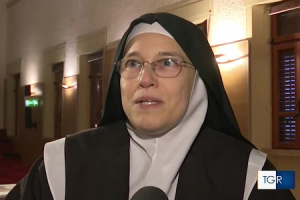
Adesso basta!: the Book of Sister Daniela Solustri on Multiple Sclerosis
TGR Rai Toscana interviewed Carmelite nun Sister Daniela Solustri, author of Adesso basta!, a book that presents her human and spiritual experience in light of the disease Multiple Sclerosis which she was diagnosed with 12 years ago.
Sister Daniela is a cloistered nun in a Carmelite convent in Cerreto di Sorano, in the province of Grosseto. In 2013, at the age of 42, she was diagnosed with Multiple Sclerosis, which brought with it suffering, fear of losing autonomy, and the inevitable slowing down of life.
In the TGR Rai Toscana broadcast on Wednesday, January 8, the nun said she “took several months to understand that the Lord was calling me to a radical form of life,” referring to the disease that afflicts her.
From the onset of the illness, Sister Daniela, who holds a degree in literature, began writing, first for herself but went on to shape a book, Adesso basta! (It Is Enough Now!).
The book, published by Effigi, was presented Tuesday, January 7, at 5 p.m. in the Friuli Hall of the San Francesco Convent in Grosseto. Together with the author, publisher Mario Papalini and Fr. Juliano Luiz Silva spoke. The moderator was Giacomo D'Onofrio, director of the Social Communications Office of the Diocese of Grosseto.
“Stop feeling pity for yourself, don't let life, when it seemingly becomes hostile, be unliveable,” the nun says in the interview. She added, “Everything that happens in life can be experienced as an overwhelming problem, or as an opportunity to unleash new resources, and in my case I am trying to live life with more intensity.”
Click to see the interview from TGR Rai Toscana below ...
Choir Books from the Mainz Carmelite Monastery Exhibit
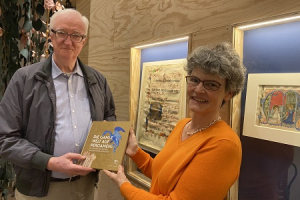
The Whole World on Parchment: The Exhibition of the Choir Books from the Mainz Carmelite Monastery
An exhibition of ancient choir book from the Carmelite monastery entitled “The Whole World on Parchment. The Choir Books from the Mainz Carmelite Monastery,” is taking place in the Episcopal Cathedral and Diocesan Museum in Mainz, Germany from November 8, 2024 to March 23, 2025. The books were created from 1430 for the Carmelites to use during their religious services.
The prior general, Míceál O’Neill, O. Carm., together with the prior of the Carmelite community in Mainz, Josef Kemper, O. Carm., and with Richard Byrne, O. Carm., were invited to visit the exhibition in the week before it opened to the public, as final preparations were being made. As part of the exhibition, visitors are given the opportunity to lift up a replica of one of the choir books which, given the books weight 26kg each, most found difficult to do! They also saw the materials that were used to make the various inks and paints within the books.
The Carmelite Choir Books: Exquisite Illumination
There are only six books, but they are impressive. Weighing up to 26 kg per volume and a total of around 1,600 parchment pages, the so-called Carmelite choir books are among the giants of medieval manuscripts. But they are not only large and heavy, they are also exquisitely beautiful and original.
Created for the Mainz Carmelite monastery, the huge books were used in services several times a day and night: the 150 psalms as well as antiphons, hymns, canticles, and responsories as well as the changing chants of the mass.
But the books go far beyond their practical needs. The melodies in square notation on four red lines and the texts in the script typical of the time are equipped with a rich world of images that are among the highest quality and most bizarre in book illumination of the 15th century. Biblical figures, countless mythical and hybrid creatures, monsters, dragons, animals, plants and people cavort in scenes that range from graceful to crude and salacious. Nothing human seems alien to these books!
It expresses the deep wish that it is not chaos but a deeper meaning that holds them together: the songs give everyday life a pleasant structure, they “sanctify time,” the texts convey wisdom, the paintings show perfection and beauty and the countless drawings show the world in all its facets: love, desire and passion, human highs and lows.
The weighty topics are presented with an impressive lightness, not with a raised index finger, but with sweeping pen drawings and subtle, humorous irony. These books do not speak of the dark Middle Ages, but rather of 600 years of cheerful hope, which culminates in the last sentence of the Psalter: “Let everything that breathes praise the Lord!”
Carmelites & Mainz
The Carmelites were first mentioned in documents in Mainz in 1285 and from then on were present in the city for more than 500 years. Their monastery, with an extensive library, was a place of education and the convent contributed significantly to the founding of the university in 1477.
During secularization in 1802, the Carmelites lost their Mainz Carmel, the brothers were expelled, and the property was auctioned off. A large part of the valuable book holdings came into the possession of what is now the Mainz Scientific City Library, but also went into various archives and libraries around the world. The valuable late-medieval choir books ended up in what is now the Episcopal Cathedral and Diocesan Museum.
At the beginning of the 20th century, the late-Gothic monastery church was in such a deplorable state that the city council decided to demolish it. Many Mainz citizens protested against this. At the request of the bishop and thanks to the commitment of the Dutch Province, the Carmelites returned to Mainz in 1924.
The church building was transferred to the diocese. This was followed by renovations such as the restoration of the Gothic ceiling frescoes, the restoration of the church building after the Second World War and, most recently in 2009, an extensive redesign of the liturgical areas. Then as now, the Carmelites in Mainz are a contemplative community in the midst of people: the Carmelite Church is an inviting, spiritual place and the Carmelites are valued pastors in a diverse and colorful urban society.
Restoration, exhibition and digitisation
The restoration of the Carmelite choir books was funded by the state of Rhineland-Palatinate as part of the state funding program for the preservation of the collections. The digitization of the Carmelite choir books was carried out in the DFG project “Digitization of medieval manuscripts from Mainz, Worms and Speyer” at the Mainz University Library. The digitization project began with the Carmelites’ six large-format choir books and will be funded by the German Research Foundation (DFG) with 310,000 euros over the next three years.
Dr. Anja Lempges, deputy director of the Episcopal Cathedral and Diocesan Museum in Mainz, has worked on these highlights of European book art with a team of scientists and is presenting the special exhibition she has curated, “The Whole World on Parchment. The Choir Books from the Mainz Carmelite Monastery,” in the Episcopal Cathedral and Diocesan Museum in Mainz from November 8, 2024 to March 23, 2025.
“We would like to present the fragile, unique choir books of the Carmelites to a broad public,” explains Dr. Anja Lempges. The special exhibition is one of the highlights in the series of festivities for the 100th anniversary of the Episcopal Cathedral and Diocesan Museum in Mainz. The 100th anniversary of the repopulation of the Carmelite monastery in Mainz is also to be celebrated and is another reason for the special exhibition.
These six Carmelite choir books have been completely digitised. You can see the books for yourself here: (you have to scroll to the bottom of the page to find them):
https://gutenberg-capture.ub.uni-mainz.de/mittelalterlichehand/nav/index/all?facets=place%3D%22836512%22
However, if you can make your way to Mainz, it would be well worth seeing them and the associated exhibition for yourself. The exhibition finishes on 23rd March 2025.
Website for museum: https://www.dommuseum-mainz.de/die-ganze-welt-auf-pergament/
(Source: Cathedral Museum, Mainz, Germany)
-------------------
Images credits
St. Andrew Corsini, Bishop
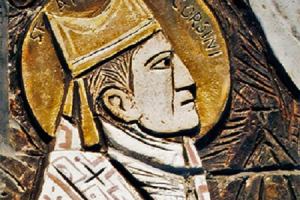
January 9 | Feast
Born in Florence at the beginning of the 14th century, he entered religious life in the Carmelite house in his native city. He was appointed Provincial of Tuscany in 1348 by the General Chapter meeting in Metz and the following year he was named bishop of Fiesole, near Florence. He governed his diocese well, becoming a model of charity and an eloquent preacher. He was distinguished by his zeal for the apostolate, his wise judgement and his love for the poor. He was admired and appreciated by everyone. Many people, rich or less well endowed, came to him as peacemaker after the many years of in-fighting and quarrelling which had ruined their families and their cities. He died on 6th January 1374 and was canonised on 29th April 1629.
For more on St. Andrew Corsini and his work
Books Available from Edizioni Carmelitane:
St. Andrew Corsini, Carmelite (c. 1302-72) A Documentary Biography Part I
By Patrick Mullins, O. Carm.
St. Andrew Corsini, Carmelite (c. 1302-72) A Documentary Biography Part II
By Patrick Mullins, O. Carm.
Prior General's Schedule for January 2025
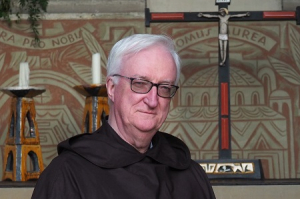
Fr. Míċeál O'Neill, the prior general, has the following schedule planned for the month of January 2025:
January 1-3: Philippines, fraternal visitation
January 3-11: Vietnam, fraternal visitation
January 13-14: Meeting of Europeans Provincials in Rome
January 15-19: Trinidad and Tobago, fraternal visitation
January 20-29: Honduras, El Salvador and Mexico, canonical visitation
January 30-31: Venezuela, Celebrations of the Centenary of the Affiliation of the Carmelite Sisters of Mother Candelaria to the Carmelite Order.