


O.Carm
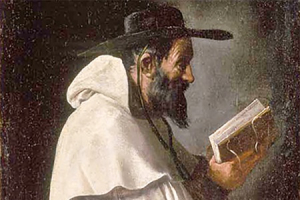
St. Peter Thomas, bishop
January 8th | Feast
Peter Thomas was a true Carmelite, not only in his relationship to Mary as the Queen and Decor Carmeli, but also in the way he lived his life according to the customs of the Order. However, his special commitment and concern was primarily for the unity of Christians. He constantly strove for reconciliation between the Church of Rome and the Orthodox Christians who had separated from the See of Peter in 1054. He developed an intensive apostolic activity as a peacemaker and defender of the popes. He always preached reconciliation. Miracles and extraordinary signs accompanied his eventful life.
A fresco created in 1880 by the Munich painter Max Fürst in the Carmelite church in Straubing shows St. Peter Thomas surrounded by confreres caring for the needy and giving communion to the sick. However, the painting also points to an essential characteristic of the saint's piety: his fervent devotion to Mary, who appears to him with the infant Jesus in her arms, accompanied by angels, and assures him of her protection and blessing. Tradition also credits him with writing a treatise on the Immaculate Conception of Mary (De Immaculata Conceptione BMV). Four volumes of his sermons have also been preserved.
In 1366, his chancellor and friend Philippe di Mézières, of whom he was also a spiritual director, wrote the biography of Petrus Thomas. Noted Carmelite historian, Joachim Smet, edited the Latin text from hitherto unpublished manuscripts. (The introduction and notes are in English.)
For more on St. Peter Thomas and his work, click here
Books Available from Edizioni Carmelitane:
The Life of Saint Peter Thomas by Philippe de Mézieres (Latin)
Introduction and Notes by Joachim Smet, O. Carm.
The Bollandist Dossier (1643) on St. Peter Thomas, O. Carm.
Edited and translated by Patrick Mullins, O. Carm.
The Revised Bollandist Dossier (1659) on St. Peter Thomas, O. Carm.
Edited and translated by Patrick Mullins, O. Carm.
Lectio Divina January 2025
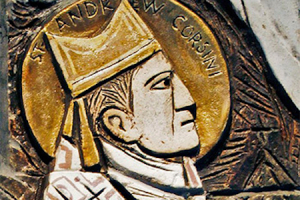
Opening Prayer
Lord Jesus, send your Spirit to help us to read the Scriptures with the same mind that you read them to the disciples on the way to Emmaus. In the light of the Word, writtenin the Bible, you helped them to discover the presence of God in the disturbing events of your sentence and death. Thus, the cross that seemed to be the end of all hope became for them the source of life and of resurrection.
Create in us silence so that we may listen to your voice in Creation and in the Scriptures, in events and in people, above all in the poor and suffering. May your word guide us so that we too, like the two disciples from Emmaus, may experience theforce of your resurrection and witness to others that you are alive in our midst as source of fraternity, justice, and peace. We ask this of you, Jesus, son of Mary, who revealed to us the Father and sent us your Spirit. Amen.
Christmas Message to the Carmelite Family
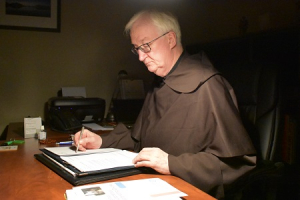
Brothers and Sisters in the Carmelite Family, friars, nuns, sisters and brothers in the affiliated congregations, lay Carmelites, in a special way our Third Order Carmelites, the Third Sunday of Advent, that we have just celebrated, invites us to be joyful always. The angels at Christmas will proclaim peace to people of good will, and the Jubilee Year that is about to begin will inspire us with the theme, “Pilgrims of Hope”. Joy, Peace and Hope are the gifts of God. Without them we cannot live a full human life. For that reason we have to pray constantly for these gifts while at the same time making them the hallmarks of how we live. Yet again this year at Christmas there are many millions of people from whom there can be no joy, there will be no peace for them and their hope is like a small flame that struggles to survive. Joy comes when God’s creation is able to speak the praises of God. Peace comes when men and women are open to the truth of God, and hope is strong when men and women remember that “all things work for good for those who love the Lord, (Rm 8,28)
I pray that our celebration of Christmas this year, by proclaiming again the good news of the incarnation of the Word of God in the womb of Mary, may bring joy to us and to many, may put peace into the minds and hearts of those who are in a position to put an end to wars, and may strengthen our hope in the knowledge of God’s never ending love for all his creatures. May the Word of God speak joy, peace and hope to you, to your community and your family this Christmas. May it be possible for all of us to together to cry out with Mary, My soul glorifies the Lord, my spirit rejoices in God my Saviour. (Lk 1,47)
A blessed and joyful Christmas to one and all.
Thank you.
To watch the video on YouTube ...
...
Causa Nostrae Laetitiae
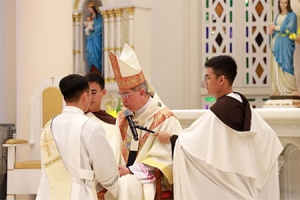
PROFESSIO TEMPORANEA
10-11-24 Teresa Maria de São José (TRI) Triunfo, Brasil
10-11-24 Teresinha Maria do Coração de Jesus (TRI) Triunfo, Brasil
10-11-24 Maria José do Espirito Santo (TRI) Triunfo, Brasil
10-11-24 Maria Isabel de Jesus Crucificado (TRI) Triunfo, Brasil
PROFESSIO SOLEMNIS
23-11-24 Dominic Therese Nhat Huynh (SEL-Viet)
23-11-24 Joseph Mary Luong Nguyen (SEL-Viet)
23-11-24 Nicholas of the Cross Dat Duong (SEL-Viet)
23-11-22 João Afonso Miranda Dias (Flum) São Paolo, Brasil
23-11-22 João Wanderson de Oliveira Ossola da Cruz (Flum) São Paolo, Brasil
23-11-22 Luis Miguel dos Santos Lima (Flum) São Paolo, Brasil
08-12-24 José Ricardo da Silva Oliveira (Pern) Olinda, Brasil
ORDINATIO DIACONALIS
23-11-24 João Paulo Prata Seixas (Pern) Caririaçu, Brasil
12-12-24 Igor Ângelo Peite (Pern) Camoncim de São Félix, Brasil
ORDINATIO SACERDOTALIS
14-11-24 Wanderson Luiz Freitas da Silva (Pern) João Câmara, Brasil
Pope Declares 16 Carmelites Nuns of Compiègne Saints
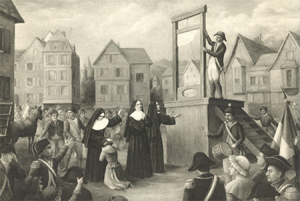
Pope Francis Declares 16 Carmelites Killed During French Revolution as Saints
In a decree published on December 18, Pope Francis declared 16 Discalced Carmelite nuns executed by guillotine during the French Revolution as martyrs. The Church did not use the usual process for the creation of a saint but by a rare process known as “equivalent canonization.” This process recognizes the long-standing veneration of the martyrs.
Pope Francis approved placing Blessed Teresa of St. Augustine and 15 other members of the Discalced Carmelites of Compiègne killed during the French Reign of Terror in the canon of saints. Two years after the French revolutionary government outlawed religious life in 1790, the community of Discalced Carmelites in Compiègne was forced to leave their monastery. In 1794, they were discovered to have continued living in community as consecrated women. They were tried and publicly executed by guillotine on July 17, 1794. As they moved towards martyrdom, they sang hymns of praise.
The story of these nuns inspired Francis Poulenc’s 1957 opera Dialogue of the Carmelites which was based on the book by the same name by Catholic novelist Georges Bernanos.
The pope recognized the heroic virtues of five others as well, including Archbishop Eduard Profitlich, a Jesuit, who died in a Russian prison in 1942; Salesian Elia Comini; the layman Pierre Goursat, founder of the Emmanuel Community; Áron Márton of Romania; and Giuseppe Maria Leone from the Congregation of the Most Holy Redeemer.
To read more ...
Carmelite NGO Present at COP29 in Azerbaijan

Carmelite NGO Present at COP29 to Discuss Environmental Concerns
In this issue of CarmeNGO, Dr. Renato Francesco Rallo reports on Azerbaijan’s climate summit and offers a personal reflection on the COPs (Conference of the Parties of the UN Framework Convention on Climate Change of which the Carmelite NGO is a member) taking place in various parts of the world. He writes “As long as the COPs continue to exist, that alone is already a success because humans have historically been much more accustomed to waging wars than holding conferences.” He calls the COPs “the rarest experience of humanity as a whole.”
COP29 was hosted by Azerbaijan, a country with significant fossil fuel interests, resulting in little expectation of positive results from the conference. However, two steps forward were taken: a carbon credit market agreement and a new agreement on the financial contributions that the countries would make towards energy transition.
There was also a seven-point plan from a group from Rome, proposals to change some of the processes employed by COP making it more efficient.
Renato Rallo holds a PhD in Energy Engineering and was the COP29 Observer Delegation head of the Carmelite NGO. The first COP was held in Berlin, Germany in 1995.
pdf To read the issue of CarmeNGO 2024 Vol 17 # 5(4.29 MB) ...
Celebrating At Home - 4th Sunday of Advent
The Promise Fulfilled
(Luke 1:39-44)
The great Christmas feast is almost here. As always in Advent, what is promised in the first reading is brought to fulfilment in the Gospel reading. We began Advent with the cry, ‘Come, Lord Jesus’. We will end it with the joyful shout, ‘God is with us!’ Beautiful words from the Prophet Micah form the first reading today which looks forward to the birth of a leader for Israel who, as a shepherd king gathers the people and feeds them with the power of the Lord and the majesty of God. His powerful reign will bring about an era of security and he himself will be peace.
What Micah looks forward to in words becomes flesh and blood in the person of Jesus.
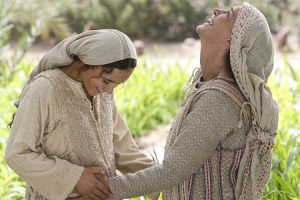
Luke’s touching story of the meeting of the pregnant cousins, Mary and Elizabeth, is full of joy, warmth and love.
It’s not hard to imagine the joyful greetings and embrace at Mary’s surprise visit. Mary greets Elizabeth with the usual greeting, Shalom (‘Peace!’) which is exactly what she brings with her - the One Micah talks about in the first reading, the Messiah. In his very first act of witness to the presence of the Messiah, John leaps in his mother’s womb which releases within her the power of prophecy. Filled with the Holy Spirit Elizabeth proclaims Mary as blessed, wonders at why she, herself, should have been found worthy to give hospitality to the mother of the Lord, and blesses Mary’s faith that the promises of the Lord would indeed find fulfilment in her.
Can we dare to imagine that we, too, carry within us the Peace of God? Can we welcome the presence of God within us and one another? Can we find the ways to nourish our awareness of that presence, let it grow stronger and deeper until our whole life is filled with God, immersed in God and overflows in every word, thought and action of ours?
- pdf Celebrating At Home - 4th Sunday of Advent [PDF](3.35 MB)
- default Celebrating At Home - 4th Sunday of Advent [ePub](7.74 MB)
- pdf Celebrando en Familia - Cuarto Domingo de Adviento(1.03 MB)
- pdf Celebrando in Casa - IV Domenica di Avvento(515 KB)
- pdf Celebrando em família - Quarto Domingo Do Advento(1.11 MB)
OCARM and OCD General Councils Meet in Rome
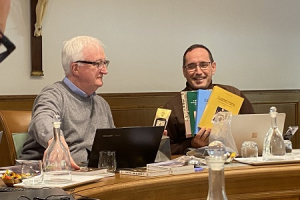
The two General Councils (OCARM and OCD) met for their biannual meeting in the General Curia of the Discalced Carmelites (Rome) on December 10, 2024.
The meeting began with Midday Prayer in the Community Chapel, after which, the Councils met together to plenary session.
Together, the members of the Councils discussed the topic of safeguarding and shared various standards and structures (especially at Order-level) that are fundamental and necessary.
Time was spent discussing how the formation documents of the Orders (Ratio Institutionis Vitæ Carmelitanæ, Ratio Institutionis) were currently being revised. In particular, attention was given to the accompaniment necessary for friars who are in the early years after their solemn profession or priesthood. Different approaches were reviewed by the General Councils.
During the meeting, the various initiatives that both Orders have planned to celebrate the Jubilee Year of 2025 were spoken about. It was agreed that the two General Councils would make a joint pilgrimage through the Holy Door of St Peter’s Basilica in June 2025. In addition, it was agreed to celebrate a Eucharist together at Santa Maria in Traspontina (Via della Conciliazione, Rome) on June 2, 2025, together with all the members of the Carmelite Family present in Rome at that time. Building on the work done by the joint commission in 2000, both Orders will collaborate to prepare a map for pilgrims pinpointing significant Carmelite locations in Rome.
The General Councils then discussed how Marian devotion and Marian theology could be deepened and strengthened in both Orders.
During the meeting, various gifts were exchanged between the two councils including scapulars made by the Discalced Nuns in Haifa (Israel) and some recent publications in both Orders.
St. John of the Cross, Doctor of the Church
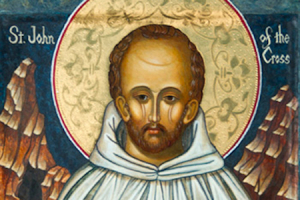
14 December Feast
Saint John was born, probably in 1540, in Fontiveros, near Avila in Spain. His father died when he was very young and he had to move with his mother from one place to another, while he tried as best he could to continue his education and, at the same time, to earn a living. In Medina in 1563 he was clothed in the Carmelite habit and, after a year's novitiate, was given permission to follow the unmitigated Carmelite Rule.
He was ordained priest in 1567, after studying philosophy and theology at Salamanca, and, in the same year, he met Saint Teresa of Jesus who, a little while before, had obtained permission from the Prior General Rossi to found two communities of contemplative Carmelite Friars (later called the Discalced) in order that they might help the communities of nuns that she had established. A year later - during which he travelled with Teresa - on the 28th November 1568, John became part of the first group of Reformed Carmelites at Duruelo, changing his name from John of St. Matthias to John of the Cross.
To read more on the life of St. John of the Cross ...
For more on John of the Cross and His Eucharistic Spirituality ...
Publications by Edizioni Carmelitante available at the Webstore
"Within This Living Bread": Exploring the Eucharistic Spirituality of St. John of the CrossDr. John D. Love, STD, 2022.Celebrating At Home - 3rd Sunday of Advent
What Must We Do?
(Luke 3:10-18)
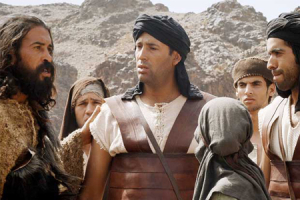
We continue to focus on John the Baptist in the Gospel today. Last week we heard about John’s ministry of preaching repentance and baptism for the forgiveness of sins. The idea of repentance is about turning around and facing in a new direction. John’s call to the people was to turn away from the old ways of life and to turn towards God.
The Gospel opens with the people, the tax collectors and some soldiers, having heard the call to change their lives, all asking John, ‘What must we do?” These three groups would normally be very suspicious of each other. The Roman soldiers, occupying the country, the locals who collected tax on behalf of the Romans, and the crowd, often the victim of both.
Yet somehow John’s preaching has brought them all together in a community of sorts.
Notice how practical John’s advice is. And, at the same time, it is a call to live by the values of compassion (to the crowd), justice (to the tax collectors), and the promotion of peace (to the soldiers). Values and behaviours opposite to these hinder relationship with God, dehumanise others and ruin life in community.
What results from conversion is a new way of life. In the Gospel, John spells out what that new way of life might look like for these groups of people.
John’s teaching and advice build a sense of expectancy among the crowd. “Is this the One?” they ask themselves.
It would have been easy for John to get carried away with his popularity, but he proves to be a true servant of the Word (like the prophets) and directs the peoples’ attention away from himself and towards the One who is to come.
Feelings of expectation and rejoicing dominate the prayers and readings of this part of Advent as we grow closer to celebrating the Christmas feast.
Our celebration of the historical birth of Jesus is the lens through which we again contemplate the enduring presence of Jesus in our lives. Accompanied by the beautiful thoughts of the first reading we can be confident in God’s love, which (as the reading says) renews us.
How do we respond to this new awareness of God’s abiding love? We ask the same question as the people asked John, “What must I do?” Our response to that question leads to a reformation of our attitudes and behaviour towards others. To be baptised with the Holy Spirit and with fire is to be baptised ‘from within’, to have hearts and minds re-made in the image and likeness of Christ.
Learning the way of Christ is how we become the wheat in the Kingdom of God, not the chaff in the fire.
- pdf Celebrating At Home - 3rd Sunday of Advent [PDF](1.28 MB)
- default Celebrating At Home - 3rd Sunday of Advent [ePub](2.69 MB)
- pdf Celebrando en Familia - Tercer Domingo de Adviento(504 KB)
- pdf Celebrando in Casa - Terza Domenica di Avvento(502 KB)
- pdf Celebrando em família - Terceiro Domingo Do Advento(497 KB)