



O.Carm
The Festival and Night of the Archives
Archivissima 2024 – The Festival and Night of the Archives
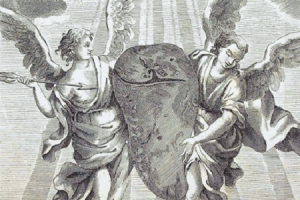
From June 6 to 9, cultural initiatives of the Archivissima 2024 event - The Festival and Night of the Archives, dedicated to the theme #Passions, will take place throughout Italy. For this occasion, the Carmelite Archives and General Library have organized a panel discussion entitled: Aut pati aut mori. The Symbolism of the Heart in Carmelite Female Iconography.
Together with Ruggiero Doronzo, art historian and author of several books, and Carmelite Charló Camilleri, spiritual theologian, we will dialogue on the symbolism of the heart in female Carmelite mysticism of the modern age (16th-18th centuries), starting from its representation in the chalcographic engravings kept in the General Archives of the Carmelite Order, with special reference to the figures of St. Teresa of Avila, St. Maria Magdalena De' Pazzi and the venerable Rosa Maria Serio.
Doronzo authored the book Iconografia Carmelitana al Femminile which was published by Edizioni Carmelitane. More information at the webstore of Edizioni Carmelitane.
The event will take place on June 7, 2024, at 6:30 p.m. at the St. Albert International Center, Via Sforza Pallavicini 10, Rome.
(This article first appeared in ABiGOC 5/2024 — The General Archives and Library of the Carmelite Order)Celebrating At Home - 10th Sunday of Ordinary Time
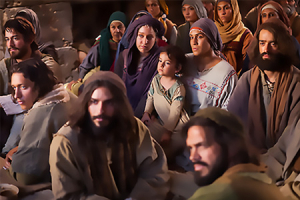
The New Family of Jesus
Mark 3:20-35
Today’s Gospel opens with the chaotic scene of a huge crowd gathered around the house where Jesus is. It’s such a busy scene that Jesus and the disciples have no time even to have a meal.
This spectacle provokes both the relatives of Jesus and some scribes from Jerusalem into action. The relatives think Jesus is mad; the scribes think he is possessed.
Intentionally or not, both the relatives and the scribes seem intent on closing down the mission of Jesus.
The relatives, convinced that Jesus is out of his mind, and quite possibly embarrassed at the spectacle he is making of himself, set out to take charge of (capture) him, probably intending to take him back to Nazareth and sort him out.
The scribes from Jerusalem try to close down Jesus’ mission by accusing him of being in league with the devil, using Satan’s power in his healing miracles.
Jesus points out how absurd this claim is since the miracles he works with the power of the Holy Spirit bring healing, freedom and liberation, not deeper enslavement to the power of evil. A house divided against itself, he says, cannot stand.
Jesus also tells a parable about a strong man and a burglar. Most people would think that the strong man is Jesus and the burglar is Satan. In fact, it is the other way around! Using the power of God, it is Jesus who has tied up Satan and breaks into his house to free those imprisoned by evil. Jesus warns of the seriousness of accusing him of being an agent of Satan – identifying the Holy Spirit of God with the unclean spirits of the demonic world.
Then the family of Jesus now appear, outside the house. Unable to get to him because of the crowd, they send a message to him, asking to see him. Jesus doesn’t respond directly to the request but asks and answers the question, “who are my mother and brothers?” Pointing to the people gathered around him inside the house, Jesus says, “Here are my mother and my brothers. Anyone who does the will of God, that person is my brother and sister and mother.” The old family is left outside, and the new family of Jesus is gathered with him inside.
Being part of the family of Jesus doesn’t depend on blood relationship with him but on recognising that he comes from God and doing God’s will.
Belonging to the new family of Jesus is joining him in the business of incarnating, making real in flesh and blood, God’s deep love and mercy for all his people.
- pdf Celebrating At Home - 10th Sunday of Ordinary Time [PDF](2.87 MB)
- default Celebrating At Home - 10th Sunday of Ordinary Time [ePub](3.93 MB)
- pdf Celebrando en Familia - Décimo Domingo del Tiempo Ordinario(307 KB)
- pdf Celebrando in Casa - X Domenica del Tempo Ordinario(465 KB)
- pdf Celebrando em família - Décimo Domingo do Tempo Comum(466 KB)
New Leadership Appointed in the Czech Delegation
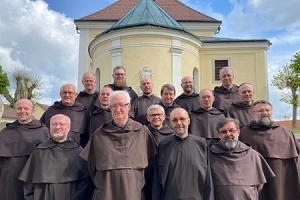
During the first full assembly of the General Delegation of Bohemia and Moravia, held on April 16-18, 2024, (CITOC 68/2024), the participants discussed leadership for the Delegation.
Following consultation of the members, the General Council appointed Fr. Serafim Smejkal to be the new General Delegate. Fr. Marian Masařík and Fr. Vojtěch Kodet were appointed as his councilors.
Carmelite Basilica Joins Cultural Festivities in Rome
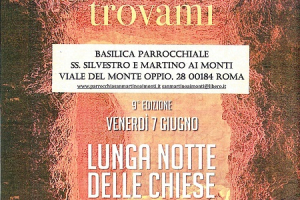
The Basilica SS. Silvestro and Martino ai Monti joins the 9th Edition of the Long Night of the Churches ("Lunga Notte delle Chiese") that will take place on Friday, June 7.
The Long Night of Churches is the first "white night" of places of worship in which music, art, and culture are merged in the key of reflection and spirituality.
The theme that will be a common thread in the 2024 edition is a word that sounds like an invitation: “FIND ME ! “. This invitation is meant to be an answer to the question that was asked in the previous edition, namely, “WHERE ARE YOU?”
The program for the event at the Basilica SS. Silvestro and Martino ai Monti is:
8:30 PM: STORYTELLING ABOUT THE BASILICA
Storyteller: Fr. Lucio Maria Zappatore
9:30 P.M.: MUSICAL INTERLUDE
Director: M° Daniele Perri
10 P.M.: “ALL'OMBRA DER CUPPOLONE”
poems in Roman dialect about the last three Popes (L.M.Z.)
10:30 P.M.: MUSICAL INTERLUDE
Director: M° Daniele Perri
11 PM: VISIT WITH FLASHLIGHTS TO THE “TTTULUS AEQUITII”
12 MIDNIGHT: CLOSING OF THE BASILICA
The Long Night of the Churches is an event organized by the BellunoLaNotte.com association with the collaboration of the participating dioceses. The idea originated in 2016 from the already implemented and successful “Lange Nacht der Kirchen” project that has been taking place in Austria and South Tyrol for several years already, involving hundreds of churches at the same time.
More information can be found at: www.parrocchiasanmartinoaimonti.it
See the full program at https://www.lunganottedellechiese.com/
The Carmelite Nuns of Santa Ana Holds Its Elective Chapter
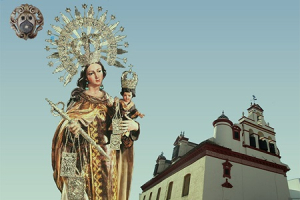
The Carmelite Nuns of the Monastery of Santa Ana Celebrated Their Triennial Elective Chapter on May 15, 2024
The monastery was founded in Paterna del Campo (Huelva) in 1537, with nuns of the community of the monastery of Bethlehem (Seville) which itself was founded in 1513. After 59 years in Paterna the nuns moved to Seville “because the poverty of that place could not give the nuns what they needed.”
The Carmelites arrived in Seville on July 26, 1594, the feast of St. Anne. They stayed in a house in Rosario Street for 12 years when they moved to the present monastery's location in “the neighborhood of San Lorenzo on the street now named after the monastery. That move was made on September 9, 1606, while Master Fray Alonso de Bohórquez was Provincial of Andalusia. His authority facilitated the move and it was accomplished with little difficulty.”
The monastery has distinguished itself by the many foundations that it has made through the centuries spreading Carmel.
The results of the elective chapter were as follows:
Prioress | Priora | Priora:
Sor María Teresa Molina Sánchez, O. Carm.
1st Councilor | 1ª Consejera | 1ª Consigliera:
Sor María Isabel Moreno de la Torre, O. Carm.
2nd Councilor | 2ª Consejera | 2ª Consigliera:
Sor María de Cristo Rey Mora Pérez, O. Carm.
3rd Councilor | 3ª Consejera | 3ª Consigliera:
Sor Hermelinda de María Guadalupe Bal Pichiyá, O. Carm.
4th Councilor | 4ª Consejera | 4ª Consigliera:
Sor Blanca de Jesús Toro Sierra, O. Carm.
Treasurer | Ecónoma | Economa
Sor Hermelinda de María Guadalupe Bal Pichiyá, O. Carm.
Formator | Formadora | Formatrice
Sor María Isabel Moreno de la Torre, O. Carm.
Sacristan | Sacristana | Sacrestana
Sor Eliana Patricia López Agudelo, O. Carm.
Celebrating At Home - Body and Blood of Christ
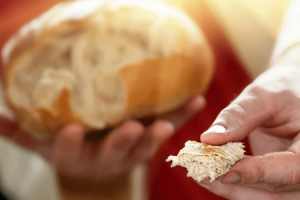
The Real Presence of Jesus in Us
Mk 14, 12-16. 22-26
We are very used to talking about the Real Presence of Jesus being in the Blessed Sacrament. But the real presence of Christ is also in the community when it gathers in his name to feast on the Word of Scripture, to recall what Jesus said and did at the Last Supper (not only the words over bread and wine, but also the washing of the feet), when it shares the food of the Eucharist together, when it goes out and continues to break and pour out that food in acts of loving kindness, in soothing and nourishing words which brings others to life.
The Eucharist is not only an object to be looked at, but an action to be done so that the living presence of Jesus continues to touch and heal.
Maybe we need to think more deeply about the real presence of Jesus being in real, living human beings.
Bread and Wine have no eyes to gaze with love, no face with which to smile, no mouth to speak soothing words, no arms to hold the grieving and the sick, or to lend a hand, no ears to hear the pain. But we do.
So we are called to become the Eucharist that feeds those around us with the nourishment of breadth of heart and vision, respect, love, compassion, hope and forgiveness.
May we become what we receive. (St Augustine)
- pdf Celebrating At Home - Body and Blood of Christ [PDF](2.90 MB)
- default Celebrating At Home - Body and Blood of Christ [ePub](2.41 MB)
- pdf Celebrando en Familia - Santísimo Cuerpo y Sangre de Cristo(436 KB)
- pdf Celebrando in Casa - Santissimo Corpo e Sangue di Cristo(435 KB)
- pdf Celebrando em família - Santíssimo Corpo e Sangue de Cristo(649 KB)
The Polish Province Held its Triennial Chapter
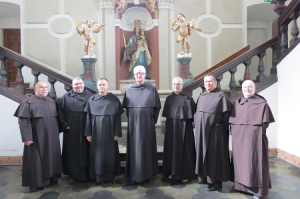
The triennial provincial chapter of the Polish Province place from 19th to 23rd May 2024 in the ancient Carmelite Monastery in Kraków. The chapter began on the first evening with a hymn to the Holy Spirit and a moment of prayer as the participants gathered together.
In his opening address to the chapter, the Prior General, Míceál O’Neill, prayed that the chapter would be a meeting of minds and hearts so that the friars would see more clearly what they have received from God and what is their calling in Poland today.
Every day during the chapter, the friars were given a conference to help their reflections by a Capuchin, Łukasz Stec OFM Cap, the spiritual director in the seminary. He spoke about Christ’s resurrection as a source of hope for every consecrated person.
During the chapter, the friars worked both in smaller groups and in plenary assembly and examined the future of the Order in Europe and what forms of cooperation that could take place between provinces.
The participants attended a training session regarding safeguarding and the protection of minors given by Mr. Patron dr Michał Poniatowski, assistant professor in the Faculty of Canon Law, Cardinal Stefan Wyszyński University (Warsaw).
The chapter also discussed synodality and how the Carmelite Family might be developed in Poland with a special focus on how young people could be involved in the life of the Province.
In response to the appeal of Pope Francis, the chapter considered the need to protect the Created World and our care for our common home. Dr. Eng. Michał Kaczmarczyk gave the members some proposals for how the province could use green energy.
Father Piotr Męczyński handed over to the newly confirmed Provincial all the archives he had collected about Father Wincenty Kruszewski from Obory, whose beatification process the province is trying to start.
The participants also discussed various possibilities for how best to use its property. Finally, time was spent discussing the formation programme of the province and, especially, how the ongoing formation could be augmented.
On the final day of the chapter, the retired Archbishop of Krakow, Cardinal Stanisław Dziwisz celebrated the Eucharist in the Carmelite church of the monastery, also called the “Piasku” – referring to the area of the city it is located in. In his homily, the Cardinal recalled the rich history of Carmel in Poland and the Monastery on the Piasku, founded by Saint Queen Jadwiga, whose 650th anniversary of her birth will be celebrated later this year.
Cardinal Stanisław Dziwisz, who had been secretary to Pope John Paul II, donated relics to the Province of Saint Pope John Paul II at the beginning of the Eucharist. He also noted that Karol Wojtyła, who was a student and later a priest and shepherd of the archdiocese, was also among the great devotees of this church and of Our Lady of Piasek, the Lady of Krakow. The Cardinal recalled how the later pope often, to the surprise of the faithful and the Carmelites themselves, sat in the confessional in this church during the time he was Archbishop of Krakow and heard the confessions of many people.
The Cardinal drew attention to the ecclesial dimension of the Chapter, “It cannot focus only on itself,” he said. In conclusion, the Cardinal wished: “that the Blessed Virgin Mary, your patroness, will accompany you in all your endeavours on the path of the new time that comes in the Province after the Chapter.”
The guests at the Eucharist also included other religious, including the Sisters of the Institute of Our Lady of Carmel, celebrating the Jubilee Year of the 200th anniversary of the birth of Blessed Mother Maria Teresa Scrilli.
Lectio Divina June 2024
Opening Prayer
Lord, Father of goodness and mercy, You have sent your Son Jesus from heaven to reveal to us the authority and the sweetness of your love. Send us your Holy Spirit as He descended upon Christ on the baptism in the Jordan River, and the heavens open with your voice of salvation: "You are my Son, my beloved," may our hearts not discuss, nor close, but in full confidence that they can welcome your light and embracement of the Father, now and forever. Amen.
Feast of St. Mary Magdelen de' Pazzi, Virgin
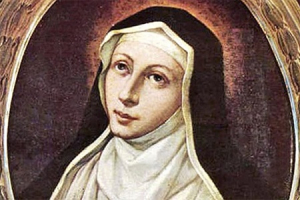
May 25 | Feast
St. Mary Magdelen de' Pazzi, Virgin
Born into the noble family of Pazzi in Florence in 1566, Mary Magdelene had a deep sense of the presence of God, a great love of the Eucharist, and a longing to live a penitential life. She entered the cloistered Carmelite monastery of St. Mary of the Angels in Florence, near the Carmelite church. She underwent continuous physical suffering and severe spiritual trials but also experienced God's mercy with extraordinary graces. She died on May 25, 1607.
She was keenly aware of the need to reform the Church. She offered herself to that clergy would once again be a witness to Christ in the world and that the lapsed would return to the Church. The central theme in her spirituality is love: we are created by God with love and by love and is the means by which we must turn to him. She had a great devotion to Our Lady.
She was beatified in 1626, 19 years after her death, and was canonized in 1669.
Read more ...
Free Online Seminar on Disenchantment and Hope
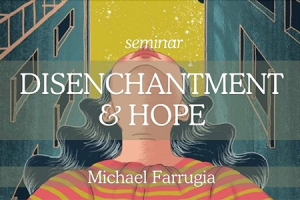
Free Online Seminar | 9:30 AM - 12:30 PM (European)
The Carmelite Institute of Malta Online Seminar: Disenchantment and Hope
On May 25, the Carmelite Institue of Malta is sponsoring a free English language seminar by Michael Farrugia. Registration is by email: This email address is being protected from spambots. You need JavaScript enabled to view it.
In recent years many discussion have centered on the problem of disenchantment, which primarily is the loss of meaning or value. The term was first coined by the German sociologist Max Weber. Although thought to be a distinctly modern problem with the rise of science, people of faith known from the Scritpures went through periods of doubt and disenchantment.
As modern society goes through disenchantment, we remember what God has done and continues to do in our lives, In the experience of disenchantment, hope is indispensable. Hope is God's gift and virtue that has to be cultivated, nurtured, and practiced. Hope guides us on the journey by keeping us focused on the true meaning and essence of life.
The seminar is free. But if you wish to donate you can do so in three ways:
1) Bank Transfer: Institute Bank Account: [IBAN] MT 28 VALL 2201 3000 0000 400 1797 9621
2) Cheque addressed to "Carmelite Institute" for amounts greater than €20 (according to Directive n. 19 by the Central Bank of Malta)
3) via Revolut or BOV Mobile to 79060733