






Displaying items by tag: Celebrating At Home
Celebrating At Home - 28th Sunday in Ordinary Time

Invitations Refused & Accepted
(Matthew 22:1-14)
The third of the parables addressed to the chief priests and the elders is our Gospel today. Told in the context of a wedding feast given by a great King it’s a parable in three parts.
The first part is about God’s gracious invitation and its indifferent and sometimes violent refusal by those invited first (the religious and lay leaders).
Second part: God’s invitation having been rejected by the first to whom it was offered, is now offered to others - good and bad alike (the sinners).
Third part: the story of the guest without a wedding garment (one who accepts the invitation but does not change - a little like the son in the first parable who said, “Yes”, but didn’t go to the vineyard).
The wedding garment is a symbol of a converted life full of good deeds.
The sense of the last line of the Gospel: “Many are called but few are chosen”, is that all are called to salvation, but it is only had by those who accept the invitation and who change and yield good deeds.
There is no room for complacency.
All three Gospel parables of the last three Sundays are about conversion. Conversion is not just turning away from sin but a radical reorienting of one’s life (turning) towards God. Repentance is not so much being sorry for past sins as a total change of direction. Conversion is impossible for the self-righteous because they don’t believe they need it. Hardness of heart and the refusal to listen are two great biblical sins.
In the three parables, St Matthew is urging his community to seek after true righteousness which comes from conversion and repentance, which flows from allowing the vision of God to fill their eyes and hearts. The kingdom has been entrusted to them, they are to produce its fruit of good deeds through a life of continual turning towards God.
Hard hearts, blocked ears, blind eyes, refusing to change are the path to death.
We are those who choose Life.
- pdf Celebrating At Home - 28th Sunday in Ordinary Time [PDF](2.85 MB)
- default Celebrating At Home - 28th Sunday in Ordinary Time [ePub](2.98 MB)
- pdf Celebrando en Familia - 28 Domingo del Tiempo Ordinario(573 KB)
- pdf Celebrando in Casa - 28 Domenica del Tempo Ordinario(572 KB)
- pdf Celebrando em familia - 28 Domingo do Tempo Comum(573 KB)
Celebrating At Home - 27th Sunday in Ordinary Time

Stewards of God’s gift
(Matthew 21:33-43)
In last Sunday’s parable, Jesus addressed the Jerusalem priests and elders with a message that “action speaks louder than words”.
This Sunday, Jesus continues his address to them, building upon that message by using another parable.
This week’s parable asks us how we have used the gifts that God has entrusted to us. It is essentially a parable about stewardship.
God has entrusted the kingdom to us, individually and collectively. We are expected to cultivate and manage this Kingdom life in such a way that it bears good fruit, fruit that we can present to God, the ‘owner of the vineyard’.
There is nothing in the parable to indicate that there was any actual produce for the landowner to collect. It may very well be that the tenants had simply neglected the wonderful vineyard altogether and allowed it to fall into ruin.
Each of us has been given, not only the gift of life, but the wealth provided by God’s grace – the very kingdom of God. Indeed, we have been privileged. However, with this privilege comes responsibility and we are ultimately responsible to God for the way we use or neglect the Kingdom within. We have to become a people who produce the fruit of the kingdom: love, mercy, justice, forgiveness, tolerance, hope, joy, deeds of loving kindness.
What will we do with the Kingdom that has been entrusted to us?
Let us pray that we may leave all the various ‘vineyards’ of our worlds in a better condition than how we were given them. Let us develop and sustain our awareness, seek out opportunities to contribute and then make judicious use of the gifts and grace that God has given us by letting God’s grace be seen at work in us; and, through us, at work in the world.
We are stewards of the Kingdom and of God’s grace. Let’s not waste such a great gift.
- pdf Celebrating At Home - 27th Sunday in Ordinary Time [PDF](2.85 MB)
- default Celebrating At Home - 27th Sunday in Ordinary Time [ePub](2.28 MB)
- pdf Celebrando en Familia - 27 Domingo del Tiempo Ordinario(560 KB)
- pdf Celebrando in Casa - 27 Domenica del Tempo Ordinario(404 KB)
- pdf Celebrando em familia - 27 Domingo do Tempo Comum(561 KB)
Celebrating At Home - 26th Sunday in Ordinary Time

Disobedient obedience
(Matthew 21:28-32)
Over the next three Sundays we will listen to three parables where Jesus, having cleansed the temple, addresses the Jerusalem priests and elders. These “parables of judgement” voice God’s judgement against Israel – especially her leaders – for their rejection of Jesus.
The message, however, is also for us.
In this Sunday’s parable, the message could not be simpler: action speaks louder than words.
The tax collectors and prostitutes acted like the first son. Initially they said no to God, but hearing John the Baptist’s preaching they converted and did what pleased God.
The chief priests and elders are like the second son. They, too, heard John’s preaching and saw the responses of the tax collectors and prostitutes but didn’t change. They pretended acceptance of God but refused to accept John’s message. It is the tax collectors and the prostitutes, therefore, who will enter the Kingdom of God before the chief priests and elders.
It is easy to say that we are going to do something to please someone. But the real honour comes in doing.
If we really want to honour our God, we must find ways to do the will of God. Sometimes it won’t be easy, sometimes it will put us out.
We are not called to ‘police’ God’s mercy – to decide who is deserving of it and who is not. If we have truly heard the Word of God we will be more concerned about extending the reign of God’s mercy and love to everyone, especially to those most despised in the world.
- pdf Celebrating At Home - 26th Sunday in Ordinary Time [PDF](2.89 MB)
- default Celebrating At Home - 26th Sunday in Ordinary Time [ePub](2.27 MB)
- pdf Celebrando en Familia - 26 Domingo del Tiempo Ordinario(463 KB)
- pdf Celebrando in Casa - 26 Domenica del Tempo Ordinario(464 KB)
- pdf Celebrando em familia - 26 Domingo do Tempo Comum(565 KB)
Celebrating At Home - 25th Sunday in Ordinary Time
God’s Outrageous Generosity
(Matthew 20:1-16)
For many, the parable which Jesus tells in the Gospel today seems profoundly unjust. Why should those who have done little work get the same pay as those who worked all day?
Maybe the answer lies in the first reading for today: My ways are not your ways; my thoughts not your thoughts. So often in the scriptures, God seems to have a totally different way of approaching things to most of us.
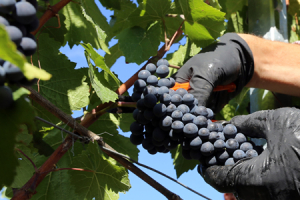
The parable presents God as a landowner going out at five different times during the day to hire workers for his vineyard.
With the 6am workers he makes an agreement for one denarius for the day’s work - the usual daily wage for a labourer. The workers who come later are promised a ‘fair wage’. But when payment time comes, they get a full day’s pay even though some have worked only one hour!
Usually, the youngest and fittest would be hired first and older and weaker workers left till last. But God doesn’t seem too worried about what condition the workers are in or what time of day it is.
The last comers must have been delighted to have received their unexpected full day’s pay. For them, it was really a gift rather than a wage for time worked. The ‘early birds’ fell victim to ‘rising expectations’, thinking that they would get more.
In giving both early birds and late comers the same ‘wage’ the landowner has made them equals – all are equal beneficiaries of God’s gracious invitation to the Kingdom. And there is a place for everyone in that Kingdom, including those often left behind in the world – the poor, sick, old, disabled, etc.
Life in the Kingdom is not a reward for long hours of work. It is a gift – it cannot be earned, but is had by responding to God’s choice of us, no matter what condition we are in, whether we are an early bird or a late comer.
God’s kind of thinking and acting is often very different to human thinking and acting.
The parable can also be interpreted as a practical expression of how to love our neighbour – with generosity and compassion, without considering if they deserve our kindness or not – for the disciple of Jesus must think and act like God.
This parable fits right into the biblical idea of justice which is heavily biased in favour of the ‘have nots’ – the widows, orphans, poor, blind, lame, sinners, etc. No one is left out of the gaze of God’s care.
God’s outrageous and extravagant graciousness and generosity is so different to the often petty and exacting way in which we treat each other. God’s sense of fairness and justice is so much broader and richer than ours. That is what life in the Kingdom of God is supposed to be.
Like last Sunday, it is our awareness of God’s extraordinary kindness, patience and mercy which help us to act in the same way - to see with God’s eyes, to feel with God’s heart and to act with God’s intention.
- pdf Celebrating At Home - 25th Sunday in Ordinary Time [PDF](2.84 MB)
- default Celebrating At Home - 25th Sunday in Ordinary Time [ePub](2.23 MB)
- pdf Celebrando en Familia - 25 Domingo del Tiempo Ordinario(452 KB)
- pdf Celebrando in Casa - 25 Domenica del Tempo Ordinario(561 KB)
- pdf Celebrando em familia - 25 Domingo do Tempo Comum(560 KB)
Celebrating At Home - 24th Sunday in Ordinary Time

A Family Formed by Forgiveness - Part 2
(Matthew 18:21-35)
Today’s Gospel follows directly from last Sunday’s reading about how to deal with differences and disputes.
Peter has understood the point of last Sunday’s Gospel (forgiveness and pastoral care), but wants to know the limits – is forgiving someone seven times enough? Jesus’ reply indicates that there should be no limit to the number of times. Then he tells a parable about forgiveness and gratitude.
There is no doubt that genuine forgiveness, forgiveness ‘from the heart’, is a real challenge. The more personally we are hurt by another person the harder it is to forgive them. Forgiveness is often more a movement than a moment. Often we only come to forgiveness step by step over a long period of time.
If we can pray for those who hurt us we have already taken the first step on the road to forgiveness. Forgiveness does not imply that what a person did was OK.
The biblical idea of forgiveness is built on the awareness of God’s extraordinary compassion towards us; God’s refusal to hold our past against us - the theme of today’s first reading.
But that action of God must find its resonance in how we behave towards each other. It will only have that resonance when we experience personally God’s overwhelming love for us. That is what binds us into relationship with God and into acting towards others as God has acted towards us.
That experience of God’s compassion builds a gratitude in us which enables us to forgive each other.
For the disciple of Jesus, forgiveness must be real and genuine - from the heart - and built on the awareness of God’s compassion and mercy towards us. That is why Jesus includes forgive us our debts as we have forgiven those who are in debt to us in his great prayer. If God has forgiven us, then we must forgive each other.
We don’t live our Christian lives in some kind of fantasy-land filled with pious thoughts and lovely dreams. We live it in the often harsh realities and difficult situations that human beings encounter.
How we live it will depend on the degree to which we have the same mind and heart as God.
Real life is the proving-ground of faith.
- pdf Celebrating At Home - 24th Sunday in Ordinary Time [PDF](2.81 MB)
- default Celebrating At Home - 24th Sunday in Ordinary Time [ePub](1.79 MB)
- pdf Celebrando en Familia - 24 Domingo del Tiempo Ordinario(446 KB)
- pdf Celebrando in Casa - 24 Domenica del Tempo Ordinario(448 KB)
- pdf Celebrando em familia - 24 Domingo do Tempo Comum(448 KB)
Celebrating At Home - 23rd Sunday in Ordinary Time
A Family Formed by Forgiveness
(Matthew 18:15-20)
Chapter 18 of St Matthew’s Gospel is often referred to as the Sermon on the Church. It contains the teaching of Jesus about the life of the Christian community.
Today’s reading details a procedure for dealing with differences and disputes. It follows the Parable of the Lost Sheep which is concerned with seeking out and bringing back the one who gets lost.
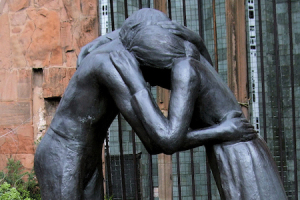
In the same way, resolving disputes is not about being right and punishing an offender, but about conversion and reconciliation.
The three-stage process moves from individual dialogue to a small group trying to sort things out, to the whole community being involved in discernment and decision.
Traditionally, we have understood the words, ‘if he refuses to listen to the community, treat him like a gentile or a tax collector, to mean that the person should be expelled or excommunicated from the community.
However, Jesus was notorious for sharing meals with tax collectors and sinners and he called one of them, Matthew, into his inner circle of disciples. At the end of the Gospel, Jesus instructs the disciples not to reject the pagans but to invite them to become children of God. Excommunication doesn’t seem to fit either with the sentiments in the Lord’s prayer about forgiveness.
The parable of the Lost Sheep immediately before this passage seems to indicate that the church, following Jesus’ example, should never give up on any of the sheep, especially the lost ones. It has a responsibility to try to win them back.
The next verse about ‘binding and loosing’ extends to the community the power of authoritative decision- making given to Peter and the disciple-leaders in the Gospel of two Sundays ago. This decision-making follows community discussion and discernment about what is to be done.
If members of the community pray and discern together about how to win back the lost one, their prayer will be heard, even if only two pray. Jesus reminds then that whenever members of the community gather in his name he is present with them.
We share a common responsibility for the lives and faith of one another and for our community as a whole. Our presence, example and prayer encourage and confirm the faith and life of Jesus among us.
- pdf Celebrating At Home - 23rd Sunday in Ordinary Time [PDF](2.87 MB)
- default Celebrating At Home - 23rd Sunday in Ordinary Time [ePub](2.44 MB)
- pdf Celebrando en Familia - 23 Domingo del Tiempo Ordinario(439 KB)
- pdf Celebrando in Casa - 23 Domenica del Tempo Ordinario(441 KB)
- pdf Celebrando em familia - 23 Domingo do Tempo Comum(441 KB)
Celebrating At Home - 22th Sunday in Ordinary Time

Finding Real Life
(Matthew 16:21-27)
What a contrast there is between last Sunday’s Gospel, when Peter was proclaimed the ‘rock’ on which the church would be built, and this Sunday when Jesus rebukes him for being a different kind of rock - a ‘stumbling block’!
When Jesus starts to talk about his suffering, death and resurrection, it’s more than Peter can cope with - “This must not happen to you.” This is exactly what Jesus was afraid of when he bound the disciples to silence about his true identity in last Sunday’s Gospel. He was afraid that they would think of him as a warrior leading a victorious uprising against the Roman occupation of Israel - the popular image of the Messiah in Jesus’ day.
Last week, Jesus proclaimed Peter ‘blessed’ because of his God-given insight into who Jesus is. Now Peter is ‘Satan’ because it is not God-given insight, but human thinking, he now shows.
Can we cope with having a shepherd-king rather than a warrior-king as our God and Saviour?
Jesus then starts talking about the call of discipleship.
First of all, it has to be freely chosen. Discipleship is not something which can be forced on people.
Second, the disciple must learn to put God and others at the centre of his/her life. This is not some pious idea. People in true, loving relationships, especially parents, know exactly what it means to ‘take up your cross’ and follow Jesus by doing loving acts of service everyday - to put another’s needs ahead of your own.
Such people save their lives by living human life as Jesus taught and as God intended.
Those who set about trying to ‘save’ their lives through power, wealth and a comfortable life eventually lose the little life they have. Nothing can prevent the moment of death when all that is stripped away and becomes meaningless. That’s what the lines about gaining the whole world and ruining your life mean.
At the end of the day, the faithfulness of the disciple, shown in loving deeds, will be rewarded.
What Jesus says about discipleship is a very different way to live and seems totally opposite to the values of modern society where we think we are in control of our destiny; where life is about amassing wealth and living comfortably for ourselves rather than for others.
- pdf Celebrating At Home - 22th Sunday in Ordinary Time [PDF](2.89 MB)
- default Celebrating At Home - 22th Sunday in Ordinary Time [ePub](3.23 MB)
- pdf Celebrando en Familia - 22 Domingo del Tiempo Ordinario(459 KB)
- pdf Celebrando in Casa - 22 Domenica del Tempo Ordinario(461 KB)
- pdf Celebrando em familia - 22 Domingo do Tempo Comum(460 KB)
Celebrating At Home - 21th Sunday in Ordinary Time

Who Do You Say I Am?
(Matthew 16:13-20)
At this point in St Matthew’s Gospel, Jesus and his chosen ones have travelled and lived together for some time. He now invites them to explore what they understand about his identity. Even in his question there is explicit hint: Who do people say the Son of Man is?
The disciples tell Jesus what they have heard from others: John the Baptist, Elijah, Jeremiah or one of the prophets.
Jesus then asks the disciples, “But, who do you say I am?” It is Peter who adds to the title ‘Son of Man’ by recognising Jesus as ‘the Christ, the Son of the living God’.
Jesus names Peter as a happy man. This same Peter whose faith faltered when he was buffeted by the wind and waves in the Gospel two weeks ago has now shown his openness to God and recognises Jesus for who he is. But this is not the end of Peter’s story.
There are ups and downs in his response, as we will see next Sunday when this ‘rock’ of faith becomes a ‘stumbling block’ to God’s purpose.
In spite of that, Jesus names Peter as the ‘rock’ on which he will build the church. Peter has a new name and a new vocation. This church will have to battle hostile forces which seek to enslave people in sin. It will be a safe haven of freedom by being the living presence of God.
Peter’s job is to use the ‘keys of the kingdom’ to unlock and release the reign of God’s grace into the world. In this work, decisions have to be made for the whole community of the church. Here, Matthew’s words about ‘binding’ and ‘loosening’ have nothing to do with the forgiveness of sins. They are a kind of pledge that the sincere and honest decisions of faithful people have divine backing. It does not mean that these decisions are the best or most perfect ones.
Discernment and decision-making are part of the job of being disciples finding together the way of the Lord; of being the living presence of God in the world.
Finally, Jesus binds the disciples to silence about his true identity lest his Messiaship get confused with the people’s expectation of a messiah who will free them from Roman occupation.
Like last Sunday, Peter is a lot like us. We really want to believe, to become the presence of God, but we don’t always seem to be able to do it. We have great moments of faith and moments in which we are deeply in tune with the heart of God. Most of us also have moments when we fall back into narrow and harsh ways that cannot hold the power of God’s love. But the Gospel reassures us that, in spite of our weakness and the many ways in which we may be found wanting, God is still close to us and faith is a journey, not a destination.
In my thoughts, words and actions, who do I say Jesus is?
- pdf Celebrating At Home - 21th Sunday in Ordinary Time [PDF](2.83 MB)
- default Celebrating At Home - 21th Sunday in Ordinary Time [ePub](2.73 MB)
- pdf Celebrando en Familia - 21 Domingo del Tiempo Ordinario(436 KB)
- pdf Celebrando in Casa - 21 Domenica del Tempo Ordinario(541 KB)
- pdf Celebrando em familia - 21 Domingo do Tempo Comum(279 KB)
Celebrating At Home - 20th Sunday in Ordinary Time
A Kingdom for all
(Matthew 15:21-28)
Today’s Gospel marks a turning point in the ministry of Jesus. He sees himself as sent ‘only to the lost sheep of the house of Israel’. That is, to those who were deemed sinners because they could not keep the Law of Moses, and were considered beyond the care and concern of God by religious authorities.
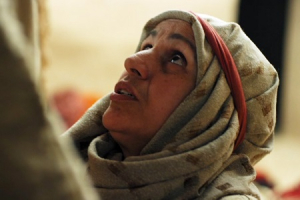
The story centres around a confrontation between Jesus and a pagan (Canaanite) woman.
Firstly, Jesus ignores her altogether. Then, because the woman is making such a racket, the disciples ask him to give her what she wants. Jesus refuses. The woman approaches him directly and asks for help. He refuses again, quoting an ancient popular racial slur against the Canaanites. His words are harsh and demeaning, but the woman persists, defeating Jesus with her quick thinking and twisting his own imagery in her favour.
He recognizes her faith and grants her wish.
St Matthew uses this story about Jesus and the woman to answer the question about who belongs in the Kingdom of God – who are the insiders and who are the outsiders?
In terms of the story, not only Israelites, but all who come with faith, are part of the Kingdom. The first reading from the Prophet Isaiah makes the same point: God’s house is a house for all the peoples.
Matthew’s early Christian community is struggling with accepting some non-Jews wanting to join them.
Just as Jesus (the ultimate insider) moves past his own prejudices, so the members of the Kingdom and the Church must move past theirs’ so that God’s house of prayer will be a place of justice and integrity for all the peoples; a house from which God’s salvation and healing flows.
- pdf Celebrating At Home - 20th Sunday in Ordinary Time [PDF](2.92 MB)
- default Celebrating At Home - 20th Sunday in Ordinary Time [ePub](2.17 MB)
- pdf Celebrando en Familia - 20 Domingo del Tiempo Ordinario(437 KB)
- pdf Celebrando in Casa - 20 Domenica del Tempo Ordinario(438 KB)
- pdf Celebrando em familia - 20 Domingo do Tempo Comum(438 KB)
Celebrating At Home - 19th Sunday in Ordinary Time

Living the Kingdom
(Matthew 14:22-33)
Trust is an essential element in the formation of faith. This section of St Matthew’s Gospel is about the Kingdom of God being seen in the Church when human needs are responded to with the life of God. Jesus is forming the faith of the disciples and helping them to understand that they can do great and unexpected things if they allow the grace of God to work in them.
For that to happen the disciples must have faith in Christ. They must learn to sense the presence of God within themselves just as Elijah learnt to recognise the presence of God in the gentle breeze in the first reading today. Jesus and Elijah remain in communion with God through moments of solitary prayer.
St Matthew uses the story of Jesus approaching the disciples across the water to illustrate the confidence and trust the disciple needs to have in Christ. The story also shows how fear can erode faith and shake confidence.
Sometimes we, too, feel like we are sinking beneath the waves. For the people in Matthew’s community this story was a call to faith, trust, courage and boldness in the midst of the hostile forces of the world. Peter’s actions in the story are a mixture of impulsive love and faith weakened by doubt. Peter and the others see clearly for the first time exactly who Jesus is.
- pdf Celebrating At Home - 19th Sunday in Ordinary Time [PDF](3.01 MB)
- default Celebrating At Home - 19th Sunday in Ordinary Time [ePub](2.62 MB)
- pdf Celebrando en Familia - 19 Domingo del Tiempo Ordinario(616 KB)
- pdf Celebrando in Casa - 19 Domenica del Tempo Ordinario(621 KB)
- pdf Celebrando em familia - 19 Domingo do Tempo Comum(514 KB)