



Fr. Simone Gamberoni, O. Carm.
It was lovely to take a walk and hear the cry of the swallows as they chased insects in the sky amid the summer heat, or perhaps to stroll after a summer storm and see the large, sly green lizards searching for a ray of sunshine, while frogs and toads hopped through the verdant countryside… and then, in the evening, to go out into the glow created by thousands of fireflies… They seem like stories from another time! Yet it is simply about when I was young and herded sheep on the hills around Florence.
The world is changing, and perhaps we don’t always realize it.
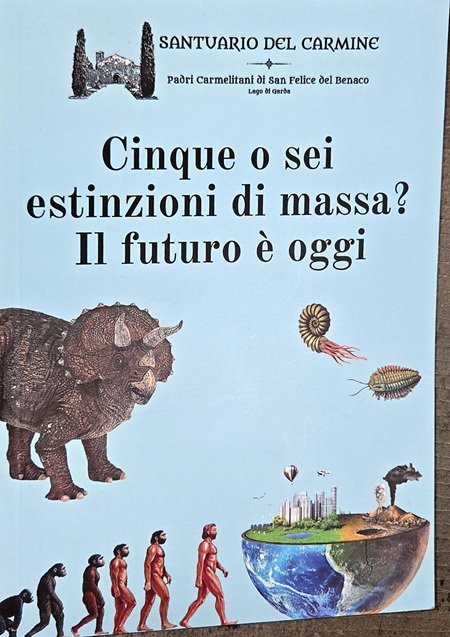
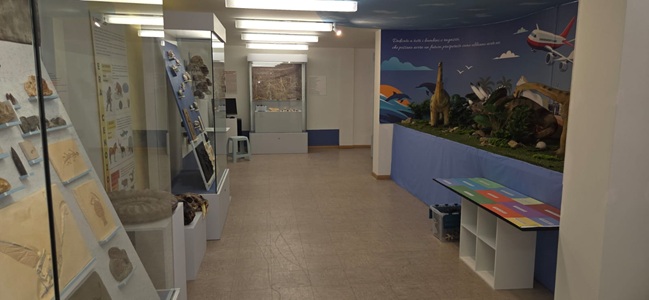
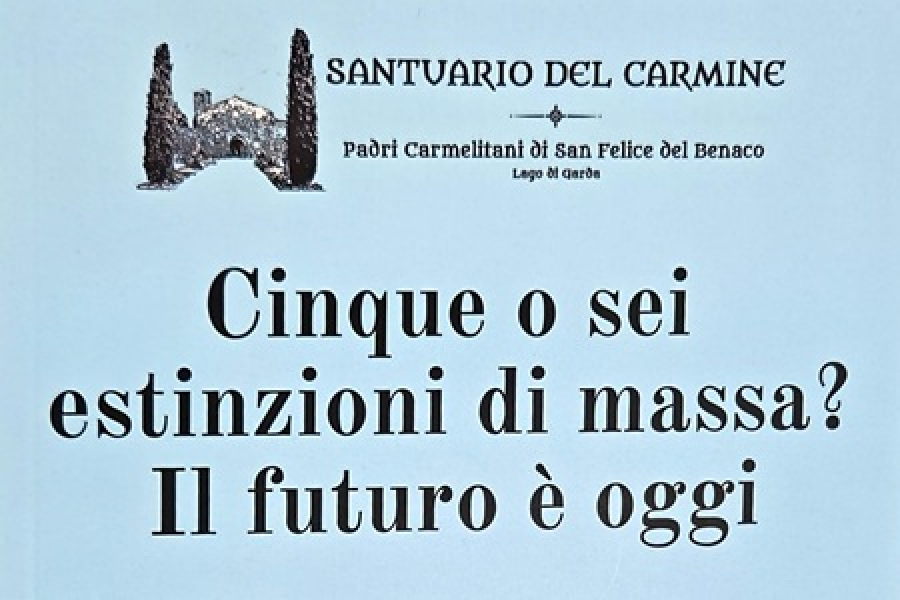
To promote awareness and sensitivity regarding ecological issues, an exhibition has been organized titled: “Five Or Six Great Mass Extinctions? The Future Is Today!” The exhibition, held inside the Casa di Accoglienza, adjacent to the Sanctuary of the Madonna del Carmine in San Felice del Benaco (BS), aims to allow people—and especially young students—to reflect on the importance of preserving Creation, offering a simple starting point for reflection, grounded in science, regarding climate change and its consequences for Creation itself. It is a mere drop in a vast ocean that would require much more attention.
The world is, after all, a closed system with limited resources, and every human being, regardless of their religious, political, or philosophical beliefs, should consider the future of the world in a perhaps slightly more prudent manner. Paleontology reminds us that after every mass extinction, life has recovered over the course of millions of years, but how many species have disappeared… To give a simple example, the Permian–Triassic mass extinction (about 252 million years ago), which is the greatest biological catastrophe ever to occur on Earth, saw the disappearance of between 90% and 96% of marine species, about 70–75% of terrestrial vertebrates, and about 30% of insect orders. Thus, approximately 57% of all families of living organisms existing at that time and about 83% of the genera disappeared. It took about 10 million years to reestablish complete and complex ecosystems.
After the sixth mass extinction, life will always recover, but will there be people capable of telling others about it? Following the geological eras that have marked the history of the Earth and life on it, many today speak of the Anthropocene, as a proposed new geological epoch in which human activity has such a profound impact that it alters the Earth’s climatic, environmental, and geological balances. The term combines the Greek words ànthrōpos (human being) and kainos (recent) and was coined in the early 1980s by biologist Eugene Stoermer and popularized in 2000 by Nobel Prize-winning chemist Paul Crutzen; it suggests the end of the previous geological epoch, the Holocene, which began approximately 11,700 years ago.
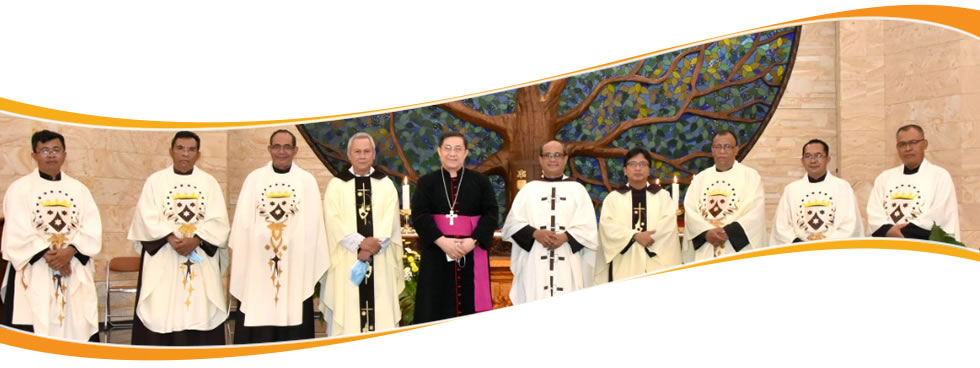
The exhibition was inaugurated on October 15, 2025, by His Excellency Monsignor Domenico Pompili, Bishop of the Diocese of Verona, approximately two years after the collection of materials began, along with the acquisition of permits and collaboration with scientific professionals. The roundtable discussion accompanying the inauguration featured the following speakers: Dr. Diego Sala, a paleontologist from Trento; Dr. Davide Grigoletto, a professor of Natural Sciences; and Dr. Gianmaria Pisani, a wildlife veterinarian. The roundtable was introduced by Fr. Simone Gamberoni, a Carmelite religious and the creator of the initiative, and was presided over by His Excellency Bishop Domenico Pompili, in the presence of more than sixty students from the Valtenesi school complex and many other people, including religious, civil, and military authorities.
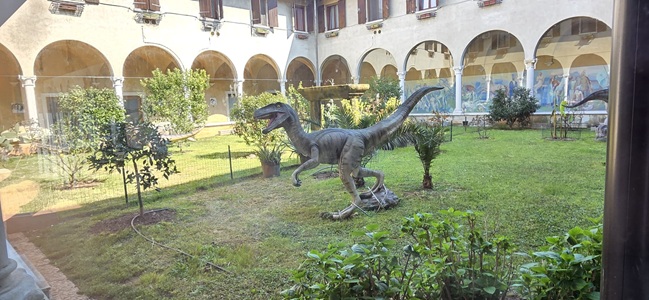
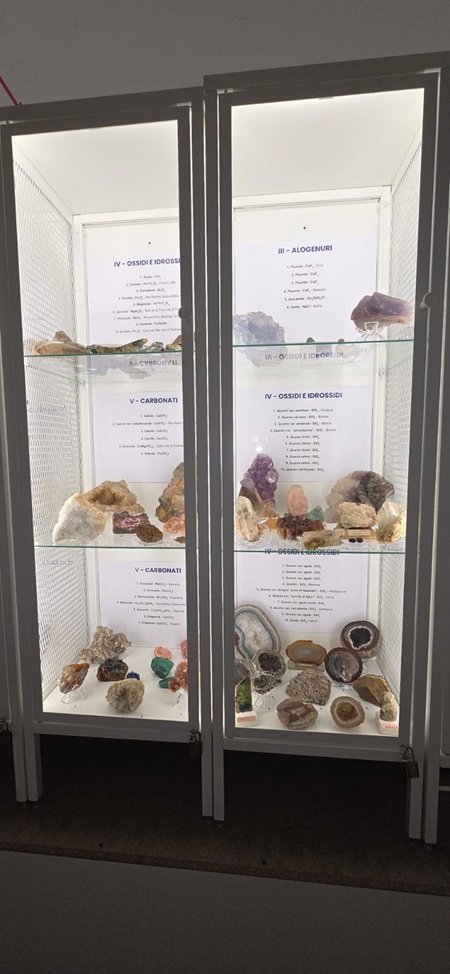
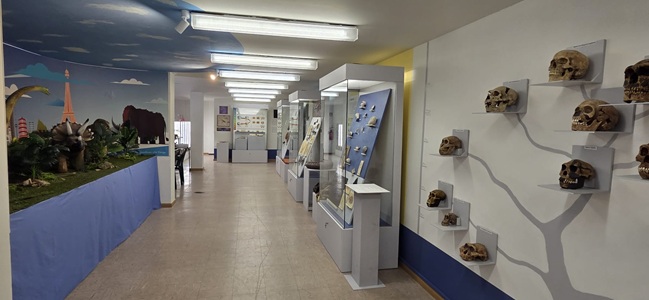
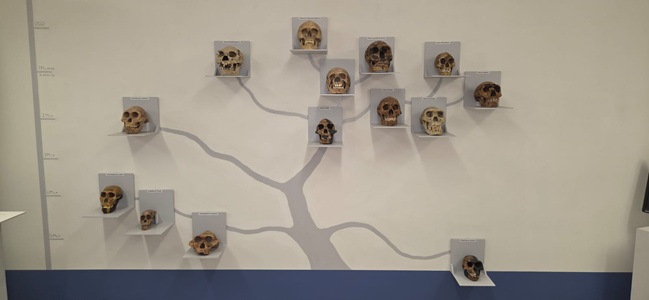
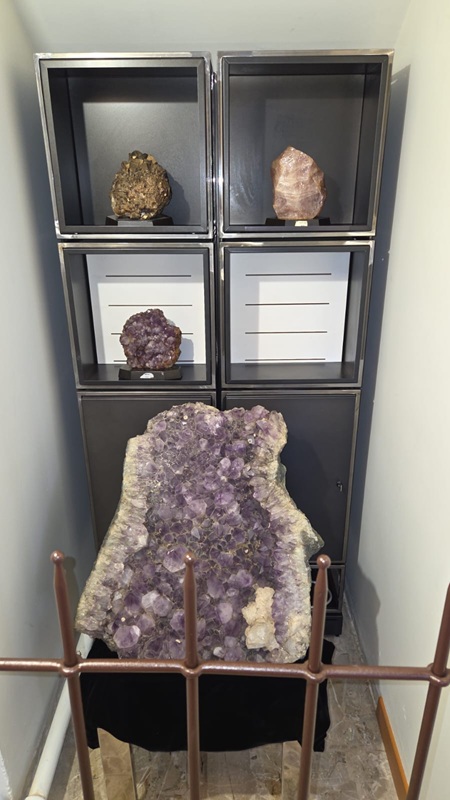
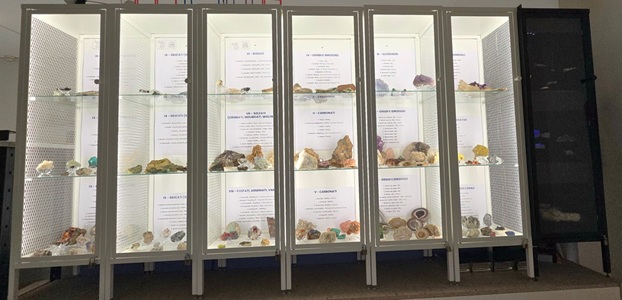
As planned, the exhibition features original specimens and casts, displayed in special museum cases, accompanied by explanatory panels curated by three paleontologists from the University of Padua (Dr. Luca Giusberti, Dr. Mariagabriella Fornasiero, and Dr. Eliana Fornaciari), with contributions from a paleoanthropologist (Dr. Luca Pagani) and a climatologist (Dr. Paolo Tarolli), also from the University of Padua, as well as an archaeologist (Dr. Paolo Biagi) from the University of Venice. The exhibition also features an educational tour, curated by a paleontologist from Trento (Dr. Diego Sala) and a professor of natural sciences (Dr. Davide Grigoletto). The room also features multimedia content, which provides a detailed explanation of the artifacts on display, the 14 casts of hominid skulls, the five major mass extinctions, and some of the key animal species driven to extinction by human activity, as well as a diorama that deliberately recreates a “Jurassic Park”-style setting. As a final element, seven small display cases have been set up, presenting minerals classified according to the Nickel–Strunz system, which remind us of the primordial order and harmony that God has inscribed even “in the stones.” The exhibition was curated by Dr. Paolo Ferretti, a geologist at the Muse in Trento. The mineralogy section also features digital microscopes for magnified observation of the perfection of crystalline macrostructures. Other educational elements are also present to facilitate workshops and games for students.
In the cloister, as an introduction to the exhibition, panels have been placed featuring prayers, reflections, and texts drawn from the three major monotheistic religions, the teachings of the Church, and ancient and modern literature.
Recently, a collaboration has also begun with the Medi State-Recognized School in Salò (BS), represented by Ms. Elena Cancellerini, to expand the educational offerings by including students in the School – Work program, who will accompany various groups of visitors to the exhibition, and by developing differentiated educational programs tailored to the various age groups of students, from middle school to high school. Contacts have already been established with the Regional School Office and with a Regional Councilor, Ms. Claudia Carzeri, to involve both educational institutions and municipal administrations in Lombardy.
Humankind has placed itself within its environment, not always respecting it, but the tools we possess today have a destructive potential that no era has ever known since the human or humanoid foot first trod the earth!
“What is the ratio of one to a thousand? And yet it is a common proverb that a single man is worth a thousand, whereas a thousand are not worth a single man. Such a difference depends on the varying abilities of the intellects…”.
With this quote from Galileo Galilei’s Dialogue Concerning the Two Chief World Systems, we wish to remind you that anyone willing to commit to knowledge and collaboration can help improve the fate of our planet.
If you’d like to learn more:
The exhibition is located at: Casa per Ferie Il Carmine, Via Carmine 11A, San Felice del Benaco (BS).
The Casa per Ferie is adjacent to the Santuario del Carmine.
Phone: +393400547915
Email: This email address is being protected from spambots. You need JavaScript enabled to view it.