






Displaying items by tag: Celebrating At Home
Celebrating At Home - 14th Sunday in Ordinary Time

Missionaries of the Kingdom
(Luke 10:1-12)
On the road to Jerusalem, Jesus teaches the disciples the meaning of ‘following’ him. Part of that following is the proclamation of the Kingdom - drawing attention to the reign of God in the world and in its peoples.
There is a sense of simplicity and urgency as Jesus commissions the seventy-two to spread the Good News of God’s involvement in human life. The Gospel, of course, is not about an historical 72 people being sent out. It is about the mission of every disciple of Jesus. Spreading the message of the Gospel is always to be done in a non-threatening way – by winning over hearts and minds through good example and good living. It is best accomplished by making oneself vulnerable and keeping oneself focussed on the mission rather than on comfort. Real rejoicing is not to be had in the conversion of great numbers of people, but in knowing that one has done the word and the will of God.
Disciples can’t afford to be weighed down by too many things or lost in idle conversation (gossip). They are to be bearers of the peace of God - a peace which heals, strengthens, soothes, frees and restores. Difficulties will be encountered, but the disciples will not be overcome.
That is the cause for the rejoicing sung about in the first reading from the prophet Isaiah. God is at work among his people like a nurturing mother and a flowing river bringing nourishment, peace, comfort and delight. People flourish when the presence of God is recognised and welcomed.
May that presence be always seen and felt in us.
- pdf Celebrating At Home - 14th Sunday in Ordinary Time [PDF](4.04 MB)
- default Celebrating At Home - 14th Sunday in Ordinary Time [ePub](3.44 MB)
- pdf Celebrando en Familia - XIV Domingo del Tiempo Ordinario(552 KB)
- pdf Celebrando in Casa - XIV Domenica del Tempo Ordinario(515 KB)
- pdf Celebrando em família - XIV Domingo do Tempo Comum(507 KB)
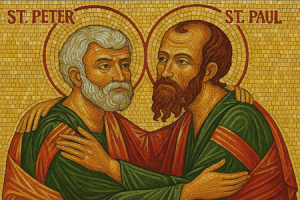
Celebrating At Home - Saints Peter and Paul
Who Do You Say I Am? (Matthew 16:13-19)
At this point in St Matthew’s Gospel, Jesus and his chosen ones have travelled and lived together for some time. He now invites them to explore what they understand about his identity. Even in his question there is explicit hint: Who do people say the Son of Man is? The disciples tell Jesus what they have heard from others: John the Baptist, Elijah, Jeremiah or one of the prophets.Jesus then asks the disciples, “But, who do you say I am?” It is Peter who adds to the title ‘Son of Man’ by recognising Jesus as ‘the Christ, the Son of the living God’.Jesus names Peter as a happy man. This same Peter whose faith faltered when he was buffeted by the wind and waves now shows his openness to God and recognises Jesus for who he is. But this is not the end of Peter’s story. There are ups and downs in his response, as we see in another passage when this ‘rock’ of faith becomes a ‘stumbling block’ to God’s purpose (Matthew 16:21-23).In spite of that, Jesus names Peter as the ‘rock’ on which he will build the church. Peter has a new name and a new vocation. This church will have to battle hostile forces which seek to enslave people in sin. It will be a safe haven of freedom by being the living presence of God.Peter’s job is to use the ‘keys of the kingdom’ to unlock and release the reign of God’s grace into the world. In this work, decisions have to be made for the whole community of the church. Here, Matthew’s words about ‘binding’ and ‘loosening’ have nothing to do with the forgiveness of sins. They are a kind of pledge that the sincere and honest decisions of faithful people have divine backing. It does not mean that these decisions are the best or most perfect ones. Discernment and decision-making are part of the job of being disciples finding together the way of the Lord; of being the living presence of God in the world.Finally, Jesus binds the disciples to silence about his true identity lest his Messiahship get confused with the people’s expectation of a messiah who will free them from Roman occupation.Peter is a lot like us. We really want to believe, to become the presence of God, but we don’t always seem to be able to do it. We have great moments of faith and moments in which we are deeply in tune with the heart of God. Most of us also have moments when we fall back into narrow and harsh ways that cannot hold the power of God’s love. But the Gospel reassures us that, in spite of our weakness and the many ways in which we may be found wanting, God is still close to us and faith is a journey, not a destination.
In my thoughts, words and actions, who do I say Jesus is?
- pdf Celebrating At Home - Saints Peter and Paul [PDF](3.14 MB)
- default Celebrating At Home - Saints Peter and Paul [ePub](2.95 MB)
- pdf Celebrando en Familia - Solemnidad de San Pedro y San Pablo(521 KB)
- pdf Celebrando in Casa - Santi Pietro e Paolo(486 KB)
- pdf Celebrando em família - Solenidade de San Pedro e San Paulo(547 KB)
Celebrating At Home - The Most Holy Body And Blood Of Christ
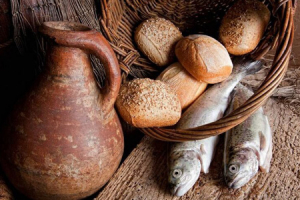
The Real Presence of Jesus in Us (Luke 9:11-17)
Today’s feast celebrates the enduring sign of Christ’s presence with us in the Bread and Wine of the Eucharist.
It also celebrates Christ’s presence with us in the community of the Church. The Eucharist is our sacrament of communion, not only with Christ and God, but also with all those called into the Christian community. Our communion binds us to one another in a sacred union of mind and heart with Jesus.
The word ‘communion’ means to share in common. In Holy Communion what we share in common with God and each other is Jesus Christ present in the Bread and the Wine. Another meaning of ‘communion’ is to be of one mind and heart. It is the Holy Spirit who keeps us in communion of mind and heart with God, with Christ and with each other.
We are very used to thinking about the Real Presence of Jesus being in the Blessed Sacrament. But the real presence of Christ is also in the community when it gathers in his name to feast on the Word of Scripture, to recall what Jesus said and did at the Last Supper (not only the words over bread and wine, but also the washing of the feet), when it shares the food of the Eucharist together, when it goes out and continues to break and pour out that food in acts of loving kindness, in soothing and nourishing words which brings others to life.
The Eucharist is not only an object to be looked at, but an action to be done so that the living presence of Jesus continues to touch and heal.
Maybe we need to think more deeply about the real presence of Jesus being in real, living human beings. Bread and Wine have no eyes to gaze with love, no face with which to smile, no mouth to speak soothing words, no arms to hold the grieving and the sick, or to lend a hand, no ears to hear the pain. But we do.
So we are called to become the Eucharist that feeds those around us with the nourishment of breadth of heart and vision, respect, love, compassion, hope and forgiveness.
May we become what we receive. (St Augustine)
- pdf Celebrating At Home - The Most Holy Body And Blood Of Christ [PDF](2.88 MB)
- default Celebrating At Home - The Most Holy Body And Blood Of Christ [ePub](2.59 MB)
- pdf Celebrando en Familia - Santísimo Cuerpo y Sangre de Cristo(463 KB)
- pdf Celebrando in Casa - Santissimo Corpo e Sangue di Cristo(462 KB)
- pdf Celebrando em família - Santíssimo Corpo e Sangue de Cristo(459 KB)
Celebrating At Home - Trinity Sunday
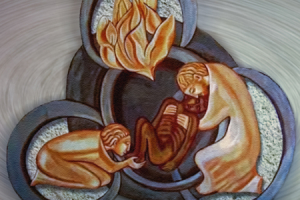
God Enfleshed In Us (John 16:12-15)
The Feast of the Trinity is a day for reflecting on who God is, not for trying to figure out how there can be three persons in one God.
The Church’s focus today is on experience, not theology.
In intellectual terms, God remains a mystery. For people of faith, God is known not by the mind, but by the heart. That is what spirituality and mysticism are about - exploring our experience of God.
Through our public liturgy, private prayer and contemplation we come to experience - to ‘know’ and feel in our hearts - that God loves us, accepts us, forgives us and constantly invites us into an ever deeper experience of love.
When we allow God’s heart to speak to ours in love we begin to absorb more of God’s life into our own. We are being transformed. Our values and attitudes, our ways of looking at and being in the world start to change. We begin to see with God’s eyes and feel with God’s heart.
We become passionate about the things God is passionate about: speaking truthfully, acting with justice and integrity, looking out for each other and especially for the vulnerable, promoting peace and understanding, ending competition and discrimination, respecting life.
That makes us better people and our lives become a blessing for each other and for the world.
That is what it means to live out of God’s great gift to us, the Spirit of Jesus Christ which God has placed in our hearts. God becomes enfleshed in us and we become stewards of God’s grace and life.
- pdf Celebrating At Home - Trinity Sunday [PDF](3.00 MB)
- default Celebrating At Home - Trinity Sunday [ePub](2.86 MB)
- pdf Celebrando en Familia - Domingo de la Santísima Trinidad(470 KB)
- pdf Celebrando in Casa - Domenica della Santissima Trinità(469 KB)
- pdf Celebrando em família - O Domingo da Santíssima Trindade(467 KB)
Celebrating At Home - Pentecost Sunday
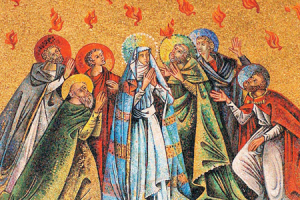
Let God’s Love Be Seen (John 14:15-16, 23-26)
At Pentecost we celebrate the gift of the Holy Spirit to the first group of Christian believers - the disciples. This gift of the Holy Spirit is the culmination of the life, death and resurrection of Jesus.
It would be wrong to think that this gift happened only once, in one moment of history. In fact, the gifting of the Holy Spirit is a continuing event in the life of every believing person and, therefore, in every age of human history. The Holy Spirit is the presence of God with us - the enduring way in which Jesus remains present in the Church and in the life of each person.
Today we do not pray to receive the Holy Spirit. The presence of the Holy Spirit in us has been affirmed and proclaimed in the sacraments of Baptism and Confirmation. Instead, we pray to grow more aware of the Spirit’s presence in our lives and to allow that Spirit to grow within us, gradually re-shaping our minds and hearts in the image of Jesus.
Pentecost brings to a close the fifty days of the Church’s Easter celebrations. Soon we will begin Ordinary Time again. So, our feast today helps us understand that we take the Holy Spirit with us into the ordinary events and tasks of each day. That is how we allow the sacred to touch, heal and transform us and the world around us.
The spiritual search is for the heart of God within our own. When we enter into relationship with Christ through the Spirit, the gifts begin to flow more abundantly. The Spirit is the source of reconciliation with ourselves and with each other. Reconciliation is essential if we are to ‘hold and guard’ each other in the midst of all that life throws at us, especially at the moment.
The Spirit brings gifts of wisdom, courage, understanding, right judgement, knowledge, reverence, wonder and awe in God’s presence. May we be graced by them all as we discern and decide how we can best work together to build up each other and to let God’s love be seen at work in each of us.
Celebrating At Home - Ascension Sunday
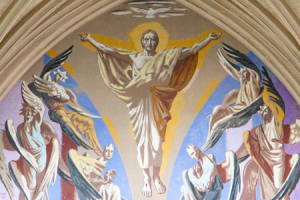
Called to be the Living Presence of God (Luke 24:46-53)
The feast of the Ascension commemorates the return of Jesus to the Father. Jesus leaves in body but remains with us through the gift of the Spirit. We will celebrate the gift and presence of the Holy Spirit in next Sunday’s feast of Pentecost.
The true meaning of our feast today is not found in Jesus’ leaving, but in the way he calls his disciples back together, to re-form them as a new community entrusted with the spread of the Gospel. Jesus sends the disciples out to make disciples of all nations and to teach them his way. But the disciples are not left to do all that on their own. Jesus promises that he is with them always.
Jesus has called the ragged, group of disciples, scattered after his crucifixion, back to himself to form them, fragile and doubtful as they are, into a community for mission in the name of God. The task of the historical Jesus is complete; the task of the church as the living Body of Christ has just begun. It is comforting to recognise that Jesus doesn’t insist on perfection before he calls us and entrusts us with his mission.
This mission is authorised by God and passed on to us through Jesus. It is not about authority over others. It is actually a call to act as God would act, true to God’s heart as Jesus has taught us.
Ever since Easter, we have been proclaiming that Jesus is alive. The feasts of the Ascension and Pentecost help us to realise that we are part of a long tradition of faithful disciples. We have our faults and failings, but our call is to witness to and teach the way of Jesus by the kind of people we are, the values and attitudes we hold, in thought, word and action - to be the living presence of God in the world today.
Celebrating At Home - Sixth Sunday of Easter
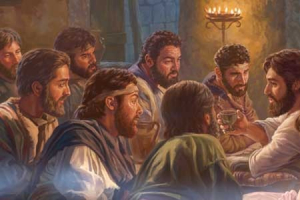
Remembering & Making Present (John 14:23-29)
Our reading of The Farewell Discourse in John’s Gospel (13:31-17:26) continues in the Gospel for today as Jesus makes a number of promises to the disciples.
The opening words say that those who love Jesus will keep his word. This is not like keeping road rules. It is about allowing the word of Jesus to form our hearts and shape our lives. Throughout John’s Gospel the word that Jesus speaks is about his boundless affection for the Father and the disciples.
Another favourite theme of John is that, just as the Father and Jesus abide together in love, they will also come to abide in the heart of the disciple. It is this bond of love that creates the ‘dwelling place’ for God in the heart of the disciple. There is no separation from the Father; the disciple does not need to look to a heavenly place in order to experience the presence of God.
Jesus promises that the Father will send the Advocate, the Holy Spirit, to help the disciples ‘remember’, that is, to understand more deeply the words and actions of Jesus, especially his death and resurrection. This remembering will make Jesus present to them.
Abiding in the love of Jesus and the Father brings a peace that cannot otherwise be found in this world, so the disciples have no need to be afraid of the future, not even the impending departure of Jesus. In fact, if they are already truly abiding in the presence of God and Jesus in their hearts, why should his physical departure disturb them?
Jesus does not speak these words in the sense of foretelling the future, but rather to prepare the disciples for their daily ‘remembering’ of, and making present, his words and actions in their own lives. This Gospel begs us ask ourselves if we are truly people who remember Jesus and allow his Spirit to shape our words, thoughts and actions so that he may remain present to us and to those around us.
- pdf Celebrating At Home - Sixth Sunday of Easter [PDF](2.89 MB)
- default Celebrating At Home - Sixth Sunday of Easter [ePub](2.80 MB)
- pdf Celebrando en Familia - Sexto Domingo de Pascua(515 KB)
- pdf Celebrando in Casa - VI Domenica di Pasqua(513 KB)
- pdf Celebrando em família - Sexto Domingo da Páscoa(460 KB)
Celebrating At Home - Fifth Sunday of Easter
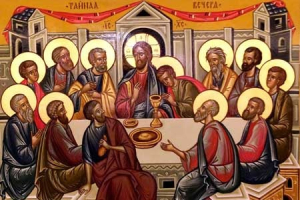
Farewell, Glory & Discipleship of Love (John 13:31-35)
Given during Jesus’ last meal with his disciples, these words begin what is called The Farewell Discourse in John’s Gospel (13:31-17:26). They are Jesus’ last words to his disciples before his death. In the course of offering assurance and comfort, Jesus develops various themes that have been introduced earlier in his ministry, including in particular glory, mutual indwelling and love. His main point is the experience of life in God the disciples have and will continue to have. The relationship between the Father and the Son, which has been revealed in the first twelve chapters of the Gospel, Jesus now declares to be realised in the disciples.
The relationship between the Father, the Son and the Spirit are described in more detail here than anywhere else in the Bible. In these chapters, therefore, is the most profound teaching on God and discipleship in the Bible.
The first part of today’s Gospel reading is a bit confusing unless we understand that ‘glory’ in the biblical tradition has to do with the revelation of the unseen God. So, in these lines there is a sense of mutual glorification - the Father is revealed in the Son and the Son reveals the Father in his death on the cross. The Son will reveal the love of the Father most patently when he gives up his life.
Using the intimate form of address, ‘My little children,’ Jesus gently begins to prepare the disciples for the difficult reality of his leaving them.
Just as Jesus has been God’s love in action in the world, so now, the disciples must be. The indispensable nature of abiding in love is underlined by the use of ‘commandment’. It is through their mutual love that all will recognise them as disciples of the One who loved even to laying down his life.
- pdf Celebrating At Home - Fifth Sunday of Easter [PDF](3.08 MB)
- default Celebrating At Home - Fifth Sunday of Easter [ePub](4.33 MB)
- pdf Celebrando en Familia - Quinto Domingo de Pascua(433 KB)
- pdf Celebrando in Casa - V Domenica di Pasqua(588 KB)
- pdf Celebrando em família - Quinto Domingo da Páscoa(586 KB)
Celebrating At Home - Fourth Sunday of Easter
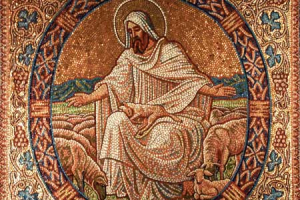
Shepherd and Sheep,
Bonds of Life and Love (John 10:27-30)
This fourth Sunday of Easter is traditionally known as Good Shepherd Sunday because the Gospel for this Sunday always portrays Jesus as the Good Shepherd.
Being a shepherd in the time of Jesus was not anything like the large-scale, commercial farming enterprises of today. Then, a shepherd usually had responsibility for about fifteen or twenty sheep whom he accompanied day and night. Both shepherd and sheep got to know each other. The shepherd was responsible for keeping the flock together and safe, for leading it to good pasture, for binding up wounds. The sheep depended on the shepherd for life.
No wonder the image of the Good Shepherd became so popular as a description of the relationship between Jesus and his followers.
Today’s Gospel is full of warmth and intimacy in the way it speaks about Jesus’ relationship with us.
The sheep who listen to Jesus belong to (are in relationship with) him. There is a sense of intimacy in the idea that Jesus knows each of the sheep who follow him. He knows them and they follow him because they are bound together by the bond of love.
The sheep have life through their relationship with Jesus, a relationship which brings eternal life, not just after death; the sheep already live the eternal life of God here and now.
This relationship with Jesus and the eternal life it brings can never be lost or snatched away.
We are the gift that the Father gives to Jesus. And because the Father and Jesus live in deep communion with each other, we, too, are caught up in this enduring communion of love.
This love God has for us makes us part of God’s family: God’s beloved daughters and sons.
Any reflection about Jesus as the Good Shepherd also keeps us mindful that shepherding each other according to the heart of Jesus is part of our vocation as disciples.
- pdf Celebrating At Home - Fourth Sunday of Easter [PDF](5.07 MB)
- default Celebrating At Home - Fourth Sunday of Easter [ePub](4.21 MB)
- pdf Celebrando en Familia - Cuarto Domingo de Pascua(529 KB)
- pdf Celebrando in Casa - Quarta Domenica di Pasqua(552 KB)
- pdf Celebrando em família - Quarto Domingo da Páscoa(532 KB)
Celebrating At Home - Third Sunday of Easter

Breakfast with Friends,
Leadership of Love (John 21:1-19)
The readings of the Easter Season continue to unfold for us the great Easter Mystery - the enduring presence of Jesus among us and what ‘new life in Christ’ might mean.
The Gospel today recounts the third appearance of Jesus to the disciples after his resurrection. At first, they don’t recognise him; then there is a huge haul of fish followed by a meal; then, in the long version of this Gospel, Peter’s commission to lead the flock in love.
It takes faith to recognise the presence of Jesus among us. Reality can be changed and good things result when we do. All the meals we share are reminders of the Eucharistic Meal which keeps us in communion with the life of the Risen Christ and with one another. Jesus continues to be nourishment and strength for the journey. Our faith is built on love.
In his dialogue with Christ, Peter reaffirms his love for him three times, reversing his triple denial of Jesus before the crucifixion. Peter is leader, but his leadership is built on his love of Christ. It is not the authority of tyranny, but of pastoral care. Peter is to ‘Feed my lambs’ - the young, the vulnerable. He is to ‘look after my sheep’ - feeding and caring for the flock, seeing to their needs.
Whenever Jesus shared a meal with his followers he opened their hearts and minds. As we continue to share in the Eucharistic Meal, Jesus continues to feed and nourish us with fresh insight, deeper understanding and greater love.
- pdf Celebrating At Home - Third Sunday of Easter [PDF](3.80 MB)
- default Celebrating At Home - Third Sunday of Easter [ePub](4.50 MB)
- pdf Celebrando en Familia - Tercer Domingo de Pascua(889 KB)
- pdf Celebrando in Casa - Terza Domenica di Pasqua(902 KB)
- pdf Celebrando em família - Terceiro Domingo da Páscoa(892 KB)