









O.Carm
Celebrating At Home - 6th Sunday in Ordinary Time
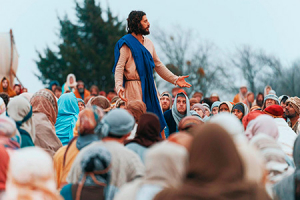
Blessings & Woes (Luke 6:17, 20-26)
Over the next three Sundays we will listen to almost the whole of Luke’s Sermon on the Plain. Luke has used Matthew’s Sermon on the Mount but changed and shortened it significantly. It is important to realise that both Sermons are more than only the Beatitudes which begin them.
In Luke, Jesus’ words are addressed to the disciples, not to the gathered crowd, so we might think of the sermon as a teaching about discipleship.
The whole of the Sermon is quite confronting and challenging, especially those verses which form today’s Gospel reading. The Sermon begins with four blessings and four woes.
At first glance it is very odd to call people who are poor, hungry, weeping and hated blessed, fortunate or happy. But we have to hear the words of Jesus in the context of the religious teaching and general thinking which belonged to his time. Then, it was generally thought that those who suffered these things were experiencing the effects of either their own personal sinfulness or that of an ancestor.
Similarly, those with wealth, plenty of food and high status were considered blessed and rewarded by God.
In the beatitudes Jesus reverses this way of thinking and effectively says that the opposite is true: God is, in fact, on the side of the poor and suffering.
They experience suffering through no fault of their own (e.g., sin), it is simply the situation in which they find themselves. As the woes (‘Alas for you…’) make clear, the rich have a great deal to lose. The poor and suffering are fortunate in Jesus’ view because they have a need which the overflowing generosity of God can fill. They are in situations which attract God’s impulse to save. The Kingdom of God is already among them.
All things being equal, being wealthy, well-fed, happy and enjoying a good reputation are perfectly desirable. But in Jesus’ view all things are not equal. Often the poor are poor precisely because the rich are rich. The powerless suffer at the hands of those who have power and influence. ‘The rich get richer, and the poor get poorer’ is a saying that endures even to this day.
Throughout his Gospel, Luke has Jesus insist repeatedly on the need for his followers to embrace poverty and to be under no illusions about the danger of wealth. Those who remain possessed by their possessions and the privileges they bring are unable to receive the gift of salvation, but even they can join the blessed through their care of the poor.
- Celebrating At Home - 6th Sunday in Ordinary Time [PDF] Download pdf here(632 KB)
- Celebrating At Home - 6th Sunday in Ordinary Time [ePub] Download default here(2.82 MB)
- Celebrando en Familia - Sexto Domingo del Tiempo Ordinario Download pdf here(230 KB)
- Celebrando in Casa - VI Domenica del Tempo Ordinario Download pdf here(243 KB)
- Celebrando em Familia - Sexto Domingo do Tempo Comum [Português] Download pdf here(229 KB)
2. Education
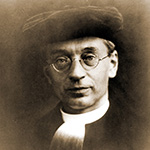
Titus was a good student who understood from early on the value of education. As a child he read widely and had a particular liking for literature and history.
5. A Poet of the Cross
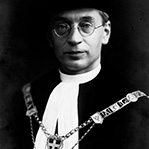
Fr Titus Brandsma did his doctorate in philosophy in Rome in 1909. In addition, he used his “Roman years” to study sociology and make contact with the new currents of Christian social thought and with the social doctrine of the Church.
Celebrating At Home - 5th Sunday in Ordinary Time
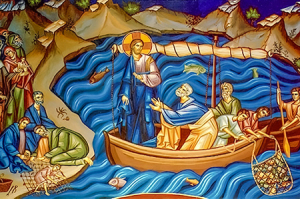
Here I am, send me (Luke 5:1-11)
As if to balance the rejection Jesus experienced in last week’s Gospel, this week’s episode tells two stories of people who welcome his message.
Firstly, an enthusiastic crowd has gathered on the shore of the lake, eagerly pressing forward to hear Jesus’ teaching. Jesus seems to be in danger of being crushed or at least being pushed into the sea! He takes the unusual step of teaching from Simon’s boat.
Secondly, Luke tells us that Simon and his companions are washing their nets on the shore as Jesus teaches, no doubt listening to what he has to say at the same time.
When Jesus finishes his teaching he asks Simon to put out into deep water and prepare for a catch.
Simon protests: if they caught nothing all night, the best time for fishing, what hope was there of a good catch during the day? Anyway, what would a craftsman like Jesus know about the art of commercial fishing?
Nevertheless, Simon does as Jesus asks and an extraordinary abundance of fish is caught - enough to almost sink two boats.
Overwhelmed by the huge catch, Simon sense both the presence of the Divine and his own unworthiness and begs Jesus to leave him.
Jesus’ words to him are both a call and a commission. From now on it will not be fish destined to be killed, but living people that Simon and his companions will catch and draw into the community of disciples.
Amazingly, Simon Peter, James and John abandon their thriving business, leaving everything behind, nets, boats and employees, and follow Jesus.
These new disciples of Jesus will use the Word of God to lure men and women to bring about their transformation to new life in Christ. The miraculous catch of such a huge number of fish seems to indicate that a vast number of people will find the way of Life in the preaching of the apostles.
Our call as disciples is not only to personal holiness but also to partnership with Christ in transforming the world and its peoples with words and actions of justice, peace, integrity, forgiveness, mercy, tolerance, hope and love.
First we must allow ourselves to be caught and taught by Jesus. The response that is asked for, it seems, is to be prepared to give up everything in our quest to know Jesus. In spite of our sinfulness, sense of unworthiness and lack of faith in ourselves, it is a call to trust in God’s choice of us and in God’s faith in us.
- Celebrating At Home - 5th Sunday in Ordinary Time [PDF] Download pdf here(1.63 MB)
- Celebrating At Home - 5th Sunday in Ordinary Time [ePub] Download default here(3.32 MB)
- Celebrando en Familia - Quinto Domingo del Tiempo Ordinario Download pdf here(270 KB)
- Celebrando in Casa - V Domenica del Tempo Ordinario Download pdf here(289 KB)
- Celebrando em Familia - Quinto Domingo do Tempo Comum [Português] Download pdf here(269 KB)
Blessed Archangela Girlani
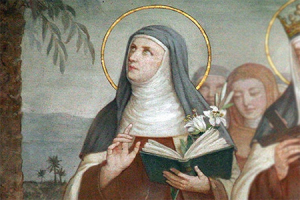
Prayer
Father in heaven,
you gave the virgin Blessed Archangela Girlani
particular dedication to the mystery of the eternal Trinity.
Through her prayers
may we taste the delights of your glory
already here on earth,
and look upon you for ever in heaven.
We ask this through Christ, our Lord.
Celebrating At Home - 4th Sunday in Ordinary Time
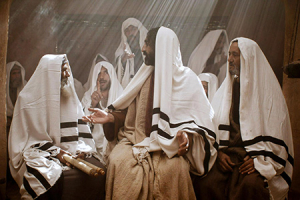
Homecoming 2 (Luke 4:21-30)
This Sunday’s Gospel continues Luke’s story of Jesus’ visit to his hometown. The warmth, welcome and approval with which Jesus was initially greeted soon turns into an ugly scene.
Last week, in the synagogue in Nazareth Jesus announced his mission quoting the words of the Old Testament prophet Isaiah. He comes as God’s anointed one, filled with the Spirit, to proclaim good news to the poor, liberty to captives, new sight to the blind; to set the downtrodden free and to proclaim the Lord’s year of favour.
Now, at first astonished by ‘the gracious words that came from his lips’, the people can hardly believe that this message of welcome and acceptance by God could be coming from the boy they watched grow up. He is beginning to sound like a prophet, but, ‘This is Joseph’s son, surely?’
Jesus accuses them of wanting him to play the prophet for their benefit: to stay in Nazareth and do miracles and wonders just for them, like some kind of local magician.
The townspeople cannot recognise or respond to God’s word spoken in Jesus. Certain that they know exactly who Jesus is, they cannot hear the message and believe in him.
Using examples from the lives of the prophets Elijah and Elisha Jesus makes plain that God’s offer of salvation is not restricted just to them, nor indeed, even to Israelites. Neither the widow nor Naaman are Israelites. God’s love is unconditional and meant for all.
The people are so enraged that they want to kill him, but Jesus slips away to continue his journey according to God’s plan.
This whole episode reminds us that God’s offer of hospitality and welcome to us cannot be treated just as lovely words, nor God as some kind of personal wonderworker.
It is as though the Nazarenes thought that they had God, Jesus and his message neatly worked out and arranged for their sole benefit. It was a kind of superficial response - ‘What’s in it for us?’
Jesus brings these thoughts out into the open because the salvation he brings cannot rest just on the surface. It is meant to touch, explore and heal the depths of human beings. That is the journey of conversion.
- Celebrating At Home - 4th Sunday in Ordinary Time [PDF] Download pdf here(1.27 MB)
- Celebrating At Home - 4th Sunday in Ordinary Time [ePub] Download default here(4.59 MB)
- Celebrando en Familia - Cuarto Domingo del Tiempo Ordinario Download pdf here(215 KB)
- Celebrando in Casa - IV Domenica del Tempo Ordinario Download pdf here(244 KB)
This resource is presented by the Carmelites of Australia & Timor-Leste at a time when many cannot gather together as we usually do to celebrate the Eucharist. We are conscious that Christ is present not only in the Blessed Sacrament but also in the Scriptures and in our hearts. Even when we are on our own we remain part of the Body of Christ.
In the room you decide to use for this prayer you could have a lighted candle, a crucifix and the Bible. These symbols help keep us mindful of the sacredness of our time of prayer and can help us feel connected with our local worshipping communities.
This text is arranged with parts for a leader and for all to pray, but the leader’s parts can be shared among those present.
As you use this prayer know that the Carmelites will be remembering in our prayer all the members of our family at this time.
Lectio Divina February 2022

- Lectio Divina February 2022 [PDF] Download here
- Lectio Divina February 2022 [ePub] Download here
- Lectio Divina February 2022 [Mobi] Download here
"Lectio divina," a Latin term, means "divine reading" and describes a way of reading the Scriptures whereby we gradually let go of our own agenda and open ourselves to what God wants to say to us. In the 12th century, a Carthusian monk called Guigo, described the stages which he saw as essential to the practice of Lectio divina. There are various ways of practicing Lectio divina either individually or in groups but Guigo's description remains fundamental.
Celebrating At Home - 3rd Sunday in Ordinary Time
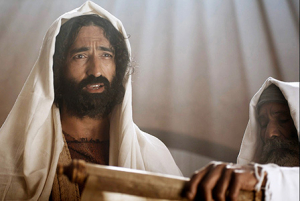
Homecoming (Luke 1:1-4, 4:14-21)
Homecomings can turn out to be very mixed events. Initial warmth and welcome can turn, surprisingly quickly, to doubt, antagonism and rejection.
In the Gospels for this Sunday and next, Luke tells the story of Jesus’ visit to his hometown of Nazareth.
Before that story begins, however, the Church has included the very first lines of Luke’s Gospel in today’s reading. Here Luke explains, in classical literary fashion, what the purpose of his writings is: to offer an authentic and ordered account of the Christian movement, designed to give Theophilus firm reassurance about the things he has been taught.
After this introduction the first part of the story of Jesus’ homecoming follows. We will hear the second part in next week’s Gospel.
Following his temptation in the wilderness, Jesus returns to Galilee, the region in which he had grown up. He sets about teaching in the synagogues, winning many admirers.
Eventually, Jesus appears in his hometown of Nazareth and attends synagogue on the Sabbath as he usually did. He does the second reading of the synagogue service - the reading from the Prophets, in this case from the prophet Isaiah.
What Jesus reads out becomes and explanation of his mission and ministry. In the Spirit of the Lord, with which Jesus has been anointed, he will bring good news to the poor, liberty to captives, new sight to the blind, freedom to the downtrodden and proclaim a year of the Lord’s favour.
The essential good news that Jesus preaches and enacts is of God’s acceptance and welcome (not judgement) of the people who find themselves bound, trapped and afflicted.
Here Jesus sets the pattern not only for his own life and ministry, but also for those who would wish to follow him. We, too, anointed by the Spirit, are called to be God’s acceptance, welcome and freedom for all who are bound, trapped or afflicted in their lives.
In the broader context of Luke’s Gospel, this message is not to be reduced to metaphor. It is about giving real help for all who are struggling in one way or another with the concrete situations of their lives.
- pdf Celebrating At Home - 3rd Sunday in Ordinary Time [PDF](1.01 MB)
- default Celebrating At Home - 3rd Sunday in Ordinary Time [ePub](3.42 MB)
- pdf Celebrando En Familia - Tercer Domingo del Tiempo Ordinario(188 KB)
- pdf Celebrando In Casa - III Domenica del Tempo Ordinario(207 KB)
- pdf Celebrando Em Familia - Terceiro Domingo do Tempo Comum [Português](187 KB)
This resource is presented by the Carmelites of Australia & Timor-Leste at a time when many cannot gather together as we usually do to celebrate the Eucharist. We are conscious that Christ is present not only in the Blessed Sacrament but also in the Scriptures and in our hearts. Even when we are on our own we remain part of the Body of Christ.
In the room you decide to use for this prayer you could have a lighted candle, a crucifix and the Bible. These symbols help keep us mindful of the sacredness of our time of prayer and can help us feel connected with our local worshipping communities.
This text is arranged with parts for a leader and for all to pray, but the leader’s parts can be shared among those present.
As you use this prayer know that the Carmelites will be remembering in our prayer all the members of our family at this time.
Blessed Angelo Paoli, priest
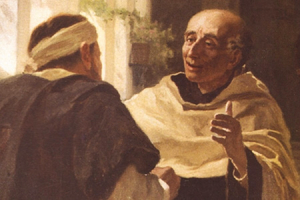
Angelo was born on September 1, 1642.
His life can be divided into two periods: the years spent in his religious province of Tuscany, and those spent in Rome.
Wherever he had worked during the first period of his religious life, he had given a fine impression as a religious steeped in silence, prayer and mortification, but, above all, given to the works of charity, both spiritual and corporal, in favor of the sick and the poor.
In Rome he had the care of the two hospitals (for men and for women) of St. John and established the hospice for the convalescent poor on the street that led from the Colosseum to the basilica of St. John Lateran.
His motto was: "Whoever loves God must go to find Him among the poor".
Causa Nostrae Laetitia - Ianuarius 2022
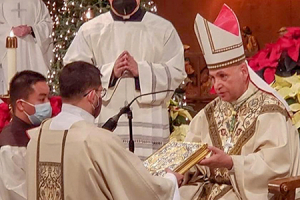
Initium Novitiatus
04-01-22 Kevin Alexander Flores Landaverde (PCM- ES) Lurin, Perú
04-01-22 Noé Marcelo Girón López (PCM-ES) Lurin, Perú
04-01-22 Richard Janson Lachira Alcas (PCM-Peru) Lurin, Perú
04-01-22 Joyser Nestor Laureate Pereyra (PCM-Peru) Lurin, Perú
04-01-22 Juan Carlos Meléndez Landaverde (PCM-ES) Lurin, Perú
04-01-22 Augusto Isaías Padilla Paredes (PCM-Peru) Lurin, Perú
04-01-22 Luis Alberto Valeriano Meza (PCM-ES) Lurin, Perú
04-01-22 Eloy Willian Vasquez Becerra (PCM-Peru) Lurin, Perú
04-01-22 Kevin Eduardo Vega Paniagua (PCM-ES) Lurin, Perú
04-01-22 Irvin Omar Zometa Samayoa (PCM-ES) Lurin, Perú
Professio Temporanea
08-12-21 Mary Elijah Guingon (MAC) Christoval, Texas, USA Lurin, Perú
07-01-22 Pedro Antonio Mira Padilla (PCM-ES) Lurin, Perú
07-01-22 Bertoliny Alexander Montes Ramos (PCM-Peru) Lurin, Perú
07-01-22 Héctor Tavárez Mendoza (PCM-Mexico) Lurin, Perú
07-01-22 Geovanni de Jesús Velázquez Ramos (PCM-Mexico) Lurin, Perú
07-01-22 Christian Orlando García Hernández (PCM-ES) Lurin, Perú
Professio Solemnis
15-01-22 Anthony Thanh Nguyen (SEL-Viet) Ho Chi Minh City, Vietnam
15-01-22 Joseph Tam Nguyen (SEL-Viet) Ho Chi Minh City, Vietnam
15-01-22 Peter Trong Pham (SEL-Viet) Ho Chi Minh City, Vietnam
Ordinatio Diaconalis
06-12-21 Nicolás Carrizales (CAT) Barcelona, España
03-01-22 Antony Ebin Mathew (STSA) North Paravur, Kerala, India
03-01-22 Thomas Renju Rajan (STSA) North Paravur, Kerala, India
Ordinatio Sacerdotalis
08-12-21 Paul Kaptain Pakao (Phil) Rabaul, Philippines
06-01-22 Albert Anson Cancis (STSA) Perumpilly, India
10-01-22 Jose Vilayakattu (STSA) Meppadi, India
13-01-22 Simon Aldrin Louiz (STSA) Aripalam, India