






O.Carm
Causa Nostrae Laetitia - Nov/Dec 2021
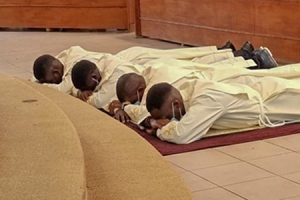
Initium Novitiatus
14-11-21 Mary Karen Wambura of St. John of the Cross (MAC) Machakos, Kenya
14-11-21 Mary Margaret of Christ the King (MAC) Machakos, Kenya
14-12-21 Constantino Barreto Amaral (Aust-TO) Middle Park, Victoria, Australia
14-12-21 Moises Soares (Aust-TO) Middle Park, Victoria, Australia
14-21-21 MAnuel Xavier Gonzaga (Aust-TO) Middle Park, Victoria, Australia
Professio Temporanea
21-11-21 Teresa Rosa del Sacro Cuore di Gesù (CAR) Carpineto Romano, Italia
Professio Solemnis
06-11-21 Maria Grazia Panlilo (CAE) Camerino, Italia
Ordinatio Diaconalis
20-11-21 Albino Dos Santos (Aust-TO) Middle Park, Victoria, Australia
14-12-21 Emmanuel Shikoli (Ken) Nkoroi, Kenya
Ordinatio Sacerdotalis
04-12-21 Marlon Beharry (SEL-TT) Middletown, New York, USA
14-12-21 Eugine Ekeya (Ken) Nkoroi, Kenya
14-12-21 Peter Wafula (Ken) Nkoroi, Kenya
14-12-21 Daniel Nthama (Ken) Nkoroi, Kenya
Second Volume of Titus Brandsma Writings Published
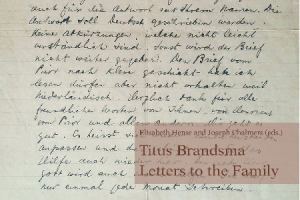
The second volume of Blessed Titus Brandsma’s writings has been published by Edizioni Carmelitane in Rome. The volume is entitled Titus Brandsma: Letters to the Family. The book contains over 500 pages and includes any writings still extant of the many cards and letters that Blessed Titus Brandsma wrote to his family. Included are the text of 292 letters and postcards. The correspondence are presented in chronological order and placed in their context. There are reproductions of the many postcards sent by Brandsma, which he sent primarily when he traveled. Included is the final letter he sent to his family from the Dachau Concentration camp on July 12, 1942. The first is a letter he sent to his mother, Tjitje on October 14, 1895, when Brandsma was 14 years old and studying at the Franciscan school in Megen.
This is volume two of a planned seven volume series on the writings, speeches, and letters of Brandsma.
The book can be purchased directly from Edizioni Carmelitane or from other webstores around the world.
Click here to access the many fine publications at Edizioni Carmelitane.
To place your order please contact:
Libreria Nardecchia (only in Italy)
TEL.: (+39) 06-5373901
FAX: (+39) 06-5373902
E-mail: Esta dirección de correo electrónico está siendo protegida contra los robots de spam. Necesita tener JavaScript habilitado para poder verlo.
Edizioni Carmelitane
TEL.: +39-0646201807
FAX: +39-0646201808
C.C.P.: 14069009
BIC/SWIFT: BPPIITRRXXX
IBAN: IT67 Z076 0103 2000 0001 4069 009
E-mail: Esta dirección de correo electrónico está siendo protegida contra los robots de spam. Necesita tener JavaScript habilitado para poder verlo.
Ven. John of Saint-Samson Celebrated in Malta
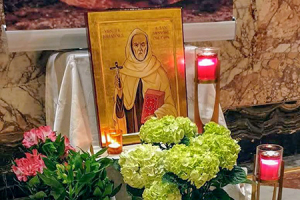
The 450th anniversary of Ven. John of Saint-Samson’s birth was celebrated at the Mdina Carmelite Priory, the seat of the Carmelite Institute Malta, with a series of events.
On December 23, Fr. Charlò Camilleri preached the Christmas retreat to the Augustinian Sister Servants of Jesus and Mary on the meditation by John of Saint Samson entitled “Of the Ineffable Incarnation of God made Man.” The accompanying text for personal reflection and communal prayer for the day was John’s Song of the Most Deep Love of God.
On December 28, a talk on Aspirative Prayer according to John of St. Samson was delivered to the group participating in the monthly Christian Meditation Class in the Carmelite Tradition.
On January 5, the Mdina Carmelite Third Order Secular Fraternity, during the monthly fraternity meeting, reflected on John’s mystical doctrine of union with God.
The Carmelite Church in Mdina also owns a painting of Ven. John of Saint Samson. Holy cards with a short biography on Ven. John are also made available in various languages, and are particularly appreciated by the French vistors to our Church.
To commemorate the 450th anniversary and make the spirituality of John of Saint-Samson more widely known, a variety of newspaper articles were published locally by Fr. Herman Duncarn, O. Carm.
Tragic Fire in USA Carmelite Parish
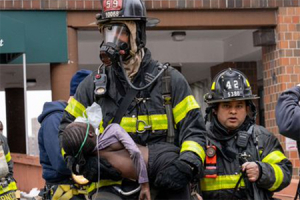
On Sunday, January 9th, the deadliest fire in New York City (USA) in three decades took place in a building 500 feet (154 meters) from the Carmelite parish in the Bronx, New York. Only one apartment had fire. However, smoke traveled throughout the building, especially the stairwells. Seventeen residents of the 19-story building were killed, including 9 children, the youngest being a 2-year-old who was visiting an apartment with his aunt and cousin, both of whom were also killed. Some 60 others were hospitalized with dozens in critical condition.
The St. Simon Stock – St. Joseph parish is providing outreach to those involved. In addition, a number of religious services were held. An ecumenical prayer service was held on Monday morning at which the Carmelites participated. A special Mass was held at St. Simon’s on Monday evening and livestreamed over the parish’s Facebook page. Auxiliary Bishop Peter J. Byrne celebrated the Mass and Michael Kissane, O. Carm., pastor of St. Simon Stock – St. Joseph, preached. Another prayer service was held on Tuesday evening. Most of the residents are recent immigrants from Gambia and are of the Muslim faith.
Two families from the parish live in the building and survived. The parish has assisted them with clothing. Catholic Charities has taken care of helping any of the other families regardless of religion.
Pope Francis sent a telegram to the Archdiocese of New York. "In offering heartfelt condolences and the assurance of his spiritual closeness to those affected by this tragedy, he entrusts the victims and their families to the merciful love of almighty God and invokes upon all consolation and strength in the Lord," the telegram said.
Fr. Michael wrote, “I do not believe any of the residents of the building who survived need any financial help, food or clothing. They have all been taken care of. There, of course, will be help needed as families relocate or come back to the building. I would say most are not interested in coming back.”
Celebrating At Home - 2nd Sunday in Ordinary Time
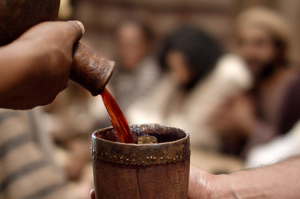
The true bridegroom (John 2: 1-11)
Weddings are usually wonderful occasions. Family and friends come together to witness to and celebrate a couples’ love and commitment. The ritual is crowned with singing, dancing, eating and drinking. It has been so for centuries. In Jewish tradition a wedding could last for days, not hours.
It’s interesting that, in John’s Gospel, Jesus begins his ministry in the warm and homely setting of a village wedding in the same region in which Jesus had grown up. Mary, Jesus and his disciples have been invited.
Disaster strikes when the wine runs out. It’s not hard to imagine how acutely embarrassing and humiliating that would have been for the wedding couple and their families. From then on the wedding would have been remembered as, ‘the one when the wine ran out’.
Mary sees what has happened and mentions it to Jesus but he seems reluctant to do anything about it: ‘My hour,’ he says, ‘has not come yet.’ In John’s Gospel, Jesus’ hour will come on the cross, when he will reveal God as God truly is, through the sacrifice of divine love for the world.
Mary is not put off by Jesus’ reply. Perhaps she knows her Son better than he does himself at this point. ‘Do whatever he tells you,’ she says to the servants.
Even though his time had not yet come, Jesus acts with kindness and compassion, saving the couple from acute embarrassment and ensuring that the wedding celebration can continue with plenty of ‘the best wine’.
In telling this story, John is drawing on Old Testament themes which picture God as the ‘bridegroom’ of Israel. The bond of love between God and Israel was meant to be deep and enduring - like a marriage. Such themes led to the expectation that the promised Messiah would restore this relationship.
In Jewish tradition it was the bridegroom’s responsibility to provide the wine for the wedding.
In John’s story it is Jesus who ends up providing an abundance of the best wine, revealing Jesus as the divine bridegroom, come to take Israel back as bride.
At the end of this Gospel passage, John tells us that Jesus’ action in turning the water into wine was the first of the signs he gave. In John’s Gospel there will be six more. All of them to do with healing, saving, restoring, feeding and giving life to human beings.
None are empty displays of Jesus’ power. The ‘glory’ of Jesus lies in revealing the God of love, especially in moments of real human need. The signs show that the power of love which comes from God is always at the service of human beings.
We, too, are called to allow the glory of God to shine out through us in loving, healing, transforming words and actions.
- pdf Celebrating At Home - 2nd Sunday in Ordinary Time [PDF](845 KB)
- default Celebrating At Home - 2nd Sunday in Ordinary Time [ePub](2.54 MB)
- pdf Celebrando En Familia - II Domingo del Tiempo Ordinario(197 KB)
- pdf Celebrando In Casa - II Domenica del Tempo Ordinario(242 KB)
- pdf Celebrando Em Familia - II Domingo do Tempo Comum [Português](209 KB)
This resource is presented by the Carmelites of Australia & Timor-Leste at a time when many cannot gather together as we usually do to celebrate the Eucharist. We are conscious that Christ is present not only in the Blessed Sacrament but also in the Scriptures and in our hearts. Even when we are on our own we remain part of the Body of Christ.
In the room you decide to use for this prayer you could have a lighted candle, a crucifix and the Bible. These symbols help keep us mindful of the sacredness of our time of prayer and can help us feel connected with our local worshipping communities.
This text is arranged with parts for a leader and for all to pray, but the leader’s parts can be shared among those present.
As you use this prayer know that the Carmelites will be remembering in our prayer all the members of our family at this time.
Vitam Coelo Reddiderunt
Fr. Carmel Anthony Ferrante (Mel)
18-12-21
Ortus: 26-04-38
P. Temp.: 09-10-55
P. Soll.: 07-05-59
Ord.: 27-05-61
Fr. Augustine Carter (PCM)
23-12-21
Ortus: 21-07-24
P. Temp.: 08-09-47
P. Soll.: 10-10-50
Ord.: 08-07-51
New Liturgical Calendar Approved
The Vatican has approved a new liturgical calendar for the Order. The Order was notified on November 18, 2021, by the Congregation for Divine Worship and the Discipline of the Sacraments. The calendar was approved and signed by officials at the congregation on November 6, 2021, the Feast of Saint Nuno Álvares Pereira.
Fr. Michael Farrugia, the procurator general of the Order, has written a letter to the Order explaining the changes. This letter and the new calendar as well as some accompanying documents are now posted on the Order’s website.
Some modifications were made to the 1972 Proper Calendar which has been in use until now. The Congregation for Divine Worship and the Discipline of the Sacraments revised the levels and dates of the celebrations according to the 1999 norms. The new calendar is divided into two parts: the first is intended for celebrations in the whole Order, while the second is an Appendix, for celebrations intended exclusively for local areas. In the first part the dates and levels of the celebrations are indicated: solemnity, feast, and obligatory memorial. Some ‘optional memorials’ have been moved to the Appendix, whereas previously they could be celebrated throughout the Order. Now they are allowed in certain regions.
This is further explained in Fr. Michael's letter and in the accompanying documents:
Read pdf here (121 KB) the Letter to the Order, by Fr. Michael Farrugia O. Carm.
Read pdf here (42 KB) the Decree on the Calendarium proprium
Read pdf here (16 KB) the Approval of the Calendarium proprium
Read pdf here (68 KB) the Calendarium proprium
Feast of St. Peter Thomas
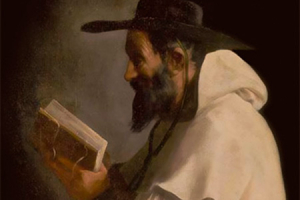
On January 8th we celebrate the Feast of Saint Peter Thomas.
He joined the Carmelite Order when twenty years of age. He was Procurator General of the Order at the Papal Curia at Avignon and also an official preacher to the Curia there.
In 1354, he was appointed bishop of Patti and Lipari. He acted as papal legate to the kings and emperors of his time, seeking to promote peace and to re-establish unity with the Eastern Churches.
Read more here
Lectio Divina January 2022
Lord Jesus, send your Spirit to help us to read the Scriptures with the same mind that you read them to the disciples on the way to Emmaus. In the light of the Word, written in the Bible, you helped them to discover the presence of God in the disturbing events of your sentence and death. Thus, the cross that seemed to be the end of all hope became for them the source of life and of resurrection.
Create in us silence so that we may listen to your voice in Creation and in the Scriptures, in events and in people, above all in the poor and suffering. May your word guide us so that we too, like the two disciples from Emmaus, may experience the force of your resurrection and witness to others that you are alive in our midst as source of fraternity, justice, and peace. We ask this of you, Jesus, son of Mary, who revealed to us the Father and sent us your Spirit. Amen.
- Lectio Divina January 2022 [PDF] Download pdf here(811 KB)
- Lectio Divina January 2022 [ePub] Download default here(188 KB)
- Lectio Divina January 2022 [Mobi] Download default here(254 KB)
A Message for Christmas by Fr. Míceál O'Neill, Prior General
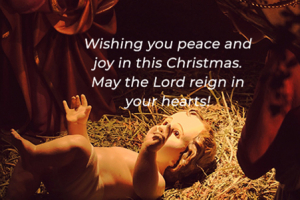
Sisters and brothers in the Carmelite Family,
On my own behalf and on behalf of the General Council I pray that this Christmas will heal our wounds, give us new hope and reveal to us again the depths of God’s love for the world.
This is a world in which many will not celebrate Christmas because it does not mean anything to them, many would love to celebrate Christmas but cannot do so because of the difficulties in their lives, many will celebrate Christmas but without any attention to Jesus, and many will celebrate Christmas with a full sense of its meaning.
The Son of Man came for all of us, for every man and woman on this earth, but particularly for the people who recognise their need of salvation. Once again we hear the call of the prophet, urging us to make space in our lives for the One who has come in the name of the Lord. If we make space for the One who comes, we will also make space for others.
Christmas is always a time for thinking about others, not about ourselves. Though he was in the form of God, Jesus did not count equality with God a thing to be held on to. (Phil 2,6). He emptied himself in order to show us how to be truly human, one who came for others, not for himself, standing for the dignity of his brothers and sisters, not for his own. This essential truth of living for others we see in Jesus, Mary and Joseph.
We find it also in the lives of our saints, with particular attention this year to the life and witness of Blessed Titus Brandsma.
This year, for the second time we will celebrate Christmas under the cloud of the coronavirus. Once again we are being asked to think of others, and to protect one another by doing everything that is necessary to stop the spread of the virus.
With our minds and hearts firmly fixed on Jesus, Mary and Joseph, and with the care we have for one another we will be able to celebrate Christmas with all its meaning.
May you all, in your individual lives, in your communities and in your families be blessed with all that our Saviour desires to give to all those who are open to receive his gift.
Watch here