





O.Carm
Australia–Timor-Leste Facebook Views Top 11.3M

Australia and Timor-Leste Facebook Views in 2025 Reaches 11.3 Million
The Carmelites of Australia and Timor-Leste are making a big impact on social media with 11.3 million Facebook views so far this year. With 240,000 followers on Facebook and 6,600 on Instagram the resources we provide are finding a home in many parts of the world - nearly 45,000 downloads of Lectio Divina, over 14,500 downloads of the Jubilee Year logo, and more than 106,000 downloads of St Titus Brandsma resources. The mix is distinctly Carmelite—including short prayers and reflections, weekly Celebrating at Home Sunday materials, Lectio Divina, and stories from ministries across Australia and Timor-Leste—crafted to place beauty, Scripture and hope within everyday reach.
“This isn’t about chasing numbers,” a provincial spokesperson said. “It’s about making space—on phones and in hearts—for quiet prayer, honest hope, and the Gospel lived simply. If our posts travel far, it’s because people are finding something they can trust.”
New General Delegate for the Nuns Appointed
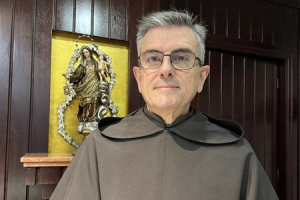
The General Council Names the New General Delegate of the Nuns
The General Council has appointed Fr. Francisco Daza Valverde of the Bética Province (Spain) of the Most Holy Name of Mary as Delegate to the Nuns. The Prior General and his Council thank Fr. Francisco for his willingness to serve the Order and will keep him in their prayers.
Francisco Daza Valverde was born in Santa Eufemia, Córdoba on 6 August 1962. He made his temporary profession on October 3, 1981, and his solemn profession on December 7, 1986. He was ordained a priest on September 23, 1988. He obtained a master's degree in Spiritual Theology from the Pontifical University of Comillas (Madrid). He has taught at two Carmelites Schools in Madrid and has been councilor for formation, councilor for vocations, secretary and formator in the community of Seville. In 2000, he was part of the founding team of the Carmelite mission in Burkina Faso, where he remained until 2008. He was prior provincial of the Bética Province from 2014 to 2020. He is currently religious assistant to the Federation of the Carmelite Nuns ‘Mater et Decor Carmeli,’ of the Bética Province, in Spain.
Causa Nostrae Laetitiae
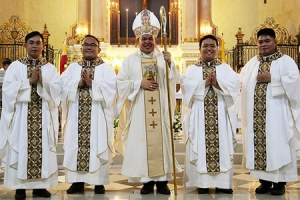
INITIUM NOVITIATUS
02-12-25 Erçio Manuel Freitas (Aust-TL) Hera, Timor-Leste
02-12-25 João Martinho Falo (Aust-TL) Hera, Timor-Leste
02-12-25 Celestino Exposto (Aust-TL) Hera, Timor-Leste
02-12-25 Ricardo Carvalho Saldanha (Aust-TL) Hera, Timor-Leste
02-12-25 Lorenço Colo (Aust-TL) Hera, Timor-Leste
02-12-25 Zeferino José Carvalho (Aust-TL) Hera, Timor-Leste
02-12-25 Domingos Dos Santos Martins (Aust-TL) Hera, Timor-Leste
02-12-25 Emilio Dos Santos Ribeiro (Aust-TL) Hera, Timor-Leste
02-12-25 Hajetelino Sanches Simões (Aust-TL) Hera, Timor-Leste
02-12-25 Tõsio João Guterres Rangel (Aust-TL) Hera, Timor-Leste
PROFESSIO TEMPORANEA
20-11-25 Paulo Martins De Araújo (Aust-TL) Hera, Timor-Leste
20-11-25 Celesino Soares (Aust-TL) Hera, Timor-Leste
20-11-25 Elias Soares Sin (Aust-TL) Hera, Timor-Leste
20-11-25 João Fernando Cabal (Aust-TL) Hera, Timor-Leste
20-11-25 Fernando Gusmão (Aust-TL) Hera, Timor-Leste
20-11-25 Samuel Lopes (Aust-TL) Hera, Timor-Leste
ORDINATIO SACERDOTALIS
22-10-25 Jaynor Mike Gomez (Phil) Cubao, Philippines
22-10-25 Adrian Vergel Ballares (Phil) Cubao, Philippines
22-10-25 Dave Malinao (Phil) Cubao, Philippines
22-10-25 Rolando Mamites (Phil) Cubao, Philippines
08-12-25 Yohanes Seran (Indo-Est) Sorong-Ovest, Papua
Celebrating At Home - 4th Sunday of Advent

The Promise Fulfilled
(Matthew 1:18-24)
The great Christmas feast is almost here. As always in Advent, what is promised in the first reading is brought to fulfilment in the Gospel reading. We began Advent with the cry, ‘Come, Lord Jesus’. We will end it with the joyful shout, ‘God is with us!’
Our Advent journey has called us to:
stay awake to the coming of God,
prepare ourselves to receive the Lord,
rejoice that he is not afraid to make his home with us, and to
receive him with faith and love.
At Christmas we will hear the call to give birth to him in word and action so that the saving power of God may be seen and experienced through our every thought, word and action.
The promise of the first reading from Isaiah that, “The virgin will conceive and give birth to a son and they will call him Emmanuel, a name which means ‘God-is-with us’,” is fulfilled in the Gospel which tells how Joseph received both Mary and Jesus into his home.
Following Joseph’s example, we joyfully welcome Jesus, and Mary, into our hearts.
The great gift of Jesus to the world cannot be confined only to one moment in history. Through us, the Body of Christ, the Gift is given again and again; born into every moment of human history. The presents we exchange at Christmas are meant to be symbols of our readiness to give and receive Christ, the eternal gift of God’s love.
As, year by year, we travel the liturgical journey of the Church’s feasts and seasons we touch ever more deeply the living presence of Christ in us that we may become ever more deeply the living presence of Christ in the world.
The General Council Names a New Secretary General
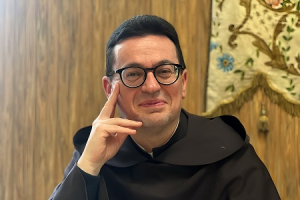
New Secretary General, Fr. Giampiero Molinari, O. Carm.
The General Council has appointed the Rev. Giampiero Molinari of the Italian Province of the Carmelites of St. Elijah the Prophet, St. Albert of Trapani, and St. Andrew Corsini as Secretary General. The Prior General and his Council thank Fr. Giampiero for his willingness to serve the Order and keep him in their prayers.
Fr Giampiero Molinari was born in Jesi (AN), Italy, on August 21, 1973. At the end of his novitiate, he made his temporary profession on September 3, 1995 and his solemn profession on November 8, 1998. He completed his philosophical and theological studies at the Pontifical Gregorian University and obtained a licentiate in Mariology at the Pontifical Marianum Theological Faculty. He also attended a course for formators at the Pontifical Salesian University.
Ordained a priest on April 15, 2000, he was a member of the International Commission for Formation and Secretary General from July 2016 to December 2019. In his Italian Province, he has held the offices of prior, formator, assistant provincial and provincial councilor. On July 31, 2023, he was appointed assistant to the Federation of St. Mary Magdalene de Pazzi of the Italian monasteries.
New Leadership Elected in Vietnam
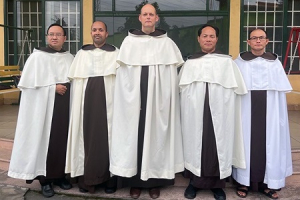
New Leadership Elected at the 3rd Chapter of the Commissariat in Vietnam
The Commissariat of St. Joseph of the Province of St. Elias in North America announced the election of its new leadership during the 3rd Commissariat Chapter. The meeting was held at the Vinh Phuc Retreat House in Ho Chi Minh City, Vietnam, from November 24–28, 2025.
The Commissariat of St. Joseph was officially established during the Chapter of the Province of St. Elias in 2019. Today, it is home to 60 members across Vietnam and comprises six communities actively serving in three dioceses as well as in the United States.
Its website is https://dongcatminh.org.
The following members were elected to leadership:
Commissary Provincial | Comisario Provincial | Commissario Provinciale
Joseph Diep Dinh, O. Carm.
1st Councilor | 1er Consejero | 1o Consigliere
Joseph Tri Phan, O. Carm.
2nd Councilor | 2o Consejero | 2o Consigliere
Paul Therese Hung Tran, O. Carm.
St. John of the Cross, Doctor of the Church
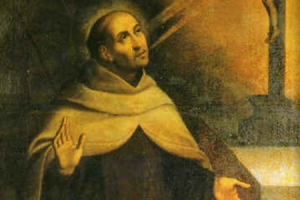
14 December Feast
Saint John was born, probably in 1540, in Fontiveros, near Avila in Spain. His father died when he was very young and he had to move with his mother from one place to another, while he tried as best he could to continue his education and, at the same time, to earn a living. In Medina in 1563 he was clothed in the Carmelite habit and, after a year's novitiate, was given permission to follow the unmitigated Carmelite Rule.
He was ordained priest in 1567, after studying philosophy and theology at Salamanca, and, in the same year, he met Saint Teresa of Jesus who, a little while before, had obtained permission from the Prior General Rossi to found two communities of contemplative Carmelite Friars (later called the Discalced) in order that they might help the communities of nuns that she had established. A year later - during which he travelled with Teresa - on the 28th November 1568, John became part of the first group of Reformed Carmelites at Duruelo, changing his name from John of St. Matthias to John of the Cross.
To read more on the life of St. John of the Cross ...
For more on John of the Cross and His Eucharistic Spirituality ...
To watch the interview from 2022 with Dr. John D. Love, S.T.D., on the relevance of St. John's today, click here ...
Publications by Edizioni Carmelitane available at the Webstore
"Within This Living Bread": Exploring the Eucharistic Spirituality of St. John of the CrossDr. John D. Love, STD, 2022.Celebrating At Home - 3rd Sunday of Advent
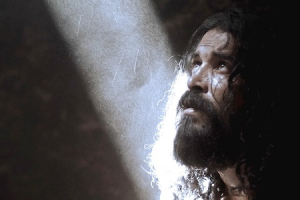
Are You the One?
(Matthew 11:2-11)
This Sunday marks the turning point in the Advent Season. Traditionally called Gaudete Sunday it is a day of rejoicing that the Saviour is near. The focus shifts from the final coming of Christ at the end of time to the first coming of Christ at Bethlehem. The note of joy is symbolised by the inclusion of the colour rose among the purple of the Season.
The joyful first reading from the prophet Isaiah proclaims that God is on his way to save his people. This coming brings healing and rejoicing and an end to sorrow and lament.
Using images of farmers and prophets, the letter of St James urges patience in our waiting for God. A kind of patient certainty is the attitude of the disciple.
Perhaps it is actually us who are slow in responding to God; slow in letting the message of the Gospel and the Holy Spirit transform our lives so that we too might have power to bring healing and joy. In the Gospel Jesus fulfils the prophecy of the first reading about the Messiah. John the Baptist asks, “Are you the one who is to come, or have we got to wait for someone else?”
The words of Jesus clarify his identity and that of John the Baptist. Jesus comes, not as the kind of warrior-messiah, slaughtering and slashing, but as ‘the kindness of God’, tending the sheep, healing and liberating the needy - the blind see again, the lame walk, lepers are cleansed, the deaf hear, and the dead are raised to life and the Good News is proclaimed to the poor.
But is Jesus the ‘one’ for us, or are we really waiting for someone or something else to save us?
Our Christmas can’t simply be about Jesus’ birth a long time ago, celebrating an historical anniversary. It has to be more than that - the celebration of a fresh discovery of an ever-deepening presence of Christ in each of us.
Rejoice! God is not only ‘on his way’, he is already here!
- pdf Celebrating At Home - 3rd Sunday of Advent [PDF](1.11 MB)
- default Celebrating At Home - 3rd Sunday of Advent [ePub](4.07 MB)
- pdf Celebrando en Familia - Tercer Domingo de Adviento(391 KB)
- pdf Celebrando in Casa - III Domenica di Avvento(383 KB)
- pdf Celebrando em família - Terceiro Domingo Do Advento(382 KB)
Blessed Bartholomew Fanti, Priest
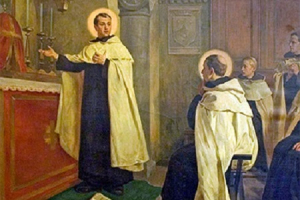
5 December Optional Memorial
A native of Mantua, Italy, he was a Carmelite in the Mantuan Congregation and already ordained priest by 1452. For 35 years in the Carmelite church of his city, he was the spiritual director and rector of the Confraternity of the Blessed Virgin Mary, for whom he wrote a rule and a set of statutes.
Humble and gentle, he gave an example to everyone of a life of prayer, of generosity and of faithful service of the Lord. He was outstanding for his love of the Eucharist which was the centre of his apostolic life and for his devotion to Mary. He died in 1495.
Celebrating At Home - 2nd Sunday of Advent
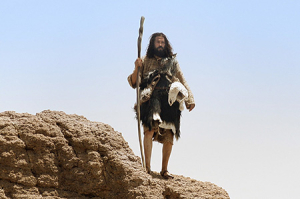
Prepare A Way For The Lord
(Matthew 3:1-12)
The magnificent first reading from the prophet Isaiah this weekend looks forward to the appearance of one ‘on whom the spirit of the Lord rests – a spirit of wisdom and insight, counsel and power and knowledge of the fear of the Lord’.
He gives judgement in favour of the poor. His judgement is not influenced by appearances or hearsay. He judges with integrity. His word strikes the ruthless and his sentences bring death to wickedness. In his day extraordinary things happen: ‘the wolf lies with the lamb…’ All creation is at peace. Even natural enemies (symbolised by the animals) live together in peace. No hurt or harm is done because the whole country ‘is filled with the knowledge of the Lord’. John the Baptist sits at the centre of this week’s Gospel and next week’s. He is the ‘one who cries in the wilderness: Prepare a way for the Lord; make his paths straight’.
John was preparing the people for the coming of Jesus.
Moved by his preaching many sought baptism in the river Jordan. This ancient water-rite symbolised dying to the old way of life and rising to a new way of life.
That’s what repentance is about: turning away from sin and turning towards God. It is about true conversion of heart. It’s about making straight the pathways of our hearts. The fruit of our repentance and true conversion shows itself in good works.
Our preparation for the coming ‘day of the Lord’ is a continual cycle of dying and rising; of turning away from sin and towards God; of remaking our minds and hearts after the mind and heart of Christ. The good works we do give Christ presence, form and shape in the concrete reality of human life. So, Christian life is a constant act of preparation through repentance and good works.
Christmas is not just about the birth of Jesus long ago.
It’s also about giving birth to him in our lives every day.
- pdf Celebrating At Home - 2nd Sunday of Advent [PDF](1.38 MB)
- default Celebrating At Home - 2nd Sunday of Advent [ePub](1.96 MB)
- pdf Celebrando en Familia - Segundo Domingo de Adviento(393 KB)
- pdf Celebrando in Casa - II Domenica di Avvento(388 KB)
- pdf Celebrando em família - Segundo Domingo Do Advento(409 KB)