






O.Carm
Celebrating At Home - 22nd Sunday in Ordinary Time

Invitation to Dinner
(Luke 14:1, 7-14)
It’s no accident that the Gospels contain many instances of shared meals, weddings feasts and miraculous feeding. In the Scriptures, meals always have something to do with the great meal – the eternal wedding feast.
We celebrate the sacred meal of the Eucharist anticipating the eternal feast of continual communion with God.
In this Gospel episode, Jesus has been invited to a meal at the home of a leading Pharisee. Luke tells us that they watched Jesus closely. No doubt, they are trying to make up their minds about him and his teaching.
Jesus, too, is watching closely and observes how those at the meal readily chose the places of honour for themselves. The fact that Luke calls the words of Jesus a ‘parable’ alerts us to the fact that this is more than just good advice about how to avoid embarrassment at a dinner party in the ancient world.
It turns out that the parable is about the feast in the Kingdom of God. In the Kingdom the usual conventions of this world are completely reversed, such that those who exalt themselves will be humbled and those who humble themselves will be exalted; the last will be first, and the first last.
It is not wealth, power and social status that gains us a high place at the eternal feast, but the good treatment (humble service) of the most disadvantaged. Being hospitable to the poor and disadvantaged now gains
a person the only welcome that truly matters: the welcome into the everlasting hospitality of God.
The true disciple acts towards others with the same largeness of heart as God. Humility enables us to be open to God’s heart, and gentleness is the way of imitating his love.
- pdf Celebrating At Home - 22nd Sunday in Ordinary Time [PDF](2.97 MB)
- default Celebrating At Home - 22nd Sunday in Ordinary Time [ePub](3.30 MB)
- pdf Celebrando en Familia - XXII Domingo del Tiempo Ordinario(517 KB)
- pdf Celebrando in Casa - XXII Domenica del Tempo Ordinario(517 KB)
- pdf Celebrando em família - XXII Domingo do Tempo Comum(517 KB)
Celebrating At Home - 21st Sunday in Ordinary Time

The Narrow Door
(Luke 13:22-30)
It is a horrible feeling to find yourself locked out of home. It can instil panic. What will I do now? It is even worse if those inside won’t let you in, or even recognise you. Worse still if the house is full of strangers.
There is no mistaking the sense of warning in this passage of Luke’s Gospel.
Over the last few weeks, the gospel has presented Jesus on the journey to Jerusalem and his teaching about how to live our lives as disciples and the hard choices involved. The readings this week continue in this vein and point to the difficulty in being authentic to God and being prepared. If we are not properly prepared, whoever we are, we will not see the Kingdom of God – remember the phrases of recent Gospel readings: ‘stand ready’, ‘lamps lit’, ‘dressed for action’.
Jesus’ teaching in the towns and villages sparks a sense that things are nearing a climax. This provokes the question about how many will be saved. Jesus refuses to speculate about numbers, instead turning the question into a warning not to miss the opportunity while it is still available. Otherwise, a person may very well find themselves locked outside.
Through what Jesus will accomplish in Jerusalem, all will have the opportunity to be part of his kingdom. He will open the door.
Being a disciple is not about following Christ in name only. Our relationship with Jesus is not gained by casual acquaintance with his words and actions but by thoroughgoing conversion (repentance) – the ‘narrow gate’. So, we need to honestly and purposefully attempt to live out our humanity, social concerns and faith through action and prayer, in the light of Christ, in his spirit and according to his teaching.
The disciple can only share fully in the life of Christ through true conversion of heart - that’s the ‘narrow door’ through which we enter the Kingdom, our true home.
- pdf Celebrating At Home - 21st Sunday in Ordinary Time [PDF](2.97 MB)
- default Celebrating At Home - 21st Sunday in Ordinary Time [ePub](2.61 MB)
- pdf Celebrando en Familia - XXI Domingo del Tiempo Ordinario(511 KB)
- pdf Celebrando in Casa - XXI Domenica del Tempo Ordinario(499 KB)
- pdf Celebrando em família - XXI Domingo do Tempo Comum(500 KB)
Celebrating At Home - 20th Sunday in Ordinary Time

The Prophet's Anguish
(Luke 12:49-53)
Sometimes we can be overwhelmed by life. Feelings of fear, uncertainty and anxiety bubble away beneath the surface. Sometimes, those feelings reach the surface in an explosion of words and actions.
In this Gospel passage we encounter the startling image of Jesus in distress and anguish over his mission and what he is yet to face. His statement that he, the Prince of Peace, has not come to bring peace, but division, is confronting.
Right at the beginning of this passage, Jesus says he has come to bring fire to the earth and wishes it were blazing already. The ‘fire’ Jesus talks about is the fire of the Holy Spirit; the fire that melts away all that is not of God. But the Holy Spirit won’t be given until after Jesus has faced and endured his destiny (passion and death) in Jerusalem. Perhaps we, who now live with the presence of the Spirit, need to ask, ‘What has yet to be melted away so that only the real presence of God remains in us, purified of greed, ambition, selfishness, and so on? We could also ask, ‘Where is the passion of God in my life?’
Jesus also speaks about a ‘baptism’ he must yet receive. It is not the sacrament of baptism he means. ‘Baptism’ was a biblical word used to describe turbulent and potentially overwhelming events which, like a roiling sea, threaten to engulf us. Again, it is a reference to his approaching suffering and death. Jesus is distressed and clearly wishes it was already over.
Following from last Sunday’s Gospel, the disciple is called not only to stand ready and stay faithful to his employment (call), but also to stand firm in the face of opposition. Peace is not to be won at any price (e.g. compromising God’s word).
Christians should never expect that discipleship makes life easy. Far from delivering us from the difficulties of life, our discipleship is more inclined to plunge us into the difficult and confronting issues which affect us and those around us. There will be division and discord an account of the Word that is preached and the values that we hold – sometimes even among those who are closest to us.
To share Jesus’ baptism is to share with him in his passion and resurrection. It carries significant responsibilities (remaining faithful to God’s word) and sometimes means that we are misunderstood or even punished for meeting those responsibilities.
To follow Jesus is to speak God’s word, in what we say and in our actions.
- pdf Celebrating At Home - 20th Sunday in Ordinary Time [PDF](2.91 MB)
- default Celebrating At Home - 20th Sunday in Ordinary Time [ePub](3.10 MB)
- pdf Celebrando en Familia - XX Domingo del Tiempo Ordinario(506 KB)
- pdf Celebrando in Casa - XX Domenica del Tempo Ordinario(505 KB)
- pdf Celebrando em família - XX Domingo do Tempo Comum(505 KB)
Celebrating At Home - 19th Sunday in Ordinary Time

Being Prepared, Remaining Faithful
(Luke 12:35-39)
Sometimes in life we find ourselves captivated by a particular cause or project and devote great enthusiasm and passion to it. As time goes on, however, we can find that our enthusiasm fades and our passion cools. Other things begin to take priority. Like last week’s Gospel, being prepared and remaining faithful is the focus of this week’s Gospel passage.
Storing up treasure in the sight of God is good preparation. Hoarding your possessions into ever bigger barns is not.
To stand ready is to be open to the Lord’s coming. Being dressed for action with lamps lit and ready to open the door to him, is the antidote to focussing too much on material possessions, status and power.
The faithful servants who are ready when the master returns are remarkably blessed by the master who will, himself, sit them down and wait on them. A classic reversal of traditional roles.
Luke’s community (and other early Christians) were slowly growing used to the idea that the second coming of Jesus, which they had felt would happen ‘any day now’, seemed to be delayed. Problems were emerging in the community as officials and others seemed to be ‘going off the boil’. Hence, the words about ‘standing ready’, ‘busy at his employment’, ‘having lamps lit’ and being ‘dressed for action’.
The parable about the servants is a call to remain faithful and in a state of readiness for the master’s return. The parable begs the question, ‘How are the disciples to behave between the two comings of Jesus?’ Like homeowners, we need to be alert and on the lookout for the presence of Jesus.
While the text is about the final return of Jesus, we can also think about being alert and watchful for the moments when the presence of Jesus suddenly breaks into our lives - in a sick friend, a beggar on the street, a person in need, a moment of prayer or reflection. As believers we want to do everything we can to build up the community, the living Body of Christ in our world, and allow the Gospel to transform our lives – which is seen in our closeness to God and in good actions which serve others.
- pdf Celebrating At Home - 19th Sunday in Ordinary Time [PDF](2.85 MB)
- default Celebrating At Home - 19th Sunday in Ordinary Time [ePub](1.82 MB)
- pdf Celebrando en Familia - XIX Domingo del Tiempo Ordinario(494 KB)
- pdf Celebrando in Casa - XIX Domenica del Tempo Ordinario(485 KB)
- pdf Celebrando em família - XIX Domingo do Tempo Comum(472 KB)
Lectio Divina September, 2025

Opening Prayer
Fill our hearts with love for You, increase our faith, and by Your constant care protect the good you have given us. We ask this through our Lord Jesus Christ, Your Son, who lives and reigns with You and the Holy Spirit, one God, for ever and ever. Amen.
St. Teresa Margaret Redi (OCD), Virgin
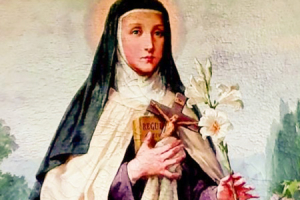
1 September | Optional Memorial
As a student at a Benedictine monastery school in Florence, Teresa was deeply moved by the enthusiasm and joy on the face of a graduate who had returned to say goodbye to her former teachers, as she was entering the community of Discalced Carmelite nuns in the city of Florence. Reflecting on her reaction to that young woman’s embracing of her vocation, Teresa felt that she suddenly received an unspoken message from Teresa of Avila, foundress of the Discalced Carmelites.
Eventually entering the Discalced monastery as well, Redi was assigned to the office of infirmarian or nurse for the community. She was quite effective. When an epidemic broke out in the community in 1770, Teresa Margaret worked diligently caring for the other nuns. She is said to have had a special gift for reaching the deaf and mentally ill nuns. Because of her life and work, she was able to grow deeply in her interior life. She came to be revered for her mystical gifts. She was given a special contemplative experience concerning the words of I John 4:8, "God is love", which was a phrase she would repeat often. The prioress of the monastery was quite strict with Teresa, constantly reprimanding and humiliating her. However, Teresa proved to be unfailingly cheerful. Her spirituality is perhaps best captured by her full religious name: Teresa Margaret of the Sacred Heart of Jesus.
To read more ...
Bl. Jacques Retouret, Priest and Martyr

26 August | Optional Memorial
Bl. Jacques Retouret was born at Limoges in France on 15th September 1746 to a merchant family. He was a serious young man, a lover of books and greatly gifted. At fifteen years of age, he entered the Carmelite house in his native city. After ordination, his zeal and learning were widely admired and large crowds of people were attracted by his way of preaching. Unfortunately, he was often unable to fulfil all his engagements, due to his persistent bad health which plagued him throughout his life.
The French Revolution did not spare him. Like the majority of his fellow clergy, Jacques refused to accept the civil law, unilaterally introduced by the state, which decreed, among other things, the election of bishops and parish priests by the people, only afterwards to be approved by the hierarchy and the pope. In addition to this refusal, Jacques was accused of siding with a group of political emigres who had invaded the country against the revolutionaries. He was arrested and condemned, together with many other priests and religious, and sentenced to exile in French Guinea in South America.
To read more ...
St. Mary of Jesus Crucified (OCD), Virgin
25 August | Optional Memorial
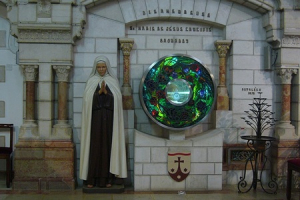
Mariam Baouardy was born at Abellin in Galilee on 5th January 1846 to very poor parents who were good living and devoted Greek-rite Catholics. She was left an orphan after the death of her parents at only three years of age when, together with her brother Paul, she was entrusted to the care of an uncle,who had moved to Alexandria in Egypt a few years earlier. She never received any formal education and remained unable to read. At thirteen years of age, wanting to give herself only to God, she firmly refused the marriage which her uncle, according to the Eastern custom, had arranged for her. The next few years, she worked as a domestic in Alexandria, Jerusalem, Beirut and Marseilles.
At the beginning of Lent in 1865, she joined the Sisters of Compassion, but falling ill, she was forced to leave after a couple of months. Then she was received into the Institute of the Sisters of Saint Joseph of the Apparition but, after two years as a postulant, she was judged not to be suited for the cloistered life. Finally, on 14th June 1867, she entered the Carmel in Pau.
To read more ...
Bl. Angelus Augustine Mazzinghi, Priest
17 August | Optional Memorial
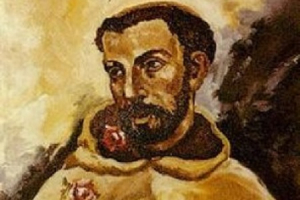
The Lord says, "The man who hears my commandments and keeps them, he it is who loves me." And the first of all commandments is: “Hear, O Israel: The Lord our God is one Lord; and you shall love the Lord your God with all your heart, and with all your soul, and with all your might. This is the greatest and first commandment." This cannot be observed without love of neighbor, because “he who does not love his brother whom he has seen, cannot love God whom he has not seen;" "and the second commandment is like it, You shall love your neighbor as yourself, 'namely, in the things and for the reason that you love yourself." His soul hates him who loves violence," says the Psalmist. Therefore, love your neighbor as yourself in good and not in evil, and "whatever you wish that men would do to you, do so to them" and "what you hate, do not do to anyone." Thus, you must love your neighbor, and so act that he becomes just if he is wicked, or remains just if he is good.
Again, you must love yourself, not because of yourself, but because of God. Whatever is loved because of itself is thus made a source of joy and a happy life, the hope of attaining which is comforting even on earth. But you must not place the hope of a blessed life in yourself or another man. “Cursed is the man who trusts in man and makes flesh his arm, whose heart turns away from the Lord." Therefore you must make the Lord the source of your joy and the happy life, as the apostle says: “But now that you have been set free from sin and have become slaves of God, the return you get is sanctification and its end, eternal life in Christ Jesus our Lord.”
If you understand this clearly, you must love God because of himself, and yourself, not because of yourself, but because of God; and, since you must love your neighbor as yourself, you must love him, not because of himself, nor because of yourself, but because of God, and what else is this but to love God in your neighbor? “By this we know that we love the children of God, when we love God and obey his commandments." In the preparation of your soul, you do all of this if you love God because of himself and your neighbor as yourself because of God. “On these two commandments depend all the law and the prophets.”
To read more ...
Bl. Isidore Bakanja, Martyr
12 August | Optional Memorial
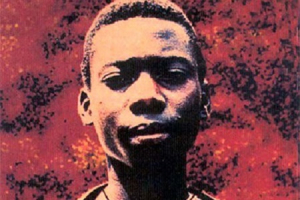
On April 24, 1994, Blessed Isidore Bakanja, layman and martyr of the Scapular of the Virgin Mary of Mount Carmel, was beatified by Pope John Paul II. Today the Order comes together to celebrate the 31st anniversary of the Church's recognition of the holiness of this Congolese Catholic who would not give up his scapular.
Isidore Bakanja was born in Bokendela (Democratic Republic of Congo) around 1885. Leaving his village, he moved to Mbandaka, where he was baptized on May 6, 1906 and confirmed a few months later, on November 25, 1906. He was heavily influenced by the witness of the Trappist missionaries, cultivating a special devotion to Jesus and the Blessed Virgin Mary.
Despite the difficulties he encountered at work because of his fidelity to Christ, he remained steadfast in his faith. On February 2, 1909, he suffered an atrocious scourging because he refused to get rid of the scapular of the Virgin Mary of Mount Carmel which he wore over his shoulders. Following a terrible beating and sensing his impending death, he received the anointing of the sick on July 24, 1909. Just as Christ died having forgiven his wrongdoers, so Bakanja died having forgiven his executioner: “The white man hit me; that's his business. It's up to him and God. When I get to heaven, I'll pray a lot for him and ask God to forgive him.”
Bakanja died on the Feast of the Assumption, August 15, 1909, at the age of 24. In imitation of Christ, whom he had followed from the moment of his baptism, Isidore Bakanja lived in his own way, like Saint Paul, who wrote: “For me, to live is Christ.” (Philippians 1, 21). "For me, to live is to be a Christian."
On June 7, 1917, his remains were exhumed and buried at the Immaculate Conception Parish in Bokote. He was proclaimed Blessed on April 24, 1994. His cause for canonization is now underway. Popes Benedict XVI and Francis have recognized and proposed Blessed Isidore Bakanja as an authentic witness and example of faith for all Christians in the world. In his post-synodal Apostolic Exhortation Christus vivit, Pope Francis named Blessed Isidore Bakanja among the young saints who today mobilize Christians in their quest for holiness and inspire new conversions. In short, Blessed Isidore Bakanja is a spiritual and ecclesial heritage for the world.
To read more ...