










O.Carm
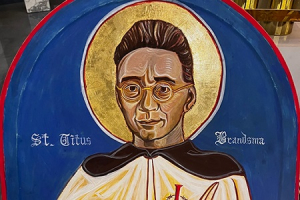
St. Titus Brandsma, priest and martyr
July 27 | Obligatory Memorial (Feast: Ger, Phil, Del Colombia)
A noted writer and journalist, in 1935, St. Titus was appointed adviser to the Dutch bishops for Catholic journalists. In the period leading up to and during the Nazi occupation in the Netherlands, he argued passionately against the National Socialist ideology, basing his stand on the Gospels. He continually defended the right to freedom in education and for a free the Catholic Press. As a result, he was imprisoned.
He passed from one prison or camp to another until he arrived in Dachau where he was killed on July 26, 1942. He was beatified as a martyr by Pope John Paul II on November 3, 1985 and was canonized by Pope Francis on May 15, 2022, in St Peter’s Square.
The Order’s petition to have the celebration of St. Titus Brandsma changed from an optional memorial to an obligatory memorial for the whole Order was accepted. The Provinces of Germany and the Philippines as well as the General Delegation in Columbia who have St. Titus as their patron celebrate the day as a feast.
Read more about the life of St. Titus Brandsma
Special Announcement:
We are proud to announce that Volume 5 in the Titus Brandsma series is due from the printer in the coming days. This incredible collection of the writings, speeches, and letters of St. Titus Brandsma, translated into English, provides the martyr of Dachau's life story in his own words.
Edizioni Carmelitane also provides a number of other excellent publications on Carmel's most recent saint including a theatrical play, a professionally produced tv production in multiple languages, as well as books in a variety of languages.
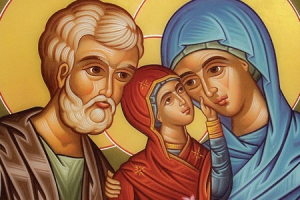
St. Joachim and St. Anne, Protectors of the Order
July 26 | Memorial
The names of the parents of Mary are known from the apocryphal “Proto-Gospel of James” (II century). The cult to Saint Anne is documented in the East in the VI century, in the West in the X century; that of Saint Joachim in the XIV century.
The Carmelite Order celebrates, with special devotion its Saints, gathering in them the most living and genuine expression of the Charism and the spirituality of the Order throughout the centuries.
Read more ...
Celebrating At Home - 17th Sunday in Ordinary Time
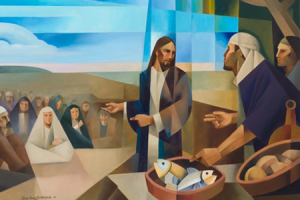
We Are Fed That We Might Feed
(Jn 6:1-15)
Unusually, our reading of St Mark’s Gospel will be interrupted for the next five weeks during which we will read the ‘Bread of Life’ passages from Chapter 6 of St John’s Gospel. These passages form a kind of meditation about who Jesus is and what is happening when we gather for Eucharist - we are being nourished by Jesus in Word and Sacrament, and we are being sent to feed and nourish one another.
In last Sunday’s Gospel, Jesus fed the crowd, hungering for the Word of God, with his teaching. This week, Jesus also feeds the crowd with bread and fish. Once again, Jesus is deeply conscious of the human needs of others. Despite there being so many, not only are all fed, but there is food left over. In the story there is a sense of super-abundance.
When God answers needs and provides for people there is never just enough; there is always more than enough.
Seeing what Jesus had done, the people think they know who Jesus is (“the prophet who is to come into the world”) and what his role should be (a king who will provide anything they want). But they have the wrong idea about Jesus’ kingship. He isn’t a national liberator, a political leader or a magician. So Jesus escapes into the hills by himself.
In next Sunday’s Gospel Jesus will explain what this sign of feeding the multitude is really about. As we begin this meditation on Jesus, the Bread of Life, our thoughts also turn to how we can be living bread for each other; how we can feed and nourish with the kinds of bread that do not perish: truth, justice, love, kindness, compassion, honesty, integrity, faith, hope and forgiveness.
What words can we speak, what actions can we do that not only feed bodies, but which also feed hearts hungry for comfort, hope, forgiveness, justice, mercy, acceptance and love? How can we be the ‘bread of God’ in our world today?
The ‘food’ is entrusted to us. We are fed that we might feed one another.
- pdf Celebrating At Home - 17th Sunday in Ordinary Time [PDF](3.42 MB)
- default Celebrating At Home - 17th Sunday in Ordinary Time [ePub](4.86 MB)
- pdf Celebrando en Familia - XVII Domingo del Tiempo Ordinario(495 KB)
- pdf Celebrando in Casa - XVII Domenica del Tempo Ordinario(524 KB)
- pdf Celebrando em família - Décimo Sétimo Domingo do Tempo Comum(487 KB)
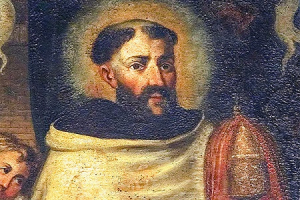
Blessed John Soreth, priest
July 24 | Memorial
John Soreth was unflagging in his efforts at renewal, during what was an especially critical period for both the Church and the Order. He dedicated himself entirely to the reform of the Order, travelling across Europe, making canonical visitations and promoting a more faithful observance of religious life both in the older Provinces and convents and in the Mantuan Reformed Congregation.
He was instrumental in the development of the Lay Carmelite Third Order.
Read more ...
Books Available on John Soreth (in Italian):
Il B. Jean Soreth (1394-1471). Priore generale, riformatore e maestro spirituale dell’Ordine Carmelitano
Giovanni Grosso, O. Carm.
Expositio paraenetica in regulam carmelitarum: Un commento alla regola del Carmelo
Giovanna D’Aniello, O. Carm.
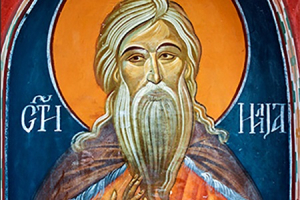
St. Elijah, prophet
July 20 | Solemnity
Elijah made himself available for God's work and was sent into various situations to proclaim God's word.
From Elijah, Carmelites learn to listen for the voice of God in the unexpected and in silence. We seek to allow the Word of God to shape our minds and our hearts so that the way we live and the things we do may be prophetic
Read more ...
Causa Nostrae Laetitiae
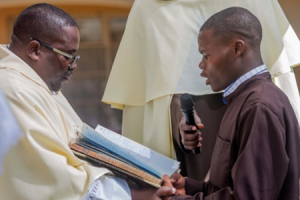
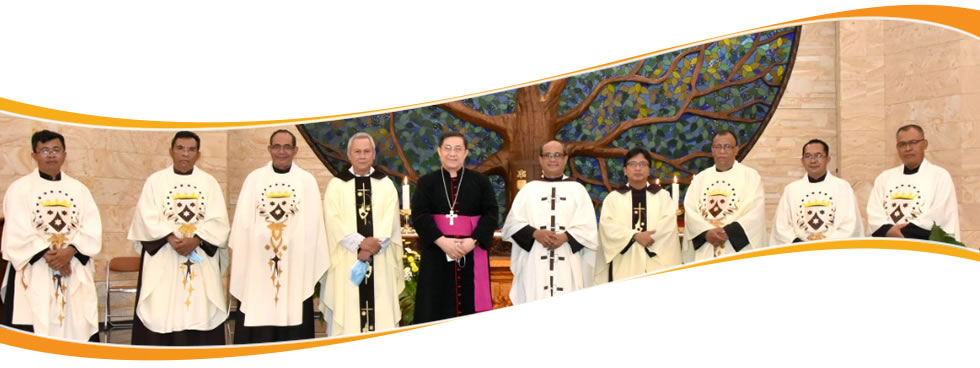
INITIUM NOVITIATUS
05-07-24 Frederick Ovko Owino (Kenya) Nyazura, Zimbabwe
05-07-24 Moses Mukwanha Wekesa (Kenya) Nyazura, Zimbabwe
05-07-24 Matthew Mweu Wambwa (Kenya) Nyazura, Zimbabwe
05-07-24 John Kheri Madava (Bruna-Tanzania) Nyazura, Zimbabwe
05-07-24 Faustine Innocent Nh'Umbili (Bruna-Tanzania) Nyazura, Zimbabwe
05-07-24 Ansbert Protace Mulaly (Bruna-Tanzania) Nyazura, Zimbabwe
05-07-24 Felicino Abgalao Massango (Pern-Moz) Nyazura, Zimbabwe
05-07-24 Juvencio Eusco Alvesta (Pern-Moz) Nyazura, Zimbabwe
05-07-24 Gabriel Tomas Congolo (Pern-Moz) Nyazura, Zimbabwe
05-07-24 Sulyvan Amalio Jaime (Pern-Moz) Nyazura, Zimbabwe
05-07-24 Simbarashe Matenza (Hib-Zim) Nyazura, Zimbabwe
05-07-24 Munashe Chimwamuchere (Hib-Zim) Nyazura, Zimbabwe
05-07-24 Kudakwashe Maposa (Hib-Zim) Nyazura, Zimbabwe
PROFESSIO TEMPORANEA
06-07-24 Sydney Mukwenha (Hib-Zim) Nyazura, Zimbabwe
06-07-24 Tallon Simbarashe Tafirenyika (Hib-Zim) Nyazura, Zimbabwe
06-07-24 Blessmore Murimambeva (Hib-Zim) Nyazura, Zimbabwe
16-07-24 Patrisius Bimasakti (Indo) Malang, Indonesia
16-07-24 Jona Dipa Manurung (Indo) Malang, Indonesia
16-07-24 Jekki Tua Sipayung (Indo) Malang, Indonesia
16-07-24 Albertus Agung Dwi Kristianto (Indo) Malang, Indonesia
16-07-24 Andreas Ferdian Ginting (Indo) Malang, Indonesia
16-07-24 Aldo Alberto Panjaitan (Indo) Malang, Indonesia
PROFESSIO SOLEMNIS
16-07-24 Bintang Parhusip (Indo) Malang, Indonesia
16-07-24 Nuryatmaja Gora Pawana (Indo) Malang, Indonesia
Celebrating At Home - 16th Sunday in Ordinary Time
Shepherding Each Other With God's Love
(Mark 6:30-34)
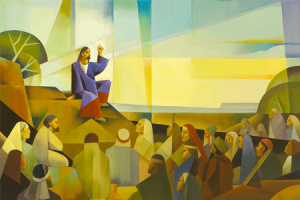
In the first reading the prophet Jeremiah laments the poor leadership given by those to whom the flock of God has been entrusted. He tells of the days to come when God will raise up true shepherds look after the flock and pasture (feed) them. The reading also looks forward to a true shepherd-king from the House of David who will act with wisdom, honesty and integrity to look after the people. He will ‘save Judah’ and will be called: The Lord, our integrity.
In the Gospel Mark shows Jesus to be a true shepherd whose heart is moved by the needs of both the people and his own disciples. The disciples have returned from their preaching and tell Jesus everything that happened to them. These exhausted shepherds are weary but the people keep coming to them, so much so that they had no time even to eat.
Jesus, moved by compassion for them, invites them to a place of quiet and rest, but the people guess where they are going and follow them. Instead of sending the people away, Jesus himself sets about teaching them while the disciples rest. He feeds the people with the Word of God. It is what genuine love does, isn’t it? It helps us go the ‘extra mile’ even when we think we are at the end of our tether.
And that is how Jesus meet us, too, as a shepherd-king, with genuine concern for us - not as a warrior-king with threats and punishments.
In the Gospel next Sunday Jesus will feed the people with the loaves and fish. Like a true shepherd Jesus looks after all the needs and hungers of his flock – feeding hearts as well as bodies. It is a very grounded approach that Jesus offers which does not ignore either spiritual or physical hungers and needs. As followers of Christ, we, too, try to be people who meet the real hungers and needs of our brothers and sisters and all entrusted to our care.
- pdf Celebrating At Home - 16th Sunday in Ordinary Time [PDF](2.86 MB)
- default Celebrating At Home - 16th Sunday in Ordinary Time [ePub](4.96 MB)
- pdf Celebrando en Familia - XVI Domingo del Tiempo Ordinario(489 KB)
- pdf Celebrando in Casa - XVI Domenica del Tempo Ordinario(492 KB)
- pdf Celebrando em família - Décimo Sexto Domingo do Tempo Comum(488 KB)
Bl. Teresa of St. Augustine and Companions, OCD
July 17 | Optional Memorial
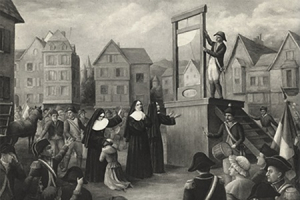
When the full terror of the French Revolution began, a community of sixteen Discalced Carmelite nuns from the monastery of the Incarnation at Compiégne offered themselves as sacrificial victims to beg God for peace for the Church and for their country.
Arrested and imprisoned on the 24th June 1794, they continued to share their joy and their faith with others. Condemned to death for their loyalty to the Church, to their religious vows and for their devotion to the Sacred Hearts of Jesus and Mary, they were guillotined in Paris on 17th July 1794 whilst singing hymns and after having renewed their vows to their prioress, Teresa of St. Augustine.
Mother Teresa of St. Augustine and companions were beatified in 1906, the first martyrs of the French revolution. The believed what they said: "We are the victims of the age, and we ought to sacrifice ourselves to obtain its return to God."
Read more ...
Major Events In History That Took Place on July 16th

On the occasion of the Solemnity of Our Lady of Mount Carmel, we can look back at the major events throughout History that took place on July 16th:
622: The Prophet Muhammad migrated from Mecca to Medina in an event known as the Hijra. This migration marked the beginning of the Islamic calendar and laid the foundation for the spread of Islam.
1054: Humbert of Silva Candida, cardinal and papal legate, excommunicated Michael Cerularius, patriarch of Constantinople, who retaliated by excommunicating the cardinal. This led to the schism between the churches of Rome and Constantinople.
1099: Crusaders herd Jews of Jerusalem into a synagogue and set it on fire.
1212: At the Battle of Las Navas de Tolosa (Battle of Al-Uqab), the combined Christian army defeats the Almohad Muslim force in a turning point for Muslim power on the Iberian peninsula.
1251: According to legend, the Virgin Mary gives Simon Stock the Brown Scapular.
1429: Joan of Arc and the French army enter the city of Rheims.
1519: A public debate takes place between Martin Luther and Johann Eck in Liepzig. Luther denies the divine right of the pope.
15th century: July 16th gradually becomes accepted as the patronal feast day, celebrating Mary.
1606: Pope Paul V enriched the confraternities of Our Lady of Mount Carmel with many indulgences and placed it patronal feast on July 16.
1609: The General Chapter of the Order establishes July 16 as the principal feast of the Order.
1661: The first banknotes in Europe are issued by the Bank of Stockholm.
1790: Washington, DC Established as the Capitol of the United States of America.
1794: The Carmelite Severinus of St. Valentine died aboard the French Revolution prison ship “Deux Associés.”
1801: Pope Pius VII and 1st Consul Napoleon Bonaparte sign a concord.
1901: The Fawcett Commission, headed by Millicent Fawcett, is established as a result of an outcry against the treatment of Afrikaners in concentration camps during the South African War.
1918: Czar Nicholas II of Russia and his family are executed by the Bolsheviks.
1936: First x-ray of arterial circulation produced in Rochester, New York.
1940: Adolf Hitler issued Directive No. 16, calling for preparations to be made for Operation Sealion—the invasion of Britain.
1942: French police arrest 13,152 Jews in Paris. Jews from the Netherlands were transported to extermination camps.
1945: The first Atomic Bomb was successfully tested.
1946: A United States of America court sentences 46 members of the Nazi SS troops to death in Dachau.
1965: The Mont Blanc Tunnel officially opened, linking France and Italy. The tunnel was the world’s longest at 7.3 miles/11.7 km.
1969: Apollo 11 was launched, carrying three astronauts into space. It would land on the moon’s surface on July 20, the Solemnity of the Prophet Elijah.
1950-1951: From July 16 until July 16 the following year, the Church celebrated the Seventh Centenary of the Granting of the Scapular.
1973: Dionysius Hadisumarta is consecrated bishop and ordinary of the Diocese of Malang, Indonesia.
1984: President Ferdinand Marcos, wearing full battle fatigues, led troops to battle communist rebels in forested mountains.
1990: A 7.7 magnitude earthquake strikes Luzon Island in the Philippines with Baguio City suffering the worst effects with more than 1,000 people killed.
1990: The Ukrainian Soviet Socialist Republic’s Parliament declared sovereignty over Ukrainian territories.
1995: Amazon officially opened for business as an online bookstore. Within the first month, Amazon has shipped books to 46 countries.
2018: Twelve new moons were discovered in the planet Jupiter’s orbit, bringing the planet’s total number of moons to 79.
1st Anniversary of the Death of Br. Pablo M. de la Cruz

The Carmelites of the Province of Aragon, Castille and Valencia would like to remember Br. Pablo Maria de la Cruz (Pablo Mary of the Cross) as we approach the first anniversary of the gift of his life in the convent of St. Andrew, Salamanca. Firstly, we wish to give thanks to God and to the Virgen Mother for this fruitful gift.
The same feelings of gratitude are extended to the Prior General and the General Curia for their accompaniment, discernment and welcoming of Br. Pablo’s call to Carmel. We also thank Bishop José Luis Retana, Bishop of Salamanca, and to Archbishop Luis Argüello, Archbishop of Valladolid and President of the Bishops’ Conference of Spain (Conferencia Episcopal Española) for their closeness, welcome and ecclesial accompaniment to the testimony of our brother. And to Miguel Márquez, Superior General of our Discalced brothers for the same closeness and accompaniment.
We continue to encourage all of our brothers and sisters in the great Carmelite family to make our own the intentions which Br. Pablo offered his life. Namely (1) That all movements, congregations and orders in the Church may be one; (2) For the conversion of young people through Jesus Christ present in the Eucharist; (3) and that all Christians may banish the fear of death. In the same way, we pray for the gift of a spiritual littleness which brings us closer to the weakest and most suffering, as this brother of ours has taught us.
To the Eucharistic victim God who, in his ineffable mystery of sacrificial love, continues to unite souls to the mystery of his glorious cross and his crown made of thorns, we continue to entrust the memory of our brother Pablo Maria de la Cruz knowing that the God of Abraham, Isaac and Jacob is a God of life. We do this through the hands of our Mother and Sister, the Blessed Virgen Mary of Mount Carmel, at whose feet Br. Pablo offered his life on the eve of her Solemn commemoration in 2023. To her, ‘the sunflower in the garden of Carmel’ we entrust, like a seed planted in fertile ground, the memory and testimony of our brother. And to her we sing, with gratitude, joy and confidence our hymn of praise: Flos Carmeli, vitis florigera, carmelitis, esto proitia.