












O.Carm
Celebrating At Home - 25th Sunday in Ordinary Time
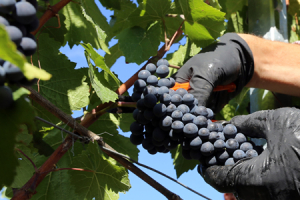
God’s Outrageous Generosity
(Matthew 20:1-16)
For many, the parable which Jesus tells in the Gospel today seems profoundly unjust. Why should those who have done little work get the same pay as those who worked all day?
Maybe the answer lies in the first reading for today: My ways are not your ways; my thoughts not your thoughts. So often in the scriptures, God seems to have a totally different way of approaching things to most of us.
The parable presents God as a landowner going out at five different times during the day to hire workers for his vineyard.
With the 6am workers he makes an agreement for one denarius for the day’s work - the usual daily wage for a labourer. The workers who come later are promised a ‘fair wage’. But when payment time comes, they get a full day’s pay even though some have worked only one hour!
Usually, the youngest and fittest would be hired first and older and weaker workers left till last. But God doesn’t seem too worried about what condition the workers are in or what time of day it is.
The last comers must have been delighted to have received their unexpected full day’s pay. For them, it was really a gift rather than a wage for time worked. The ‘early birds’ fell victim to ‘rising expectations’, thinking that they would get more.
In giving both early birds and late comers the same ‘wage’ the landowner has made them equals – all are equal beneficiaries of God’s gracious invitation to the Kingdom. And there is a place for everyone in that Kingdom, including those often left behind in the world – the poor, sick, old, disabled, etc.
Life in the Kingdom is not a reward for long hours of work. It is a gift – it cannot be earned, but is had by responding to God’s choice of us, no matter what condition we are in, whether we are an early bird or a late comer.
God’s kind of thinking and acting is often very different to human thinking and acting.
The parable can also be interpreted as a practical expression of how to love our neighbour – with generosity and compassion, without considering if they deserve our kindness or not – for the disciple of Jesus must think and act like God.
This parable fits right into the biblical idea of justice which is heavily biased in favour of the ‘have nots’ – the widows, orphans, poor, blind, lame, sinners, etc. No one is left out of the gaze of God’s care.
God’s outrageous and extravagant graciousness and generosity is so different to the often petty and exacting way in which we treat each other. God’s sense of fairness and justice is so much broader and richer than ours. That is what life in the Kingdom of God is supposed to be.
Like last Sunday, it is our awareness of God’s extraordinary kindness, patience and mercy which help us to act in the same way - to see with God’s eyes, to feel with God’s heart and to act with God’s intention.
- pdf Celebrating At Home - 25th Sunday in Ordinary Time [PDF](2.84 MB)
- default Celebrating At Home - 25th Sunday in Ordinary Time [ePub](2.23 MB)
- pdf Celebrando en Familia - 25 Domingo del Tiempo Ordinario(452 KB)
- pdf Celebrando in Casa - 25 Domenica del Tempo Ordinario(561 KB)
- pdf Celebrando em familia - 25 Domingo do Tempo Comum(560 KB)
Carmelite Nuns in Huesca Celebrate Elective Chapter
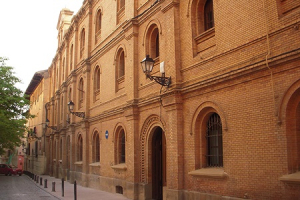
The Carmelite nuns of the monastery of Our Lady of the Assumption held their triennial elective Chapter on September 1, 2023.
The monastery was founded in 1656 by a Sr. Beatrice the Sheperd who brought nuns from the monastery of St. Michael, also in the town of Huesca. The monastery belongs to the Mater Unitatis Federation.
The results of the elective chapter were as follows:
Prioress | Priora | Priora:
Hna. Mª Jacinta Nthenya Wambua, O. Carm.
1st Councilor | 1ª Consejera | 1ª Consigliera:
Hna. Mª Anastacia Kavuu Kiswili, O. Carm.
2nd Councilor | 2ª Consejera | 2ª Consigliera:
Hna. Mª Inés Nthenya Nzyuko, O. Carm.
3rd Councilor | 3ª Consejera | 3ª Consigliera:
Hna. Mª Carmen Ibarra, O. Carm.
4th Councilor | 4ª Consejera | 4ª Consigliera:
Hna. Benedictar Mutiwa Nzuve, O. Carm.
Treasurer | Ecónoma | Economa
Hna. Inés Nthenya Nzyuko, O. Carm.
Formator | Formadora | Formatrice
Hna. Mª Anastacia Kavuu Kiswili, O. Carm.
Sacristan | Sacristana | Sacrestana
Hna. Mª Regina Mumbua Musyoka, O. Carm.
Activities of the Prior General for September 2023
01 - 07: Continuation of the Canonical Visitation in the Indonesian Province
05: Address via zoom to the meeting of the nuns of the Italian Federation, held in Sassone, on the theme of formation
08: Address via zoom to the gathering of members of the Northern European Region, held in Dublin on the theme of vocations in Europe
08-09: Mid-Chapter of the Indonesian Province, held in Malang
11 - 16: Rome time.
18 - 22: Chapter of the General Commissariat of Parana, held in Maringa.
26: Online course for new provincials offered by the General Council.
27-30: Rome time.
Relics of Titus Move the Philippine Church
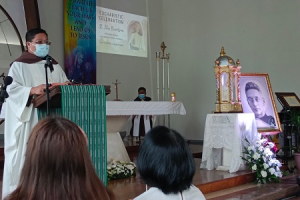
Since July 2022, the Carmelites in the Philippines have sponsored a yearlong pilgrimage of the relics of St. Titus Brandsma. The pilgrimage was the result of a decision of the previous provincial council to promote the life of the Carmelite saint to the people of the nation. The relics made more than 90 stops during the year. Although the designated year finished, dioceses are still contacting the province to ask for the relics to visit them.
Each Carmelite community has received a relic of St Titus from the postulator general’s office in Rome, allowing each to foster their own program of evangelization of St. Titus. The traveling relic is in a reliquary which in turn is inside an urn. The pilgrimage is self-sustaining. The cost of transportation as well as the cost for accommodations for those accompanying the relics
“The relics went from one parish to another, from one monastery to another, from one diocese to another, from one island to another,” said Fr. Esmeraldo Reforeal, O. Carm., the national coordinator of the tour. “We traveled by car, boat and plane.” Some remote chapels were included in the tour, enabling people without access to transportation to benefit from the relic visit.
The presence of the relic provided the faithful with far more opportunities to experience the faith than just praying before the relic. The program at each stop included a catechism, lectio divina on the life of St. Titus, a Mass of Welcome, the opportunity for confessions, a farewell Mass. Some stops made requests for a specific service and these were honored if possible. The relics were accompanied by a Carmelite and others to provide security for the relics as well as the religious services.
The final stop for the year was in the annual meeting of the Catholic Bishops Conference of the Philippines (CBCP). The bishops welcomed the idea of presenting Titus as a “truth-seeker” "truth-defender" and a “promoter of the truth.” The relic was also present at the annual meeting of the Conference of Major Superiors in the Philippines. The Carmelites were given time to present the story of St. Titus and spend time in prayer with the relics.
Feedback from the year long experience indicated that people were impressed and inspired by the life of St. Titus. This was also true among the students who were able to participate.
Causa Nostrae Laetitiae
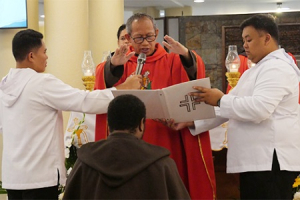
INITIUM NOVITIATUS
12-08-23 Teodorus Tonda (Indo-Est) Flores, Indonesia
12-08-23 Jilbertus F. Samo Langoarang (Indo-Est) Flores, Indonesia
12-08-23 Samuel Yulson Nitti (Indo-Est) Flores, Indonesia
12-08-23 Aloysius Sipa (Indo-Est) Flores, Indonesia
12-08-23 Gregorius Mahur (Indo-Est) Flores, Indonesia
12-08-23 Emanuel Roberto Carlos Ngaku (Indo-Est) Flores, Indonesia
12-08-23 Januarius Asa (Indo-Est) Flores, Indonesia
12-08-23 Andreas Konsili Ndoa (Indo-Est) Flores, Indonesia
12-08-23 Ignasius Alvedo Hasan (Indo-Est) Flores, Indonesia
12-08-23 Yohanes De Nggedu (Indo-Est) Flores, Indonesia
12-08-23 Agustinus Risno (Indo-Est) Flores, Indonesia
12-08-23 Yakobus Christianus Gado Tonda Bei (Indo-Est) Flores, Indonesia
12-08-23 Yohanes Paolus Kenedi (Indo-Est) Flores, Indonesia
12-08-23 Yoseph Yulius Wetu (Indo-Est) Flores, Indonesia
12-08-23 Yakobus Helianto Raymondo Djo (Indo-Est) Flores, Indonesia
12-08-23 Yohanes Samson Dapa Woda (Indo-Est) Flores, Indonesia
27-08-23 Abraham Anggelo Dulcis (Indo) Batu-Malang, Indonesia
27-08-23 Agustinus Bintang Kejora Teweng (Indo) Batu-Malang, Indonesia
27-08-23 Agustinus Herjuno Handhika Pradinta (Indo) Batu-Malang, Indonesia
27-08-23 Albert Sugendri Situmorang (Indo) Batu-Malang, Indonesia
27-08-23 Antonio Viko Ledang (Indo) Batu-Malang, Indonesia
27-08-23 Daniel Syahputra Giawa (Indo) Batu-Malang, Indonesia
27-08-23 Gomal Silalahi (Indo) Batu-Malang, Indonesia
27-08-23 John Horas Gregorius Rumapea (Indo) Batu-Malang, Indonesia
27-08-23 Michael Bagasmayo Kariadi (Indo) Batu-Malang, Indonesia
27-08-23 Rikialdus Albertus Longa (Indo) Batu-Malang, Indonesia
27-08-23 Rustam Hary Siholang (Indo) Batu-Malang, Indonesia
27-08-23 Supri Hadi Prima Marpaung (Indo) Batu-Malang, Indonesia
27-08-23 Vincentius Reyant Ekarista (Indo) Batu-Malang, Indonesia
27-08-23 Yohanes Paulus Noendi (Indo) Batu-Malang, Indonesia
PROFESSIO TEMPORANEA
16-08-23 Vinicius Alexandre Belger da Luz (Par) Florianópolis, Brazil
02-09-23 Maria Stefania di Gesù Misericordioso (CAR) Carpineto Romano, Italia
ORDINATIO DIACONALIS
02-09-23 Silvestre Alves (Aust-TL) Hera, Timor-Leste
ORDINATIO SACERDOTALIS
05-08-23 José Roberto Santos (Pern) Pacatuba, Brasil
19-08-23 José Edson da Silva (Pern) Primavera, Brasil
02-09-23 Amandio Soares Salsinha (Aust-TL) Hera, Timor-Leste
02-09-23 Narcizio Da Costa Vilanova (Aust-TL) Hera, Timor-Leste
07-09-23 Cornelius Danny Septian Pamungkas (Indo) Malang, Indonesia
07-09-23 Albertus Hamonangan Situmorang (Indo) Malang, Indonesia
07-09-23 Ignasius Anang Setia Darmanto (Indo) Malang, Indonesia
St. Albert of Jerusalem, Bishop and Lawgiver
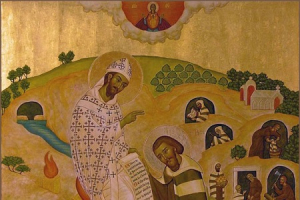
17 September Feast
Saint Albert was born towards the middle of the 12th century in Castel Gualtieri in Emilia, Italy. He entered the Canons Regular of the Holy Cross at Mortara, Pavia, and became prior there in 1180. In 1184, he was named bishop of Bobbio, and the following year he was transferred to Vercelli which he governed for twenty years.
Edizioni Carmelitane, the editorial house of the General Curia of Carmelite Order, has recently published Albert and His Rule, a book written by biblical scholar and Carmelite Michael Mulhall.
The Carmelites are one of a small handful of religious communities that can trace their origins back into the Middle Ages. The Rule that Carmelites continue to follow started with Albert, the patriarch of Jerusalem from 1206 to 1214. Some thirty-three years after Albert's death, Pope Innocent IV granted full recogntion of these Carmelites and to the Rule first written for them by Albert.
Albert's spirit still imbues the Rule. Over the years following his death three popes addressed themselves to these Carmelite hermits. Pope Honorius III acknowledged the fact that they had received their way of life from Albert, and consequently they need not fear a later prohibition against following their own unique Rule. Pope Gregory IX, who had befriended both St. Francis and St. Dominic, put the hermits under his personal protection. Lastly, Pope Innocent IV authorized two Dominicans to help bring all their changes together into one text. It is this text that we read today as the Carmelite Rule.
The book Albert and His Rule attempts to retrieve the mindset that first enlivened and held together the vision that Albert fashioned for them. lt is this originai spirit that Albert and His Rule attempts to retrieve.
Visit the New Official Website of Edizioni Carmelitane
Celebrating At Home - 24th Sunday in Ordinary Time

A Family Formed by Forgiveness - Part 2
(Matthew 18:21-35)
Today’s Gospel follows directly from last Sunday’s reading about how to deal with differences and disputes.
Peter has understood the point of last Sunday’s Gospel (forgiveness and pastoral care), but wants to know the limits – is forgiving someone seven times enough? Jesus’ reply indicates that there should be no limit to the number of times. Then he tells a parable about forgiveness and gratitude.
There is no doubt that genuine forgiveness, forgiveness ‘from the heart’, is a real challenge. The more personally we are hurt by another person the harder it is to forgive them. Forgiveness is often more a movement than a moment. Often we only come to forgiveness step by step over a long period of time.
If we can pray for those who hurt us we have already taken the first step on the road to forgiveness. Forgiveness does not imply that what a person did was OK.
The biblical idea of forgiveness is built on the awareness of God’s extraordinary compassion towards us; God’s refusal to hold our past against us - the theme of today’s first reading.
But that action of God must find its resonance in how we behave towards each other. It will only have that resonance when we experience personally God’s overwhelming love for us. That is what binds us into relationship with God and into acting towards others as God has acted towards us.
That experience of God’s compassion builds a gratitude in us which enables us to forgive each other.
For the disciple of Jesus, forgiveness must be real and genuine - from the heart - and built on the awareness of God’s compassion and mercy towards us. That is why Jesus includes forgive us our debts as we have forgiven those who are in debt to us in his great prayer. If God has forgiven us, then we must forgive each other.
We don’t live our Christian lives in some kind of fantasy-land filled with pious thoughts and lovely dreams. We live it in the often harsh realities and difficult situations that human beings encounter.
How we live it will depend on the degree to which we have the same mind and heart as God.
Real life is the proving-ground of faith.
- pdf Celebrating At Home - 24th Sunday in Ordinary Time [PDF](2.81 MB)
- default Celebrating At Home - 24th Sunday in Ordinary Time [ePub](1.79 MB)
- pdf Celebrando en Familia - 24 Domingo del Tiempo Ordinario(446 KB)
- pdf Celebrando in Casa - 24 Domenica del Tempo Ordinario(448 KB)
- pdf Celebrando em familia - 24 Domingo do Tempo Comum(448 KB)
Laudato Si’ Part 2 Being Written

Speaking to lawyers from the member countries of the Council of Europe, Pope Francis mentioned that he was writing a second part to the Laudato Si’ encyclical that was released on Pentecost in May 2015. The pope feels it necessary to update the encyclical because of “current issues.” The pope expressed his gratitude to the lawyers for their work in developing a legal frameword to protect the environment.
"We must never forget that the younger generations have the right to receive a beautiful and livable world from us, and that this implies that we have a grave responsibility towards creation which we have received from the generous hands of God,” said the Pope. “Thank you for your contribution."
Matteo Bruni, the director of the Holy See Press Office, later explained that the Laudato si version 2 will focus on the most recent extreme weather events and catastrophes affecting people across five continents.
New Foundation of Carmelite Nuns in Kenya
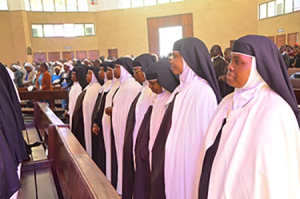
The Carmelite Monastery of Our Lady of Protection Museve Shrine was officially opened on September 1, 2023. The Rt. Rev. Joseph Mwongela, bishop of Diocese of Kitui, conducted the ceremony.
According to the sisters who took part, "The celebration was very joyous and colorful." Some 500 people were in attendance to witness the new growth of Carmel in Africa.
Also participating was the General Delegate for Kenya, Patrick Musyimi, O. Carm., as well as other members of the community and lay Carmelites.
Six of the nuns from Machakos will make up the new community: Sr. Margarita de Cristo Rey, O. Carm.; Sr. Mary Grace Mumbi, O. Carm.; Sr. Mary Leho Raissa, O. Carm.; Sr. Mary Lucy Nthule, O. Carm.; Sr. Mary Veronica Muthini, O. Carm.; Sr. Mary Lucy Munyiva, O. Carm.
Meeting for Formators of the Americas
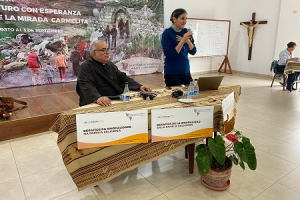
From the General Councilor for the Americas
FOCAM - Meeting for Carmelite Formators of the Americas -- Embracing the Future with Hope from a Carmelite Perspective
A meeting of FOCAM (Carmelite Formation in the Americas) was held from August 27 to September 3 in the Villa Carmelitas retreat house in Lurín, Perú. Friars, sisters and laity from Argentina, Bolivia, Brazil, Colombia, the United States, El Salvador, Peru, the Dominican Republic, Trinidad and Tobago, and Venezuela participated.
It was a week with much reflection, prayer and fraternity. The different themes developed invited and challenged us to meet as Carmelite Family, as Church, after the whole experience of the pandemic. It was a time of God, where friars, religious and laity turned their gaze to God from the Carmelite experience already initiated through the virtual meetings.
The motto of this meeting, "Embracing the Future with Hope from the Carmelite Point of View," simply reflects the desire of the heart to meet God, living the present and projecting towards the future.
At the end of the meeting we were able to confirm that what was planned was developed with a good dynamic and pedagogy helped by the following speakers: Marlom Francis, O. Carm. Prov. Fluminense; Vagner Sanagiatto, O. Carm., Commissariat of Paraná; Benny Phang, O. Carm., General Curia; Sister Liliana Franco Echeverri, ODN, president of CLAR and Licentiate Daniela Emmerich.
"We thank all the brothers and sisters who participated in this meeting of the Carmelite Family of the Americas. It was basically an experience of synodality, as our sister Liliana reminded us," said Luis Maza, General Councilor for the Americas.
There was great appreciation for the Secretariat of the Americas guidance in this FOCAM gathering. "We also thank God for the hospitality of the Carmelites of Peru. See you in Brazil in 2026," concluded Maza.