












O.Carm
JPIC Webinar on "Common Good, Common Home"
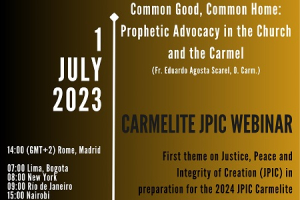
On July 1, 2023, (2 pm Central Europe) the Carmelite JPIC Webinar will take place with the theme "Common Good, Common Home. Prophetic Advocacy in the Church and the Carmel".
The webinar is organized by Fr. Eduardo Agosta Scarel, O. Carm, who is the Advocacy Senior Advisor for the Laudato Si’ Movement (Vatican City) and a Climate Researcher for the National Research and Technique Council (CONICET, Argentina).
Eduardo is an expert in climate variability with more than 20 years of experience in climate research and its impacts on different regions of the planet.
The General Commission for Justice, Peace and Integrity of Creation (JPIC) of the Carmelite Order serves under the direction of the responsible and General Councillor for Africa, Fr. Conrad Mutizamhepo, O.Carm. and all its members, with the international community through the Carmelite NGO at the United Nations and with the other NGOs within the Carmelite Family towards the promotion of the Sustainable Development Goals in Carmelite ministries worldwide especially in the areas of education, religious freedom and human rights, among other aspects contained in the Global Plan of the General Council 2019-2025.
"Common Good, Common Home. Prophetic advocacy in the Church and the Carmel". First theme on Justice, Peace, and Integrity of Creation (JPIC) in preparation for the 2024 JPIC Carmelite Family Congress.1 July 2023, 2 pm CET
9th General Chapter of the Carmelite Sisters of Our Lady
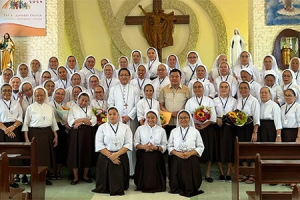
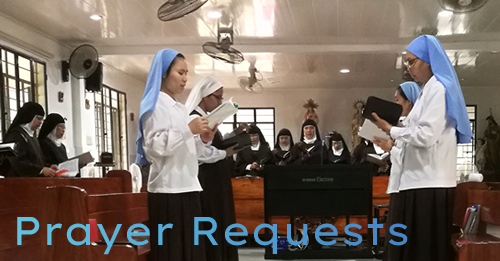
The Carmelite Sisters of Our Lady gathered for their Ninth General Chapter to discern the will of God for the Congregation for the next four years. The momentous celebration took place at St. Joseph Seminary College in Agan-an, Sibulan, Negros Oriental, Philippines on April 11-19, 2023.
The theme of the Chapter, “You are the Salt of the Earth and Light of the World” taken from Matthew 5:13-14 underscores the congregations unique calling to be agents of change in a world that hungers for love and light. As a Congregation, they seek to embody the love of Christ in a special way and are committed to be the light in the world.
At the General Chapter of Elections, the following were elected for the next quadrennium:
Superior General –
Sr. Baybeth Marie K. Andaya, Carm. O. L.
1st General Councilor and General Assistant –
Sr. Jocelinda Agnes C. Cacas, Carm. O. L.
2nd General Councilor –
Sr. Leonila Augustine N. Kilinguen, Carm. O. L.
3rd General Councilor and General Treasurer –
Sr. Liezl Soreth B. Jaralve, Carm. O. L.
4th General Councilor and General Secretary –
Sr. Elena Therese T. Soldivillo, Carm. O. L.
Celebrating At Home - 11th Sunday In Ordinary Time

Growing disciples
(Matthew 9:36-10:8)
To these twelve Jesus entrusts the mission of proclaiming that the kingdom of God is close at hand.
This is not an ‘end of the world’ prediction. We could better translate it as: the kingdom of God is very close to you. To a people who had constantly been told that God despised them, that they were sinners and very far from the kingdom of God, this was good news indeed.
Jesus gives the disciples the authority to accompany the proclamation of the Good News with the healing of ‘all kinds of diseases and sickness’ to break the idea that illness (in whatever form) was a curse sent by God or punishment for sinfulness. Instead, the disciples are to be a sign of God’s kindness which brings health and wholeness. The proclamation of the Good News is always to be done generously and without counting the cost.
Through the words of the Gospel may we hear again our own call to be emissaries of God’s love and bearers of Good News. May we allow the kindness and compassion of God to touch one another through us.
- pdf Celebrating At Home - 11th Sunday In Ordinary Time [PDF](3.07 MB)
- default Celebrating At Home - 11th Sunday In Ordinary Time [ePub](4.49 MB)
- pdf Celebrando en Familia - XI Domingo del Tiempo ordinario(472 KB)
- pdf Celebrando in Casa - XI Domenica del Tempo Ordinario(470 KB)
- pdf Celebrando em familia - 11 Domingo do Tempo Comum(473 KB)
Neapolitan Province Chapter Held
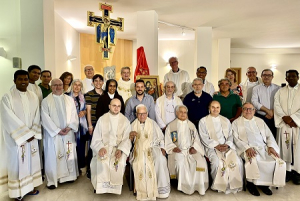
During the Provincial Chapter of the Neapolitan Province, which is being held from June 12 to 16, 2023 in Bari at Oasi Francescana De Lilla - St. Francis of Assisi Spirituality House, the election of the New Provincial Council was held, which saw the reappointment, as Prior Provincial, of Fr. Cosimo Pagliara.
The Prior General, Míceál O'Neill, and the General Councilor for Europe, Richard Byrne participated.
For the first time the election was held in the presence of a representation of the Third Order, the various lay groups and the youth belonging to our Carmelite Family, who have been active members of the Chapter in all its phases.
The following members were elected to leadership:
+ + +
Provincial | Provincial | Provinciale
Cosimo Pagliara, O. Carm.
1st Councilor | 1er Consejero | 1o Consigliere
Nicola Barbarello, O. Carm.
2nd Councilor | 2do Consejero | 2o Consigliere
Aureliano Pacciolla, O. Carm.
3rd Councilor | 3er Consejero | 3o Consigliere
Angelo De Florio, O. Carm.
4th Councilor | 4to Consejero | 4o Consigliere
Milosz Mazewski, O. Carm.
Recent Appointments of the General Council
During the plenary session of the General Council held from May 30 to June 9, 2023, the General Council appointed:
Editorial Members of Carmel in the World Magazine
Editor: Patrick J. Breen
Members: Charlò Camilleri, O. Carm (Mel); Conrad Mutizamhepo, O. Carm.; Johan Bergstrom Allen, T.O. Carm. (Brit); Marc Jozsef Lester G. Hallig, O. Carm (Phil); Sanny Bruijns, O. Carm (Neer); Simon Nolan, O. Carm (Hib)
General Commission for Safeguarding Minors and Vulnerable Adults
Chair: Michael Farrugia, O. Carm.
Members: Ms. Julie McCullough (Hib); Ms. Julie Courtney (Brit); Quinn Conners, O. Carm (PCM); Babu Payikattu, O. Carm (Ind)
Well Attended May Recital Series at Whitefriars Street
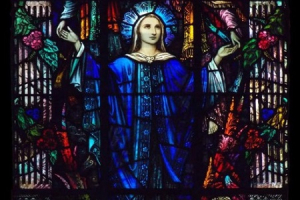
The Carmelite Church at Whitefriar Street, Dublin ran a very successful recital series on the Sunday evenings of May, featuring the church’s famous Kenneth Jones pipe organ, one of the very best in Ireland.
According to the Prior of Whitefriar Street, Fr Simon Nolan, O. Carm., attendance was extremely good, well up on numbers attending before the pandemic. Organists from both the Catholic and Anglican cathedrals were among those who played. Being the month of May, recitals featured organ music and plainchant (sung by members of Dublin’s Palestrina Choir) in honor of the Blessed Virgin Mary.
The final recital of the series included one fairly unique element, combining as it did music and the visual arts. Of Russian, French, and German background, Aleksandr Nisse is organist of Dublin’s Catholic cathedral and the leading practitioner in Ireland of the art of organ extemporization in the French School. During his recital, on May 28, he improvised a set of meditations on Whitefriar Street Church's four windows, depicting the Life of the Blessed Virgin Mary, by the renowned Irish stained glass artist, William Earley (1872-1956). The windows, in turn, depict: The Annunciation, The Visitation, The Nativity, and The Assumption.
Call for research grant in memory of Fr. Emanuele Boaga
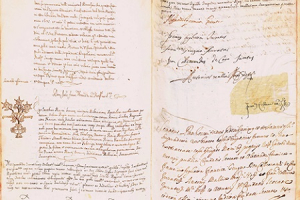
Research grant in memory of Fr. Emanuele Boaga, O. Carm. - Seventh Edition (2023)
As it does every year, the General Archives of the Carmelite Order has announced a selection for the award of a research grant, named in memory of Fr. Emanuele Boaga, O. Carm., who was the general archivist of the Order for about thirty years.
Projects should focus on historical, religious, philological or archival research, starting with an analysis of the documentary heritage preserved in our Archives. The goal is to produce a scientific paper on the basis of the studies carried out (article, monograph, edition of sources, inventory, etc.), which will be considered for publication with Carmelite Editions.
The deadline for submission of applications is August 3, 2023.
For more information, please refer to the Archives' website: https://archivioocarm.com/assegno-di-ricerca-alla-memoria-di-p-emanuele-boaga-o-carm-settima-edizione-2023/
St. Titus memorial approved as obligatory
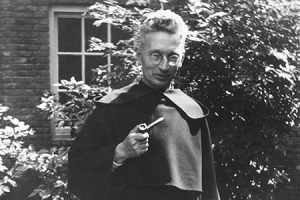
The Order’s petition to have the celebration of St. Titus Brandsma changed from an optional memorial to an obligatory memorial for the whole Order. The Dicastery for Divine Worship and the Discipline of the Sacraments notified the Order by letter on May 25, 2023. The liturgical celebration is July 27.
The Provinces of Germany and the Philippines as well as the General Delegation in Columbia who have St. Titus as their patron will celebrate the day as a feast.
St. Titus Brandsma was canonized by Pope Francis on May 15, 2022, in St. Peter’s Square along with nine other blessed. He was killed by lethal injection in the “hospital” of the Dachau concentration camp on July 26, 1942.
Celebrating At Home - Body and Blood of Christ
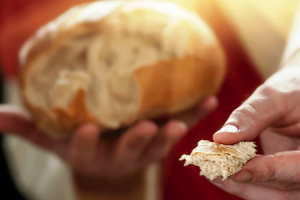
The real presence of Jesus in us
(John 6:51-58)
- pdf Celebrating At Home - Body and Blood of Christ [PDF](2.84 MB)
- default Celebrating At Home - Body and Blood of Christ [ePub](2.73 MB)
- pdf Celebrando en Familia - El Santísimo Cuerpo y Sangre de Cristo(279 KB)
- pdf Celebrando in Casa - Santissimo Corpo e Sangue di Cristo(282 KB)
- pdf Celebrando em familia - O Santíssimo Corpo e Sangue de Cristo(290 KB)
Activities of the Prior General in June
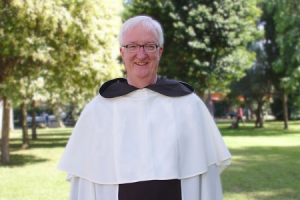
JUNE 2023
Activities of the Prior General
May 28 – June 9: General Council Plenary Meeting
June 6: Meeting with the Council of the Italian Federation of
June 7: Attend reception at the French embassy to the Holy See to
June 9: Attend Carmelite Archive’s event: Travelogues of the 17th
June 10: Bi-annual meeting of OCarm. and OCD. General Councils at
June 12-16: Chapter of the Neapolitan province in Bari
June 20-23: The Chapter of the PCM Province in Darien