


O.Carm
Elective Chapter of the Monastery in Córdoba, Spain
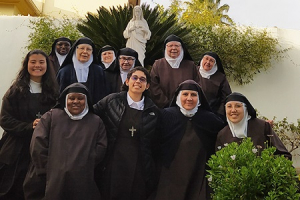
On February 7, the Monastery Sagrado Corazón y San Titus Brandsma, in Córdoba, Spain, held its elective chapter.
This monastery was founded in 1985 by the Federation "Mater et Decor Carmeli" of the Betica Province of Spain. From its foundation it is intended to be the Federal House, providing a common formation program at the service of all the monasteries of the Federation. It is the seat of the Federal President and is the seat of courses of Initial and Permanent Formation.
The results of the elective chapter were as follows:
Prioress | Priora | Priora:
Sor Reinhild Maschke, O. Carm.
1st Councilor | 1ª Consejera | 1ª Consigliera:
Sor Ma Dolores Dominguez Pérez, O. Carm.
2nd Councilor | 2ª Consejera | 2ª Consigliera:
Sor Ma Belén Garrido Garrido, O. Carm.
Formator | Formadora | Formatrice:
Sor Ma Dolores Dominguez Pérez, O. Carm.
Treasurer | Ecónoma | Economa:
Sor Ma Belén Garrido Garrido, O. Carm.
Sacristan| Sacristana | Sacrestana:
Sor Anastasia Katungwa Makua, O. Carm.
Celebrating At Home - 6th Sunday in Ordinary Time
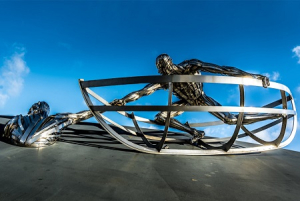
Excessive generosity
(Matthew 5:17-37)
In the Jewish tradition, guidance about how to be at rights with God and neighbour is found in the Torah, the teaching contained in the fi rst fi ve books of the Hebrew Scriptures (Old Testament).
It is especially important for St Matthew, writing his Gospel for Jewish believers, to show that Jesus is not opposed to Jewish teachings and traditions. He has not come to abolish the Law or the Prophets, but to complete or fulfi l them.
But for Jesus it is not enough to follow these teachings only in external actions. The path that Jesus is calling his disciples to is a path of thorough-going transformation from within.
The short version of this Sunday’s Gospel begins with, ‘I tell you, if your virtue goes no deeper than that of the scribes and Pharisees, you will never get into the kingdom of heaven.’ Those listening to Jesus would have been deeply shocked by these words. The scribes and Pharisees were considered the righteous ones – those who stood most chance of getting into heaven. They were expert practitioners of the Law. But Jesus is calling his disciples to a more abundant righteousness. He takes traditional interpretations of biblical teachings and corrects and extends them in a more generous interpretation.
A number of examples in today’s Gospel reading serve to make the point. As always, Jesus’ words go to the heart and from there address issue. For example: it is not enough to be able to say, ‘I have kept the commandment not to kill’. What about the anger in your heart that gives rise to a whole raft of insults, bitterness and injury against another person?
Virtue and righteousness are about being in right relationship with God and others. It is not about looking good on the outside, fulfi lling the ‘letter of the Law’, but about being good on the inside; having the right attitude of heart so as to be in right relationship with God and neighbour. Such an attitude of heart will manifest itself in generous life-giving actions that make the world safe for others.
True Christian virtue always goes beyond merely what is required and always mirrors the excessive generosity of God.
- pdf Celebrating At Home - 6th Sunday in Ordinary Time [PDF](5.54 MB)
- default Celebrating At Home - 6th Sunday in Ordinary Time [ePub](4.14 MB)
- pdf Celebrando en Familia - Sexto Domingo del Tiempo Ordinario(506 KB)
- pdf Celebrando in Casa - VI Domenica del Tempo Ordinario(508 KB)
- pdf Celebrando em familia - 6 Domingo do Tempo Comum(508 KB)
Vitam Coelo Reddiderunt
|
Ortus |
P. Temp |
P. Soll. |
Ord. |
|
|
31-12-22 |
|
|
|
|
|
13-01-23 |
|
|
|
|
|
16-01-23 |
|
|
|
|
|
21-01-23 |
|
|
|
|
|
02-02-23 |
|
|
|
|
|
05-02-23 |
|
|
|
|
Online Seminar on Spirituality in a Post-Truth Society
Online Seminar
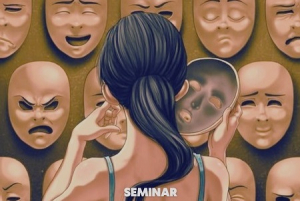
Spirituality in a Post-Truth Society
André P. DeBattista
In 2016, the Oxford Dictionary chose ‘post-truth’ as its international word of the year. It defined it as an adjective “relating to or denoting circumstances in which objective facts are less influential in shaping public opinion than appeals to emotion and personal belief”. Since then, this phrase has often been used in relation to populist politics. Nonetheless, the same description can be extended to woke trends. Information is now weaponised by different entities in order to manipulate public opinion and political outcomes.
These situations challenge Christians. How can the Christian – who believes that Christ is the “way, the truth, and the life” – live coherently in a world which recognizes no truth, but, rather, a multiplicity of “truths”? How can the Christian witness to the truth in a post-truth age? How should Christians react to populist and woke ideologies? After defining the salient points of the ‘post-truth’ society, this seminar will seek to address some of the above questions.
***
Programme
Friday 10 February 2023 – from 06:00 p.m. to 08:00 p.m.
Saturday 11 February 2023 — from 09:30 a.m. to 12:30 p.m.
Venue
Online via Zoom.
How to Register
Send an email to Esta dirección de correo electrónico está siendo protegida contra los robots de spam. Necesita tener JavaScript habilitado para poder verlo.
Payment
The seminar is being organized free of charge; however, if you wish to donate, you may do so:
(1) via bank transfer to our account [IBAN] MT 28 VALL 2201 3000 0000 400 1797 9621 [beneficiary "Carmelite Institute"]
(2) by cheque addressed to "Carmelite Institute" for amounts greater than €20 (as per directive n. 19 issued by the Central Bank of Malta)
Celebrating At Home - 5th Sunday in Ordinary Time
Vulnerable risk-takers
(Matthew 5:13-16)
Last Sunday, in the ‘Beatitudes’, Jesus called his disciples to be vulnerable risk-takers in the way they lived their lives.
Continuing the Sermon on the Mount this week, Jesus goes on to say that if they live this way, they will be like the salt that transforms the fl avour of food and the light that transforms the darkness.
Undertaking this path of transformation produces the fl avour and light of good works which lift burdens from our fellow human beings, not for the praise of the disciple but for the praise to God. In this way, these good works draw others into the circle of God’s friendship and the experience of the kingdom.
Disciples walk the path of vulnerability and risk in order to help lift burdens from human beings; to make the world safe for their brothers and sisters.
These good, life-giving actions towards our fellow human beings restore life, heal relationships and seek peace and justice.
This non-aggressive, non-grasping, non-competitive stance towards one another would hardly be described by many in today’s world as the way to a successful life. It is a real challenge to live by the Gospel in a world which fawns over and celebrates wealth, power, aggression, status and deceptive and combative behaviour. We, too, can be easily seduced.
We need to be bold and brave in our care for one another, like a light-fi lled city on a hilltop.
So, can we run the risk of being poor in spirit, gentle, a peacemaker, working for what is right, being merciful, or persecuted in the cause of right? Can we be vulnerable risk-takers?
As always, the fi rst reading (see back page) provides an introduction to the Gospel text. The reading from Isaiah (58:7-10) gives some very practical examples of good works: share your bread with the hungry, clothe the naked, look after your family members. Then ‘your light will shine’. Integrity will be yours and God will walk with you. ‘If you do away with the angry word and the clenched fi st, feed the hungry, give relief to the oppressed, your light will rise in the darkness and your shadows become like noon.’
A great ‘setting of the scene’ for the Gospel!
- pdf Celebrating At Home - 5th Sunday in Ordinary Time [PDF](5.49 MB)
- default Celebrating At Home - 5th Sunday in Ordinary Time [ePub](4.27 MB)
- pdf Celebrando en Familia - Quinto Domingo del Tiempo Ordinario(482 KB)
- pdf Celebrando in Casa - V Domenica del Tempo Ordinario(484 KB)
- pdf Celebrando em familia - 5 Domingo do Tempo Comum(336 KB)
Bl. Candelaria of St. Joseph, Virgin
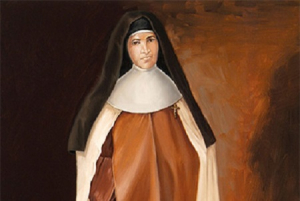
On February 1, the Carmelite Order celebrates Blessed Candelaria of St. Joseph. The day is celebrated as an optional memorial in Latin America.
Blessed Candelaria was born Susana Paz-Castillo Ramírez in 1863. She enthusiastically welcomed the call of God to holiness, and since her youth, stood out in practicing living and effective charity, with which she cared for, consoled and healed the sick and wounded that strife had left on the streets of her birth city.
Lectio Divina February 2023
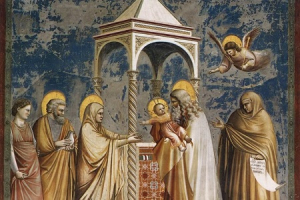
Lord our God,
help us to love You with all our hearts and to love all people as You love them.
We ask this through our Lord Jesus Christ, Your Son, who lives and reigns with You and the Holy Spirit, one God, for ever and ever. Amen
Provincial Chapter of the Rio Province in Brasil
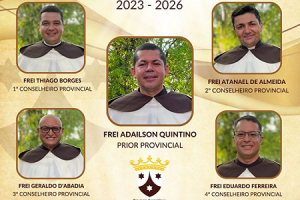
The members of the Province of Fluminis Januarii held their chapter from January 23-27, 2023, in the retreat house of São Carlos a Jundiá in São Paolo, Brasil.
The theme of the gathering was “Carmel –a Passion for God, for Humanity, and for the Brotherhood—in a World in Transformation.” Fraternity and mission were key themes of the Chapter.
The province was founded by Carmelites from Portugal. In 1595 the vice-province of Brazil was erected, consisting of four houses: Olinda (1583), Bahia (1586), Santos (1589) and Rio de Janeiro (1590). In 1720, the province was erected from the vice-province of “Estado do Brasil,” being separated from Bahia-Pernambuco.
Because of the political situation, most of the houses belonging to religious orders in Brazil were forced to close in the 19th century. However, from 1894 the Spanish Carmelites came to restore the province. In 1904 the Dutch Province undertook the restoration. Having reunited with the Province of Bahia for a decade, the Fluminis Januarii Province was re-established in 1962 and placed under the protection of St. Elias the Prophet.
During the Chapter the following were elected to leadership:
Prior Provincial | Prior Provincial | Priore Provinciale:
Frei Adailson Quintino, O. Carm.
1st Councilor | 1er Consejero | 1° Consigliere:
Frei Thiago Borges, O. Carm.
2nd Councilor | 2do Consejero | 2° Consigliere:
Frei Atanael de Almeuda, O. Carm.
3rd Councilor | 3er Consejero | 3° Consigliere:
Frei Geraldo D'Abadia, O. Carm.
4th Councilor | 4to Consejero | 4° Consigliere:
Frei Eduardo Ferreira, O. Carm.
Memorial of Blessed Archangela Girlani, Virgin
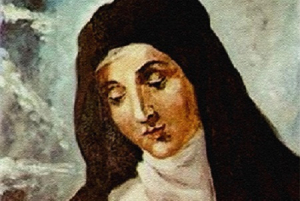
29 January Optional Memorial in the Italian Provinces
Born Eleonora, she was born in 1460 in Trino in the Marquisate of Monferrato.
It is written in an old manuscript that Blessed Archangela lived her religious life so intensely that, just as the monastery was entitled "Saint Mary in Paradise", she and the other nuns, even though still here on earth, lived as if already absorbed into heaven.
Prayer*
Father in heaven,
you gave the virgin Blessed Archangela Girlani
particular dedication to the mystery of the eternal Trinity.
Through her prayers
may we taste the delights of your glory
already here on earth,
and look upon you for ever in heaven.
We ask this through Christ, our Lord.
*Texts taken from the “Carmelite Proper of the Liturgy of the Hours,” Institutum Carmelitanum, Rome: 1993.
Celebrating At Home - 4th Sunday in Ordinary Time
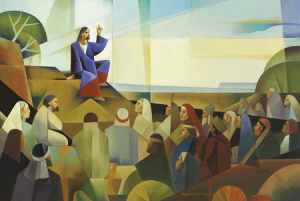
Catching the vision
(Matthew 5:1-12)
Last Sunday’s Gospel introduced the beginning of Jesus’ ministry in Galilee, his call to repentance, the choice of some disciples and the spread of his fame.
Now, over the next four Sundays, the church will take us on a journey through Jesus’ teaching in Chapters 5-7 of Matthew’s Gospel. These chapters form the Sermon on the Mount. Each Sunday’s Gospel builds on the one before – they are part of this first discourse in Matthew’s Gospel and need to be understood in a connected sense, not as a series of isolated sayings.
The text we know as the ‘Beatitudes’ introduces Jesus’ teaching about the kingdom, discipleship, the true meaning of the Law and true righteousness (virtue), interior disposition of the heart against external fulfilment of Law, trust in God and keeping the Kingdom as the focus of the disciple’s life.
Matthew’s beatitudes have been understood as a pattern of life for the follower of Jesus. Put in the context of Jesus’ call to conversion (the idea of radical change and transformation), those willing to be transformed will enjoy the blessings of the kingdom as their reward.
To be ‘poor in spirit’, to experience sadness (‘mourn’) because of the present state of affairs, to be gentle and unselfish rather than on the make, to have a passionate commitment to justice, to exercise mercy instead of taking advantage, to be ‘pure in heart’, to be ‘peacemakers’, to endure persecution and calumny for the sake of the right way of life (‘righteousness’) and allegiance to Christ: all these things make one vulnerable here and now, entailing much loss. The vulnerable make the world safe for humanity.*
For those who live according to the heart of God as Jesus reveals it, the blessings of the Kingdom will be theirs, their place in the household of God will be assured and they will be making the world a safe place for their brothers and sisters.
*Byrne, Brendan, Lifting the Burden: reading Matthew’s Gospel in the Church Today. St Pauls, 2004, pp55-57
- pdf Celebrating At Home - 4th Sunday in Ordinary Time [PDF](5.50 MB)
- default Celebrating At Home - 4th Sunday in Ordinary Time [ePub](4.36 MB)
- pdf Celebrando en Familia - Cuarto Domingo del Tiempo Ordinario(673 KB)
- pdf Celebrando in Casa - IV Domenica del Tempo Ordinario(501 KB)
- pdf Celebrando em familia - 4 Domingo do Tempo Comum(502 KB)