







O.Carm
How Do You Spend Free Days at a General Chapter?
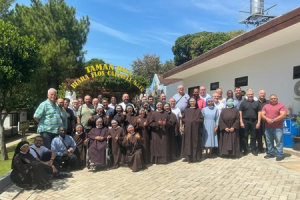
Many of those attending the recently concluded General Chapter in Malang, Indonesia, found themselves with a bit of time to explore the area. Some arrived a few days in advance to adjust to the time difference. Most took part in the scheduled Sunday free day at the end of the first week. All the excursions involved meals at local restaurants, courtesy of donors to the Indonesian province.
Those who arrived early were treated to a walking tour of Tumpang Valley with its Javenese statues and Koi fishponds on Saturday, September 6. Following that members took a journey up the mountain to the province’s retreat house—Carmel Mount of Peace—where they were again treated to a wonderful meal prepared by the sisters. While they ate, they enjoyed the incredible views.
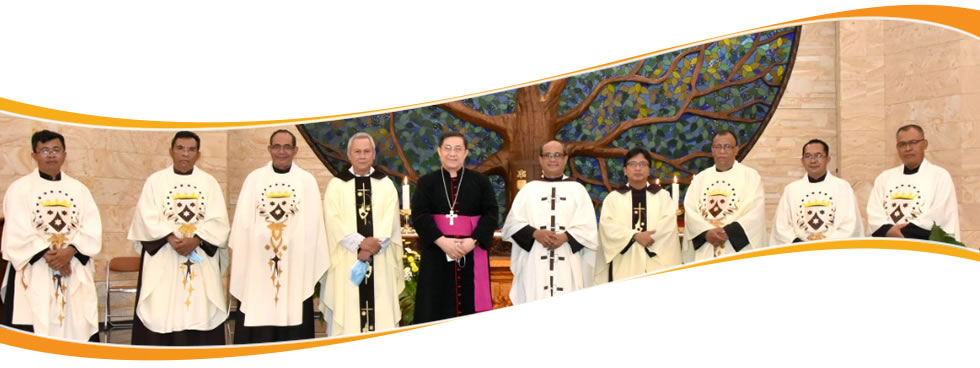
The majority departed a few hours later for the monastery of Carmelite nuns in Batu. We then crossed the street to the Carmelite parish where Carmelite Bishop Henricus Pidyardo had just finished confirmation and was now with the parishioners celebrating the 90th anniversary of the parish. The Chapter members were invited to join in. This was followed by a short drive to the Carmelite novitiate in Batu with Mass and lunch together with the community.
Then it was off to the East Java Park and the Batu Secret Zoo. The group’s fascination with the animals could not overcome the heat and humidity (and perhaps jet lag for some) so most of the group waited on the steps while a few hearty souls ventured into the museum section of the zoo. This was followed by a welcome meal and drinks at a local restaurant owned by supporters of the Order in Indonesia.
On Sunday, September 13, a few members set out to celebrate Mass with the residents of the Indonesian province’s House of Mercy, a residence in Batu for elderly who have no family to take care of them. Two buses departed a few hours later with the other members to visit some of the cultural-historical sites of Malang and the Carmelites. Among these was the Cathedral of Our Lady of Mount Carmel where the closing Mass and signing of the Acts of the Chapter would be held, the original Carmelite church in Malang, and the original dwelling of the Carmelites when they arrived from the Netherlands over 100 years ago. That building is currently being remodeled to hold the provincial offices and living quarters fo the Indonesian province.
But probably the highlight for everyone was the group’s experience at the Kolumbarium—a multi-purpose facility of the province. Visitors toured the guest house, the residence for the Carmelites stationed on the property, a museum of the province, a chapel containing the tomb of Bishop Franciscus Hadisumarta, O. Carm., and several areas dedicated to reserving the ashes of deceased Catholics as well as many of the members of the province. It provides a lot of open space and has become a popular spot for families to come and spend part of the day.
But it was when the Carmelite students as well as members of the St Albert’s Senior School community performed a Balinese dance based on the ancient Indian epic of Ramayana, that all the beauty of the Indonesian culture— its sounds, colors, and dance—came together. The epic of Ramayana narrates the life of Rama, the seventh avatar of the Hindu deity Vishnu, who is a prince of Ayodhya in the kingdom of Kosala. The epic follows his 14-year exile to the forest urged by his father on the request of Rama’s stepmother. His travels across the forests in the Indian subcontinent with his wife Sinta and brother; the kidnapping of Sinta by the king of Lanka; and Rama’s eventual return to Ayodhya along with Sinta to be crowned as a king amidst jubilation and celebration.
The master of ceremony for the show was Dimas Pele Alu, a member of the province’s formation team and well-known performer. Dimas introduced the characters and action of the epic in a humorous fashion and in a variety of languages. There were many references to the action parallelling religious life. All the hard work of the performers and musicians made for a memorable experience for the Chapter members. The evening concluded with a buffet dinner at a local restaurant which afforded some of the braver souls in the group to perform with the local band.
On Saturday, September 27, following the Chapter’s conclusion, those members flying out in subsequent days adjourned to the main house of the Hermanas Carmelitas de Oriuela in Malang for a lunch of local dishes and a bit of singing and dancing.
Final Words of the Prior General to the Chapter
At the conclusion of the Chapter, the members of the General Chapter gathered in the Hall to hear from the Prior General, Desiderio García Martínez, as he addressed the group on his reflections of the Chapter and the road ahead for the Order.
In his message, Fr. Desiderio reflects on his role as a "service of love to God, to the Church, and to the Carmelite Order", rooted in the Carmelite tradition of contemplation and fraternity. Inspired by his spiritual mentors and the wisdom of Carmelite mystics, he emphasizes that love must guide all aspects of life—prayer, service, and community—and calls for renewed focus on formation and devotion to Mary as foundations of the interior life.
He shares four key insights from the General Chapter: the need to let God lead through contemplation; the balance of prayer and action, as symbolized by Martha and Mary; the importance of authentic community life; and the mission to bring hope to the world through compassionate evangelisation. He concludes by highlighting the Eucharist as central to Carmelite identity and invites the Order to deepen its life of communion, service, and spiritual renewal.
Prior General Meets Apostolic Nuncio in Indonesia
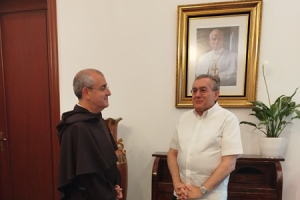
Meeting between the Prior General, Desiderio García Martínez, O. Carm., and the Apostolic Nuncio of the Holy See in Indonesia
The Prior General, Desiderio García Martínez, met on September 27 in Jakarta, at the end of our General Chapter (Malang, September 9-26, 2025), with His Excellency Monsignor Piero Pioppo, Apostolic Nuncio of the Holy See in Indonesia and to the Association of Southeast Asian Nations (ASEAN). He was accompanied on the visit by Ignatius Budiono, O. Carm., and Stanislaus Lirmanjayasastra, O. Carm.
Archbishop Pioppo informed us that the Holy Father, after eight years in Indonesia, has appointed him Apostolic Nuncio to Spain and the Principality of Andorra. He confessed his admiration for the Spanish people and culture, as well as for Carmelite spirituality, which has helped and continues to support the Church so much. The Nuncio was interested in the career of the new Prior General and in how the General Chapter had gone. He congratulated us on the courage of the Order in daring to hold it in the East.
The Prior General explained the theme of the Chapter, the current challenges facing religious life, the significance of the Carmelite charism for the Church and the world, the expansion of our Order in Asia, the challenge of the Christian family and the associated pastoral care of vocations, how our charism is a word of hope for the suffering of the innocent, etc. He then informed him of the members of the new General Council and invited him to share a meal and visit the communities of our friars in Madrid. The Prior General, on behalf of the General Chapter, presented him with a seated image of the Virgin Mary.
Monsignor Pioppo, interested in the new evangelization, insisted that hope is still alive and that some Spanish bishop friends during World Youth Day in Lisbon informed him that there is a resurgence of youth in the Spanish Church. He showed his knowledge of the history of the Spanish transition period and recalled some illustrious figures linked to the Church at that time (among them Cardinal Tarancón). He congratulated us and asked about our brother, Monsignor Filippo Ianonne, recently named Prefect of the Congregation of Bishops and President of the Pontifical Commission for Latin America.
Celebrating At Home - 27th Sunday in Ordinary Time

Does God Listen?
(Luke 17:5-10)
“Are you listening, God?” That’s the cry of the prophet Habakkuk in the first reading for this Sunday.
Everyone can resonate with the Habakkuk’s feelings of frustration and anger at the appalling injustice he witnesses. ‘Why is God so slow to act?’, he complains. God’s response to Habakkuk is a call to greater trust and faithfulness. God will answer, but not, perhaps, as quickly, or in the manner, Habakkuk would like.
The idea of faithfulness links the first reading with the today’s Gospel and the apostles asking Jesus to increase their faith.
What disciples on the ‘way of Jesus’ need more than anything is a deepening faith in the God of Jesus Christ who can and will rescue them from opposition and other destructive forces.
Jesus says that even a small amount of faith can bring about quite unexpected and seemingly impossible things - like uprooting a mulberry tree and planting it in the sea!
Essential to the faithful following of Jesus is letting go of the ego needs for power, wealth and position and living a life of faith in God and faithful following of Jesus which is expressed in true ministry to others.
Faithful disciples work diligently as servants of the Kingdom, not for rewards and honours, but keenly aware of God free graciousness to them and the need to extend that graciousness to others.
- pdf Celebrating At Home - 27th Sunday in Ordinary Time [PDF](2.91 MB)
- default Celebrating At Home - 27th Sunday in Ordinary Time [ePub](3.29 MB)
- pdf Celebrando en Familia - XXVII Domingo del Tiempo Ordinario(479 KB)
- pdf Celebrando in Casa - XXVII Domenica del Tempo Ordinario(470 KB)
- pdf Celebrando em família - XXVII Domingo do Tempo Comum(303 KB)
Feast of St. Thérèse of the Child Jesus and the Holy Face
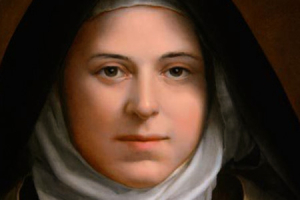
St. Thérèse of the Child Jesus and the Holy Face, Virgin and Doctor of the Church
October 1 | Feast
Saint Thérèse was born at Alençon in France on 2nd January 1873. Her parents were Louis Martin and Zélie Guérin. Following her death on September 30, 1897, of tuberculosis at the age of 24, she became known around the world as St. Thérèse of the Child Jesus and the Holy Face through the publication of her autobiography now known as Story of a Soul.
In 2025, the Church celebrates the 100th anniversary of St. Thérèse's canonization. During his homily at the canonization, the Pope Pius, “If everyone follows this path of spiritual childhood, everyone will see how easily reformation of human society can be achieved, which we have proposed since the beginning of our pontificate. On the wall of the niche in the crypt of St. Peter’s Basilica where Pius XI is buried, there is a mosaic of the saint.
Thérèse’s simple yet powerful spirituality has captured the imagination of Catholics and non-Catholics alike for the last century. Her sense of commitment led her to a profound experience of the love of God and of neighbor. She never had an easy life, but she did live with a great sense of peace and joy.
Read more about the life of St Therese
St. Thérèse, Her Family and Her Spirituality
Proclamation of St. Therese of Lisieux as Doctor of the Church
Edizioni Carmelitane published a book to celebrate the 150th anniversary of her birth in 1873 and the 100th anniversary of her beatification as well as the 100th anniversary of her canonization in 2025. More information is available here:
Singing the Mercies of the Lord Writings on Saint Thérèse of Lisieux
Also available as an ebook
Carmelite Nuns on Isla de Margarita Hold Elections
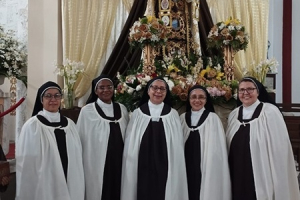
Carmelite Monastery of the Annunciation on the Isla de Margarita-Venezuela Celebrates Elective Chapter
The Carmelite nuns of the monastery of the Annunciation in Porlamar on the Isla de Margarita-Venezuela held their triennial chapter on September 25, 2025.
The monastery was founded on January 7, 1983, by six nuns, four of whom came from the monastery in Barcelona, one from the monastery in Tarrega, and one from the monastery in Vilafranca del Penedés. The canonical erection was entrusted to the Bishop of Margarita.
The monastery is part of the Nuestra Señora del Carmen Federation.
Those elected to leadership are:
Prioress | Priora | Priora:
Suor Rosa Coromoto Pérez
1st Councilor | 1ª Consejera | 1ª Consigliera:
Suor Mariela del Carmen León
2nd Councilor | 2ª Consejera | 2ª Consigliera:
Suor Norma del Carmen Sánchez
Treasurer | Ecónoma | Economa
Suor Mariela del Carmen León
Formator | Formadora | Formatrice
Suor Ludys de Cristo Rey
Sacristan | Sacristana | Sacrestana:
Suor Norma del Carmen Sánchez
Carmelite Nuns Held Elective Chapter in Cabanatuan
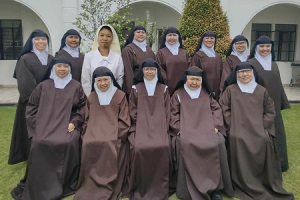
Carmelite Monastery Our Lady of Nazareth in Cabanatuan Celebrates Elective Chapter
The Carmelite nuns of the Our Lady of Nazareth Monastery in Cabanatuan, Philippines, recently held their triennial chapter.
The monastery was founded on April 8, 1983, by seven nuns from the monastery of the Holy Family in Guiguinto, Philippines. It is part of the Stella Maris Federation.
Those elected to leadership are:
Prioress | Priora | Priora:
Sr. Ma. Dorotea Santiago
1st Councilor | 1ª Consejera | 1ª Consigliera:
Sr. Ma. Dolores Asuncion
2nd Councilor | 2ª Consejera | 2ª Consigliera:
Sr. Ma. Teresa Canillo
3rd Councilor | 3ª Consejera | 3ª Consigliera:
Sr. Ma. Regina Gutierrez
4th Councilor | 4ª Consejera | 4ª Consigliera:
Sr. Ma. Raquel Ylagan
Treasurer | Ecónoma | Economa
Sr. Ma. Dolores Asuncion
Formator | Formadora | Formatrice
Sr. Ma. Teresa Canillo
Sacristan | Sacristana | Sacrestana:
Sr. Ma. Raquel Ylagan
A Carmelite Named Prefect of Bishops' Dicastery
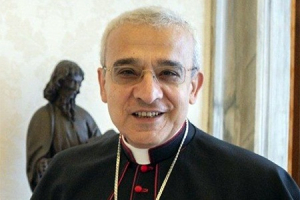
Carmelite Archbishop Filippo Iannone Appointed Prefect of the Dicastery for Bishops by Pope Leo XIV
On Friday, September 26, Pope Leo XIV appointed Archbishop Filippo Iannone as Prefect of the Dicastery for Bishops. He was previously Prefect of the Dicastery for Legistlative Texts. His new role includes the presidency of the Pontifical Commission for Latin America (CAL). He begins his new position on October 15, 2025.
The news of Mons. Iannone's appointment arrived at the General Chapter at the conclusion of the Closing Mass in the Cathedral of Our Lady of Mount Carmel. The prior general, Desiderio García Martínez, made the announcement to the congregation following the signing of the Acts of the Chapter. Later, Fr. Desiderio said, "We were very happy when we received the news that Mons. Filippo Iannone has been appointed by the pope as Prefect of the Dicastery for Bishops and President of the Pontifical Commission for Latin America. We send him our warmest congratulations on behalf of the Carmelite Order. Pope Leo XIV, due to Archbishop Iannone's dedication to the Church, has deemed him worthy of this great responsibility. May the Holy Spirit enlighten him in his new work in the service of the Church."
Archbishop Iannone is a native of Naples, Italy and member of the General Commissariat of La Bruna. He is a jurist and canon lawyer with extensive experience in courts, pontifical universities, and the archdiocese of Naples where he was an auxilary bishop. He has help various positions in Rome, including as member of the Supreme Tribunal of the Apostolic Signatura; a consultant to the then Congregation for Institutes of Consecrated Life; a member of the Council for Legal Affairs of the Italian Bishops' Conference; president of the Committee for Places of Worshop, and a member of the Episcopal Conference of the Italian province of Lazio.
In 2012, he was appointed viceregent of the Diocese of Rome by Benedict XVI. In 2017, he was appointed adjunct secretary of the Pontifical Council for Legislative Texts. He became president of that Council in April of the following year.
It is the first appointment of a head of a Vatican department by Pope Leo and is the position held by then Cardinal Robert Prevost before his election as pope following the death of Pope Francis.
Lectio Divina October, 2025
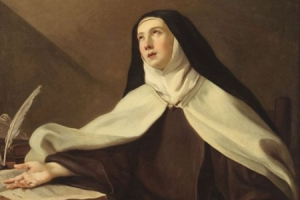
Opening Prayer
Father,
you show your almighty power in your mercy and forgiveness.
Continue to fill us with your gifts of love.
Help us to hurry towards the eternal life your promise and come to share in the joys of your kingdom.
We ask this through our Lord Jesus Christ, your Son, who lives and reigns with you and the Holy Spirit, one God, for ever and ever. Amen.
Final Message of the Chapter to the Carmelite Family
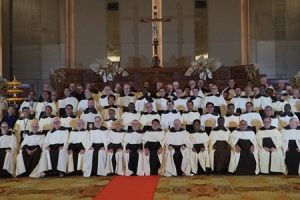
From the General Chapter | September 9-26, 2025
The Members Send a Message to the Carmelite Family at the Conclusion of the 2025 General Chapter
The Members of the General Chapter celebrated Morning Prayer together and then moved to the Chapter Hall for a final session. First order of business was the reading of the proposed Message of the Chapter to the Carmelite Family. Following its reading in the three languages of the Order, the members made some suggestions and then the message was unanimously approved.
Following a talk by the new prior general, Desiderio García Martínez, the Chapter was adjourned.
Later today the members will travel to the Cathedral of Malang for Mass with Bishop Henricus Pidyardo Gunawan, O. Carm. There they will sign the Acts of the Chapter.
pdf To Read the Final Message of the Chapter to the Carmelite Family(127 KB)