






O.Carm
Celebrating At Home - 24th Sunday in Ordinary Time

Who Am I?
(Mk 8:27-35)
All of us, at least to some extent, shape our identity and measure ourselves in response to the comments and ideas of others. From an early age we are taught how to speak, dress and act in order to be ‘acceptable’ to others. Usually this is a good thing, but sometimes it can go horribly wrong.
Celebrities, sports stars and young people can become so vulnerable to the expectations and reactions of the public, media and social media trolls that they end up with little identity of their own, or they develop a very distorted idea of their identity. Unfortunately, both these experiences have significant negative impacts on a person’s mental wellbeing.
This Sunday’s Gospel teaches us how to find our true identity.
Both the ‘people’ and Peter have ideas about who Jesus is. For the people he is John the Baptist, Elijah or one of the prophets returned from the dead. For Peter, Jesus is the Christ, the Messiah. But what happens next reveals that Peter and Jesus have very different ideas about who this Messiah is.
Though Peter understands correctly that Jesus is the Messiah, he misunderstands the kind of Messiah that Jesus is. Perhaps he wanted a Messiah who was a great warrior-king, powerful and glorious. He can’t imagine that his Messiah would meet the kind of end that Jesus talks about.
Jesus calls Peter, ‘Satan’. If Peter is to learn the true identity of Jesus and come to think with God’s heart, he must ‘get behind’ (follow) Jesus.
Such followers are called to renounce their false identity (often defined by what we have, what we work at, our delusions) and to find their true identity as God’s beloved son or daughter through a life poured out in loving service of others (taking up his/her cross).
I often think that parents are the great examples of what all this means. They constantly have to go beyond themselves, their own needs, hopes and desires and sacrifice their time, energy and money to care for their children with love. In doing so, they often discover their very best selves.
In the Gospel, Jesus, the true Messiah, appears not as a glorious God-King but as the Suffering Servant of God about whom Isaiah speaks in the first reading. The way of discipleship is not about self-glory but about true service, and about discovering our true identity as God’s beloved sons and daughters.
As disciples of Jesus we try to live our lives as a real service to our brothers and sisters in the world. But it’s not possible to do that until and unless we realise our true identity and call as God’s own people.
Then we become a source of love, mercy, hope, compassion, justice, truth, concern and Christian action as servants of God and each other. That is DOING the Gospel.
- pdf Celebrating At Home - 24th Sunday in Ordinary Time [PDF](2.88 MB)
- default Celebrating At Home - 24th Sunday in Ordinary Time [ePub](4.45 MB)
- pdf Celebrando en Familia - XXIV Domingo del Tiempo Ordinario(731 KB)
- pdf Celebrando in Casa - XXIV Domenica del Tempo Ordinario(479 KB)
- pdf Celebrando em família - XXIV Domingo do Tempo Comum(736 KB)
Prior General's Schedule for September 2024
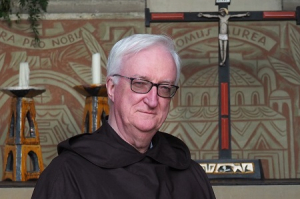
Fr. Míċeál O'Neill, the prior general, has the following schedule planned for the month of September 2024:
September 1 - 14: Canonical Visitation of Poland
September 16 - 18: Congress for Lay Carmelites -- Rome
September 19 - 21: Provincial Chapter (Part 2) -- Malta
September 23 - 30: General Council Plenary Session -- Rome
75th anniversary of Carmelite Presence in Peru Celebrated
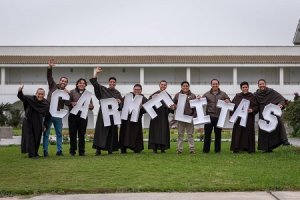
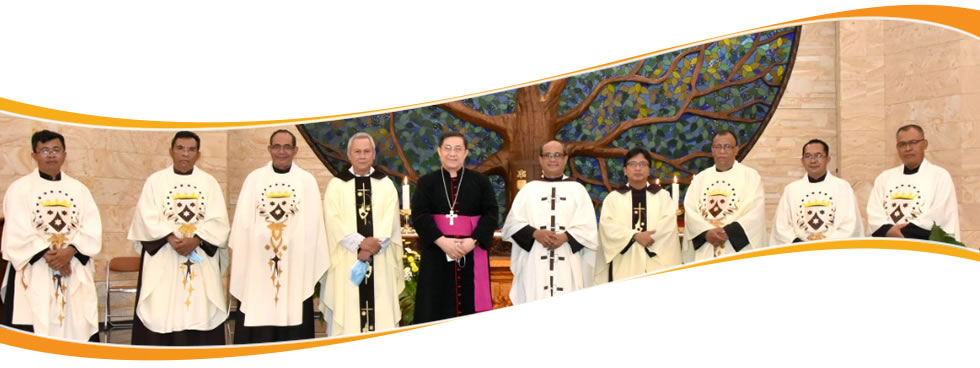
On August 3, 2024 the Peruvian Commissariat of the Province of the Most Pure Heart of Mary (PCM) celebrated the 75th anniversary of Carmelite presence in Peru.
The Carmelite Studies Program, which brings many of the PCM students together for a week of Carmelite input, was also celebrated during this time.
Former Prior General Fernando Millan spoke on Titus Brandsma and other Carmelite saints.
The Prior General, Míċeál O’Neill, presided at the procession and Mass on Saturday evening.
On Sunday, all of the Carmelites gathered for a Mass and banquet in Lurín at Villa Carmelitas, the Carmelite retreat center a few miles from Lima.
Carmelites from many different countries of the Americas and around the world were present.
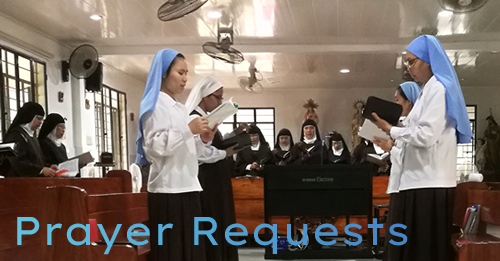
Triennial Chapter of the Carmelite Nuns Held in Philippines
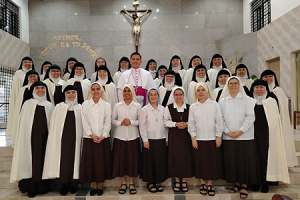
On August 26, 2024, the Carmelite nuns of the monastery of the Immaculate Heart of Mary in Tambacan, Burgos, Pangasinan, Philippines held there triennial elective Chapter. The local bishop, Napoleon Sipalay, Jr., OP, the bishop of Alaminos presided. Twelve nuns with both active and passive voice and four nuns with passive voice only participated.
The monastery was founded on May 1, 1993 with nuns from the monastery of Guiguinto. It was canonically erected on May 6, 1993. It belongs to the Federation of Stella Maris.
More information about the monastery and the nuns' lives can be found at: ocarmburgosph.weebly.com
The following were elected:
Prioress | Priora | Priora:
Sr Ma. Barbara C. Pulido, O. Carm.
1st Councilor | 1ª Consejera | 1ª Consigliera:
Sr Ma. Elena de la Eucaristia Z. Tolentino, O. Carm.
2nd Councilor | 2ª Consejera | 2ª Consigliera:
Sr Ana Maria del Sagrado Corazon D. Bernardo, O. Carm.
3rd Councilor | 3ª Consejera | 3ª Consigliera:
Sr Ma. Florencia Giuseppe M. Cruz, O. Carm.
4th Councilor | 4ª Consejera | 4ª Consigliera:
Sr Ma. Leonora of the Holy Trinity J. Borlongan, O. Carm.
Treasurer | Ecónoma | Economa
Sr Ma. Elena de la Eucaristia Z. Tolentino, O. Carm.
Formator | Formadora | Formatrice
Sr Miriam Therese of the Holy Spirit C. Albeza, O. Carm.
Sacristan | Sacristana | Sacrestana
Sr Ma. Florencia Giuseppe M. Cruz, O. Carm.
Celebrating At Home - 23rd Sunday in Ordinary Time
Loosening the Ligaments
(Mk 7:31-37)
Even with the benefits of modern technology and social media people can still feel deeply isolated, cut off from those around them. They share something of the experience of the man in this Sunday’s Gospel. He cannot hear and cannot speak properly. Living in the ancient world that must have been a profoundly isolating, frightening and frustrating experience for him. The people ask Jesus to lay a hand on the man. There were many travelling healers at that time, so the people’s request does not imply that they know who Jesus really is, only perhaps his reputation as a healer.
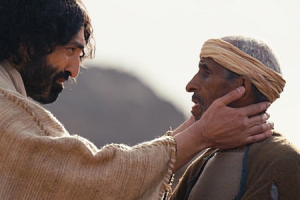
Jesus takes the man aside, away from the crowd, puts his fingers into the man’s ears and touches his tongue with spittle. Both are deeply intimate gestures and somewhat confronting. I wonder what it must have been like to be that man. How much did he understand about what Jesus was doing? Being deaf, did he even know what the crowd had asked Jesus to do for him?
Jesus looks up to heaven, sighs and says ‘Ephphatha,’ – ‘Be opened!’ All at once the man can hear and speak clearly. The man’s social isolation is ended. Now he can enter fully into relationship with other people. The man rejoices, the people rejoice and, even though Jesus asks them not to, they tell the story everywhere.
In telling this story Mark seems to suggest that without the intimate, healing touch of Jesus we remain deaf both to the voice of God and the cries of others, and unable to enter fully into relationship with either. We remain closed and crippled within ourselves, unable to hear the Word of God or pass it on to others.
But once touched by the power and spirit of Jesus we are opened to the Word made flesh, and God’s vision for human life.
Our inner ligaments, the things that once choked the Life within us, begin to be loosened and we begin to speak clearly of God’s loving concern for all humanity in every word and action.
- pdf Celebrating At Home - 23rd Sunday in Ordinary Time [PDF](2.89 MB)
- default Celebrating At Home - 23rd Sunday in Ordinary Time [ePub](4.65 MB)
- pdf Celebrando en Familia - XXIII Domingo del Tiempo Ordinario(525 KB)
- pdf Celebrando in Casa - XXIII Domenica del Tempo Ordinario(430 KB)
- pdf Celebrando em família - XXIII Domingo do Tempo Comum(501 KB)
Celebrating At Home - 22nd Sunday in Ordinary Time
Washing Hearts, Not Hands
(Mk 7:1-8, 14-15, 21-23)
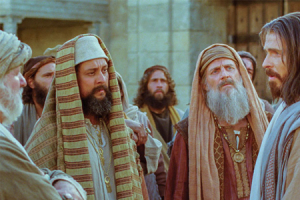
This weekend we resume reading from St Mark’s Gospel. This Sunday’s episode is about ritual purity verses purity of heart. The Pharisees were a group of especially observant Jews. They took ritual observance very seriously. These observant Pharisees and some scribes criticise the disciples for ‘not following the tradition of the elders’ by not washing their hands before eating.
This passage is not about good hygiene but about a ritual practice. By the time of Jesus the Pharisees wanted to extend the laws of ritual purity, which applied only to priests, to all the people. Jesus accuses them of substituting the law of God with mere human regulations.
The second point that Jesus makes is that it is not what goes into a person from outside which makes them unclean, but what they harbour in their hearts and minds.
We, too, can fall into the trap of thinking that our ritual practices (going to Mass, saying the Rosary, etc) are all that is necessary to be good followers of Jesus.
Some Christians seem to think that ritual practice is about being at rights with God; almost like ‘paying God off’. That having been done, they are free to do what they like in their actions towards other human beings.
The teaching of Jesus in the Gospel today challenges both those views.
It is the reform of our hearts, not our ritual practices, which needs attention and is most important in living out the vocation God has given us. If the goodness of God is not seen through us, where can it be seen?
Jesus reminds his listeners that evil does not come from the outside, but from within. According to Jesus, being at rights with God is not achieved through ritual practice but through inner conversion to the mind and heart of God.
Real religion, according to the Jesus tradition, is not about ritual practise but about how we treat each other.
It’s our hearts, not our hands, which need washing.
- pdf Celebrating At Home - 22nd Sunday in Ordinary Time [PDF](5.12 MB)
- default Celebrating At Home - 22nd Sunday in Ordinary Time [ePub](8.09 MB)
- pdf Celebrando en Familia - XXII Domingo del Tiempo Ordinario(523 KB)
- pdf Celebrando in Casa - XXII Domenica del Tempo Ordinario(522 KB)
- pdf Celebrando em família - XXII Domingo do Tempo Comum(345 KB)
Celebrating At Home - 21st Sunday in Ordinary Time
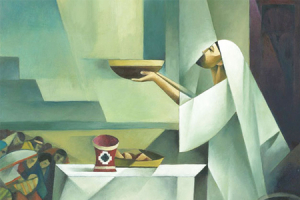
Lord, Who Shall We Go To
(Jn 6: 60-69)
The affirmation of faith in God by the people in the first reading from the Old Testament book of Joshua is echoed by Peter’s affirmation of faith in Jesus in the Gospel. Joshua says: It’s decision time. Who will be your God? The people answer: We remember what God has done for us. We have no intention of deserting the Lord our God - unlike some of the followers of Jesus in the Gospel.
Our excursion into the ‘Bread of Life’ passages of Chapter 6 of Saint John’s Gospel comes to an end today.
Over the last four Sundays, St John has taken us on a journey of discovering Jesus as the living Word of God who nourishes and strengthens us on our journey; as the living bread who gives his very self (flesh and blood) for the life of the world; and, today, as the bread of faith. Those who share the bread of faith are those who have chosen to believe in Jesus and follow him.
Only by drawing life from Jesus can one be drawn into the life of God. We feed on Jesus so that he becomes part of us and his life continues to grow in us and our life becomes caught up in his. That life draws us into communion with the life of God. We become sharers in that life, our awareness of which is nourished and strengthened as we eat and drink.
This meditation from John is about how Jesus is still present and a source of faith and nourishment in the life of the post-resurrection Christian community. The ‘real presence’ of Jesus lives on in the community. That presence is perceived by faith and received as living Word, food and drink, nourishing disciples in their journey to be the ‘real presence’ of Jesus in the world, the everlasting sign of God’s love for all.
At Eucharist we gather in communion with each other, with Jesus the Word, with Jesus the Bread and Wine. We are doing in a sacramental way what Jesus is doing in a real way within us. The Eucharist is teaching us how to live our lives as Christian disciples: how to be in communion with God and each other through our communion with Jesus.
What we physically eat and drink become us. Food changes and transforms cells, blood, muscle, tissue and organs. The purpose of Christian life is for us to become Christ. Having faith, being nourished by him changes and transforms us into his body and blood for the life of the world. We become the real presence of Jesus in the world today.
Connections to the Eucharist
The words of the Gospels of these five Sundays parallel our experience of celebrating the Eucharist. There are three ‘holy communions’ at mass, not one. There is the communion of believers, as the people of Christ gather to celebrate the Eucharist; the communion of the Word when we listen together to the Scriptures; and the communion of the Bread and Wine when we eat and drink together. These communions are holy because, through Christ, God and human beings are in communion with one another and God is at work nourishing, healing, redeeming and forming the face of his Son within us – so that we may be the living presence of Christ in the world today.
Feasting on Christ in Word and Sacrament, we too, are called to nourish and strengthen each other on our journey to God.
- pdf Celebrating At Home - 21st Sunday in Ordinary Time [PDF](2.92 MB)
- default Celebrating At Home - 21st Sunday in Ordinary Time [ePub](2.28 MB)
- pdf Celebrando en Familia - XXI Domingo del Tiempo Ordinario(518 KB)
- pdf Celebrando in Casa - XXI Domenica del Tempo Ordinario(528 KB)
- pdf Celebrando em família - XXI Domingo do Tempo Comum(518 KB)
Celebrating At Home - 20th Sunday in Ordinary Time
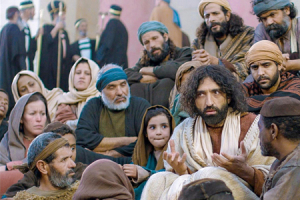
Communion with Jesus and One Another
(Jn 6:51-58)
The first reading this weekend tells how Wisdom has built a house and invited the foolish (those who are not yet wise) to feast on the food of her teaching. Those who eat the bread and drink the wine of Wisdom perceive God’s saving action and understand the life to which they are called as God’s own people.
This first reading provides us with an introduction to listening to the words of the Gospel. Jesus is the living wisdom of God. Like Wisdom in the first reading, Jesus also invites us to feed on him so that we, too, may become wise in the ways of God, perceive God’s saving action in him, become the people of God and have life, not only now, but for ever.
In the Gospel, the dialogue between Jesus and the people continues. This time they are arguing about how Jesus could possibly give them his flesh to eat. Jesus insists that if they don’t eat it they will not have life in them and they will not have eternal life.
Underlining the message by talking about his flesh being real food and his blood being real drink immediately connects this teaching of Jesus to the Eucharistic celebration. Some of these verses may well have been used by the Christians in John’s time during their liturgy. But this reading is not only about the Eucharistic celebration, but also about what that celebration symbolises – the very life of God made present and visible in the person of Jesus and received in the sacramental signs of Bread and Wine. It is a celebration of being in communion with Jesus and the Father. Following the teaching of Jesus, it is also a celebration of being in communion with one another.
Intimate relationship (being in communion) with Jesus the ‘bread of life’, is the way in which Jesus feeds his people with his very self - his own flesh and blood – everything that he is. Food sustains and supports life and growth. To eat Jesus is to be caught up in the communion of life he shares with the Father and to feed on the very life of God. It is how we are sustained in and grow in our relationship with God. Eternal life is part of sharing the life of God.
- pdf Celebrating At Home - 20th Sunday in Ordinary Time [PDF](2.94 MB)
- default Celebrating At Home - 20th Sunday in Ordinary Time [ePub](4.71 MB)
- pdf Celebrando en Familia - XX Domingo del Tiempo Ordinario(554 KB)
- pdf Celebrando in Casa - XX Domenica del Tempo Ordinario(554 KB)
- pdf Celebrando em família - XX Domingo do Tempo Comum(553 KB)
Celebrating At Home - 19th Sunday in Ordinary Time
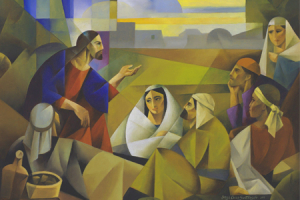
The Living Bread that Nourishes Life
(Jn 6:41-51)
At the end of last week’s Gospel, Jesus said: I am the bread of life, those who come to me will never be hungry; those who believe in me will never thirst. In other words, Jesus feeds us with the living bread of God’s word, which is himself. But this word can only be received by those who believe, that is, who are in relationship with Jesus. The first step is to recognise where Jesus comes from (God).
In a great example of unbelief the Jewish authorities reject Jesus at the beginning of this week’s Gospel because they know where he comes from and therefore he cannot be ‘from heaven’. Once again they are unable to read the face of God in Jesus. They think they know exactly who Jesus is - we know his father and mother. And their focus remains firmly fixed on the bread they ate, not the person who provided it.
Jesus tells them to stop complaining and insists that only those drawn by God can believe in him. Jesus insists again that God draws people to belief in him. One cannot be taught by God apart from hearing and believing the word of Jesus. And those who believe have eternal life.
Jesus again insists that he is the Bread of Life. Referring to his earlier conversation with the crowd in last week’s Gospel, Jesus says that those who ate the manna in the desert are dead; and those who eat the bread of life he is offering will live. Life comes from being in relationship (in communion) with Jesus.
The Gospel concludes with Jesus once again stating that he is indeed the living bread which has come down from heaven. Those who eat this bread will live for ever. The bread that Jesus will give is his own flesh offered on the altar of the cross for the life of the world and given in prophetic sign at the Last Supper.
If we enter into communion with Jesus we can become the living bread through whom God continues to feed his people with wisdom, compassion, hope, forgiveness and love.
- pdf Celebrating At Home - 19th Sunday in Ordinary Time [PDF](2.89 MB)
- default Celebrating At Home - 19th Sunday in Ordinary Time [ePub](3.89 MB)
- pdf Celebrando en Familia - XIX Domingo del Tiempo Ordinario(503 KB)
- pdf Celebrando in Casa - XIX Domenica del Tempo Ordinario(501 KB)
- pdf Celebrando em família - Décimo Nono Domingo do Tempo Comum(500 KB)
St. Teresa Margaret Redi (OCD), Virgin

1 September Optional Memorial
Saint Teresa Margaret Redi was born in Arezzo on 1st September 1747 into the noble family of Redi. In 1764, she entered the monastery of the Discalced Carmelites in Florence, changing her baptismal name of Anna Maria to that of Teresa Margaret of the Sacred Heart of Jesus.
She grounded her spiritual and religious life in devotion to the Eucharist and to Our Lady, and in her dedication to the Sacred Heart which she described as a "giving of love for love". She led a humble and hidden life in the love of God and the total offering of herself and she gave caring and continuous service to her sisters. She died of peritonitis on 7th March 1770. She was beatified in 1929 and canonised by Pope Pius XI on 13th March 1934.