





O.Carm
A Joint OCARM-OCD Letter for the Solemnity of OLMC
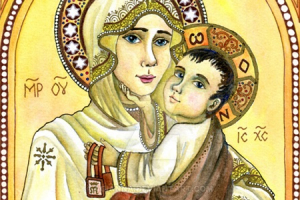
A Joint OCARM-OCD Letter for the Year of Prayer and the Solemnity of Our Lady of Mount Carmel, July 16, 2024
"In Mary a Dawn of Hope: In Mary Our Way of Praying"
A joint letter of the two general superiors, Míċeál O'Neill, O. Carm., and Miguel Márquez Calle, OCD is being published on the Solemnity of Our Lady of Mount Carmel in 2024 which coincides with the Year of Prayer called for by Pope Francis to mark a time of preparation for the Jubilee Year in 2025. Entitled "In Mary A Dawn of Hope: In Mary Our Way of Prayer," the letter seeks "to recall and relive the great traditions of Carmel in relation to prayer, and in relation to Our Lady of Mount Carmel." But the focus is on "the fruit of our personal experience the Carmelite charism," and not as a theological treatise.
The approximately 3,500 word letter reviews that various aspects of Mary's spirituality found in her appearances in the Gospels and Carmelite tradition. It concludes with possibilities for Pope Francis' "symphony of prayer" to become a reality, recognizing the dignity of the person who prays, and renewing our own prayer as Carmelites. By putting prayer at the center of our lives and our own will and desire to prayer, write the two leaders, will renew that prayer.
Frs. Míċeál and Miguel conclude by extending their prayer and good wishes to the entire Carmelite Family around the world.
In Sollemnitate B.V. Mariae De Monte Carmelo
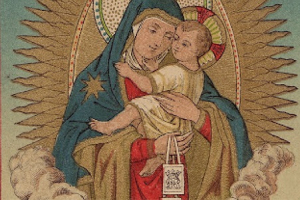
IN SOLLEMNITATE B.V. MARIAE DE MONTE CARMELO
Flos Carmeli, vitis florigera,
splendor caeli, Virgo puerpera singularis.
Mater mitis, sed viri nescia,
Carmelitis esto propitia,
stella maris.
MÍCEÁL PRIOR GENERALIS
DOMUSQUE GENERALIS COMMUNITAS
16.VII.2024
Ongoing Formation for Prioresses and Formators
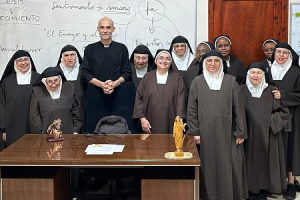
Mater Unitatis Federation Has On Going Formation for Prioresses and Formators
The Federation Mater Unitatis, of Carmelite monasteries in Spain, has had two courses of formation in 2024. The first course was held at the monastery of the Incarnation in Valencia on June 26-28. The second, a course for formators of the monasteries, took place in the monastery of Our Lady of the Assumption in Huesca.
The program of the prioress’ course called for two themes each day. Each morning session involved two moments: the presentation itself and then some “work” on the topic. The various topics discussed by the prioresses were:
+ Some Priorities in the Service of Authority
+ Presentation and Delivery of the Apostolic Letter of Pope Francis Desiderio Desideravi
+The Spirituality of Communion: A Path of Ongoing Formation from the Constitutions.
+ Presentation and Distribution of the Apostolic Exhortation of Pope Francis C'est la confiance.
+ Loving in Our Consecrated Life: In the Light of the Encyclical of Benedict XVI Deus caritas est
+ Presentation and delivery of the Bull of Convocation of the Ordinary Jubilee 2025 Spes non confundit
The course was directed by Fr. Rafael Belda Serra, CVMD, the superior general of the Cooperatores Veritatis (Co-workers for the Truth), an ecclesial reality of consecrated life erected in the diocese of Valencia (Spain) and at the service of education and evangelization.
The second course, three intense days, took place from May 28-30, 2024. Titled Human-Spiritual Integration in Carmelite Life: Formation and Accompaniment, the group was facilitated by Alfredo Pisana, O. Carm., a member of the Italian Province. He is currently part of the formation team at the international novitiate of our Carmelites in Salamanca.
He holds a degree in Developmental Psychology of Education. The sisters appreciated his wide knowledge of the subject material as well as his ability to speak from his rich experience.
In the introduction, he commented that the life and history of the people entrusted to us by the Lord are sacred. For this reason, they need and deserve accompaniment of the person first in their present time, adequate to the Carmelite charism and to the monastery itself.
The fundamental presupposition is that the human person is a unity, composed of Spirit (soul), Mind (psyche) and Body.
The starting point is that formation demands a change of perspective from content to process, favoring the maturation of the person to produce real change. A new formative perspective cannot be given without a vision of the person; that is to say, an anthropology with theological value, translated into the monastic experience.
Two elements of formation in Monastic Carmel were highlighted: the profound experience of the human heart transformed and renewed by the presence of God and the promotion of the deep identity of the called person and to lead her to the joyful maturity of her vocation which means to be "called to be transformed into the image of Christ" (2 Co 3:18).
The formator is called to accompany the candidates integrally; to transmit the Carmelite charism; to foster a personalized accompaniment; to promote human and spiritual maturation; to create an environment of continuous growth and to be a spiritual mother.
The human-spiritual accompaniment of the person tries to see how the human-person functions in order to integrate it with the spiritual aspect.
Fr. Pisano discussed the general characteristics of accompaniment. He emphasized the care in community life, especially the "attributions of thought in intentions," always giving the benefit of the doubt. He also cautioned with respect to the "projections" that can be made, and the risk in the spiritual life when it comes to judgment. The other aspects he dealt with were the affective-relational skills.
The Federation Mater Unitatis was erected on December 10, 1980. The monasteries belonging to this federation are: Caudete, Fontiveros, Huesca Asunción, Huesca san Miguel, Madrid, Onteniente, Valencia and Zaragoza.
A Message to the Carmelite Family
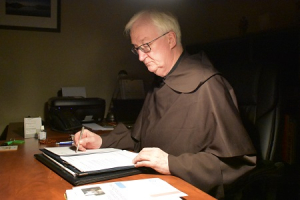
A Video Message for the Solennity of Our Lady of Mount Carmel on July 16, 2024, from Fr. Míċeál O’Neill, O. Carm, Prior General of the Order
Dear sisters and brothers in the Carmelite family throughout the world:
The celebration of the solemnity of Our Lady of Mount Carmel this year coincides with the Year of Prayer, announced by Pope Francis as a time of preparation the celebration of the 2025 Jubilee. The desire of the Holy Father is that there should be a “symphony of prayer” throughout the world. His teaching on prayer is an invitation to the Carmelite family to play its part in praying and in helping others to pray. Our rich tradition of prayer has been an inspiration to many generations from the beginning. Never was that tradition more needed by the world than today, in order to be able to encourage and accompany all the people who already have a life of prayer and are praying, and to open new doors for people who do not yet know the meaning of Christian prayer. Our prayer gives dignity to our lives because it affirms that we are the children of God, in communication with God. Our pray is also the strength of hope because of how we place our trust in God and in the Blessed Virgin Mary.
Carmel represents a place of human dignity, where God has brought people together in his name and Jesus is there in their midst. Mary is the Lady of that place, showing us what the dignity of the human person looks like, and the people who dwell in that place are people who pray, knowing that in their lives Jesus Christ is their deepest motivation, and that there is no higher ambition than to live in allegiance to him. On a day that unites us all in joy and thanksgiving, I join with Carmelites around the world, in praying that God’s name may be held as a blessing, that God’s will may be done, that God’s kingdom may come, that our daily bread may lead to daily peace and that we will find the path to forgiveness and reconciliation for ourselves and for our sisters and brothers in a world so terribly afflicted by its own lack of faith, hope and charity. May your celebrations this year bring you the abundance of God’s grace and an answer to your fervent prayer.
Thank you.
Fr. Míċeál O’Neill, O. Carm
Prior General Highlights Devotion to Our Lady
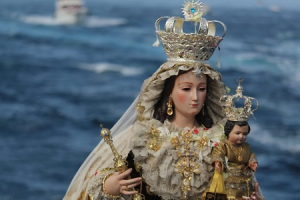
Diocese of Málaga Features Interview with Carmelite Prior General to Highlight Devotion to Our Lady of Mount Carmel in July
The July issue of the magazine of the Diocese of Málaga (Spain) focused on Our Lady of Mount Carmel. As July 16 is the feast day, several of the articles focused on the devotion of the people and how they celebrate the feast marking the Christian summer calendar. The cover of the magazine showed the image of Our Lady of Mount Carmel who is the patroness of Marbella.
One article featured an interview the Carmelite prior general, Fr. Míċeál O'Neill reflecting on the actuality of the Marian invocation that "unites us to her Son Jesus, unites us to the Church and unites us to heaven." Fr. Míċeál was in Málaga earlier to participate in the closing of the Jubilee of the centenary of the birth in Malaga of the Carmelite Congregation of the Sacred Heart of Jesus in Malaga.
Speaking of the significance of the anniversary celebration, Fr. Míċeál said, “Today we recognize that a charism is a gift of the Holy Spirit. The family lives from a charism that we have in common, together with a variety of charisms arising in the different sectors of the family: brothers and sisters of apostolic life, nuns, friars and laity. To be able to recognize and celebrate this richness is always a reason for gratitude and also an impulse to continue responding day after day to the vocation we have received and to the mission that awaits us."
In the days prior to the feast of Our Lady of Mount Carmel, the prior general reflected on one of the most beloved Marian devotions throughout the Diocese of Málaga. He called the popularity of Our Lady of Mount Carmel “a gift for the Church."
“More than 800 years [after our founding], the Carmelite Order continues to bring this water of life to the places where it is present. Our family is a Marian family as well as an Elijah family," says the prior general. “With these two great models we live as people who have a very deep experience of God, as Mary and Elijah have. In this spirit we approach God, revealed in Jesus Christ, alongside all the people who have found in their lives the importance of the search for God. We want to accompany this search with the love and wisdom that our vocation and our formation in the Church. We want to make present in the world that the dignity of the human person is found, in the first place, in his being created by God in his image and likeness; and in his capacity to live a profound friendship with God, in the person of Jesus, following the example of Mary. Carmel lives by the Word of God and helps those who come into contact with it to know and cultivate that word of salvation in their lives."
Father O'Neill has a deep knowledge of the devotion to Our Lady of Mount Carmel. “I have been able to get to know her both here in Spain and in Latin America, and she is a true gift that the Lord has given to the Church. Our Lady of Mount Carmel is a devotion and a way for many people. It is not and cannot be "campanilismo" (competition, rivalry) of any kind. Our Lady of Mount Carmel is not the “champion of the Virgins.”
“It is the Virgin of Mount Carmel who unites us with our tradition rom the beginning, unites us to her Son Jesus, unites us to the Church and unites us to heaven."
Regarding the popularity of the names Carmen or Maria del Carmen, which year after year tops the lists of the most popular Spanish names, Father O'Neill affirms that he feels "good with the people who are called Maria del Carmen, both on the part of Mary and on the part of the Virgin Mary of Mount Carmel part. The name speaks of goodness and beauty. It's hard for me to think that a person who bears this name can be anything but good and Christian. Because of the goodness and beauty of Mary, the Virgin of Carmel this name runs deep in many places and cultures. The biggest challenge today is that the Gospel penetrates the towns and cultures of today with its goodness, truth, and beauty.
Link the the full article in Spanish (pages 8-9)
Celebrating At Home - 15th Sunday in Ordinary Time
Living Sacraments of God’s Love
(Mark 6:7-13)
The first reading today tells the story of Amos, an ordinary man who was called by God to be a prophet. Amos, who had been happily looking after his sheep and his sycamore trees when God called him, was sent to preach to people who had become so lost in their wealth, power and self-importance that they could no longer read the face of God in the poor, weak and sick, and despised them. Like Amos, the disciples in the Gospel are ordinary men. None, not even Jesus himself, is a formally commissioned or ordained rabbi, yet they are called and commissioned to preach and to heal.
The Gospel needs to be presented simply and truthfully and without affectation. The preaching disciples must make themselves like the brothers and sisters to whom they dare preach. Perhaps a reminder that he/she is not above those to/for whom he/she preaches.
Too much wealth and too many possessions can easily get in the way of proclaiming the Gospel, as can an exalted sense of self-importance. Pope Francis is constantly warning priests and seminarians against clericalism (thinking they are above everyone else) and careerism (thinking more about self-advancement in the Church than about mission).
Not everyone will be able to hear or accept the message of the disciples, just as the townsfolk of Nazareth couldn’t perceive the presence of God in Jesus. But there is no firestorm of punishment. Jesus, though hurt, amazed and dumbstruck, does not retaliate with violent retribution. Instead, he intensifies and multiplies his mission by sending out the disciples to other places. Where once there was only Jesus now there are 12 others spreading the Good News and healing. Disciples are called to proclaim God’s love, not God’s wrath.
It is ordinary people like you and me, not only those formally commissioned by the Church, who are called to read the face of God in ourselves, in others and in the world around us. We try not to get lost in our own power and wealth and self-importance which can easily blind us to the presence of God. We try to be people who become sacraments of God’s presence for one another, who allow God to anoint God’s people with acts of love, compassion, hope and healing.
- pdf Celebrating At Home - 15th Sunday in Ordinary Time [PDF](3.27 MB)
- default Celebrating At Home - 15th Sunday in Ordinary Time [ePub](4.78 MB)
- pdf Celebrando en Familia - XV Domingo del Tiempo Ordinario(510 KB)
- pdf Celebrando in Casa - XV Domenica del Tempo Ordinario(520 KB)
- pdf Celebrando em família - Décimo Quinto Domingo do Tempo Comum(508 KB)
XXIX Meeting of the Carmelite Family of the Iberian Region
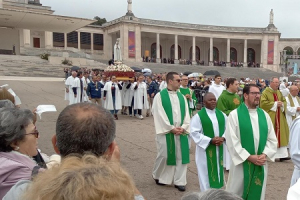
The XXIX Meeting of the Carmelite Family of the Iberian Region was held in Fatima from June 28 to 1. The theme of the Meeting was: "This way is holy and good: follow it. Figures of holiness in Carmel". With this theme we sought to continue the increasingly conscious and current reflection that the vocation to holiness is common to all Christians.
In this context, the reflections made and the conferences presented were inspired by Carmelite figures and documents that, from our spirituality, encourage us towards holiness. Thus:
- Friar Pedro Bravo spoke on the Rule of the Third Order of Carmel;
- Cardinal Emeritus of Lisbon, Don Manuel Clemente, spoke about St. Nuño de Santa Maria;
- Sr. Angela Coelho, vice postulator of the cause of the visionaries of Fatima, spoke about the Carmelite traits of the spirituality of Sr. Lucia de Jesus, one of the 3 visionaries of Fatima and who lived most of her life as a Carmelite nun;
- Mariana Frazão and Carmo Diniz, two people who were in the central organization of the World Youth Day in Lisbon in 2023, shared a reflection on the challenges of holiness launched by Pope Francis from his words and gestures during that Day.
In addition to the lectures, group work was divided into 7 workshops. Each one reflected on an inspiring figure of the Carmelite Order: St. Titus Brandsma, Friar Pablo Maria de La Cruz Hidalgo, Blessed Isidore Bakanja, St. Celia Guérin and Louis Martin, St. Nuño de Santa Maria, St. Teresa of the Child Jesus and Sister Lucia de Jesus.
In addition to the formative dimension, the meeting gave a central place to the prayerful dimension. The Organization provided a bilingual booklet that served as the basis for the liturgical moments. On Sunday, June 30, the participants joined the pilgrims from Fatima and participated in the celebration of the Eucharist at the Shrine of Our Lady of the Rosary in Fatima.
In the afternoon, the group celebrated the Way of the Cross in the space provided by the sanctuary for this exercise of popular devotion. In this Way of the Cross, the meditations for each station were written by the groups in the work previously presented and based on the life and spirituality of the respective inspirational figure.
On the evening of June 30, a fraternal meeting was held in which each participating group presented something about its place and entity. It was a very festive moment in which we gave thanks for the immense cultural richness present in the Order today.
About 150 participants from the following Carmelite entities, including friars, sisters and lay people, participated in this meeting: Carmelite Sisters of the Virgin Mary of Mount Carmel, Carmelite Sisters of the Sacred Heart of Jesus, Carmelite Nuns, Province of Aragon, Castile and Valencia, Province of Betica, Province of Catalonia, General Commissariat of Portugal.
The Meeting took place in an atmosphere of great fraternity, prayer, exchange and healthy coexistence.
The XXX Meeting of the Carmelite Family of the Iberian Region will be organized by the Province of Catalonia.
Blessed Jane Scopelli, Virgin
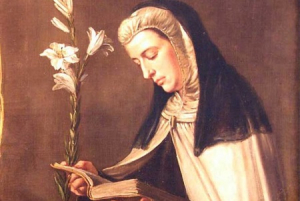
9 July Optional Memorial
Blessed Jane Scopelli was born in Reggio Emilia in 1428. Inclined to piety from a young age, she obtained permission from her parents to become a cloistered Carmelite while remaining living with the family. After the death of her parents, she joined other women and formed a community in 1480.
In the city of her birth, with the placet of Bishop Filippo Zoboli, she obtained in 1495 the house and church of the Umiliati, which she transformed into a monastery, vulgarly called "Le Bianche" and entrusted to the Congregation Mantovana. There she exercised the office of prioress. Extraordinary events are attributed to the blessed who was endowed by God with an extraordinary charism and rich in profound Marian piety.
She died on July 9, 1491. Her cult was approved by Clement XIV on August 24, 1771. When the monastery was closed in 1803 on account of the Napoleonic suppression, the Blessed's body was transferred to the city's cathedral, where it is still venerated today.
Celebrating At Home - 14th Sunday in Ordinary Time
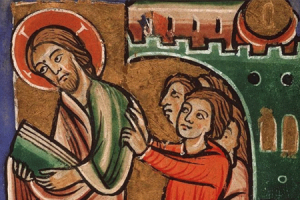
True Faith - Seeing the Sacred Everywhere
(Mark 6:1-6)
Traditionally, the prophets in the Bible had a pretty tough time. Many experienced rejection and persecution and even death. The first reading tells part of the story of Ezekiel’s call to be a prophet.
Common to all the prophets is the conviction that the Word of the Lord must be spoken to the people ‘whether they listen or not’ - the prophet must remain faithful to his vocation even if it costs him his life.
In the Gospels Jesus is presented as the prophet par excellence. In this Sunday’s Gospel we find Jesus in his home town, Nazareth, teaching in the synagogue - faithfully fulfilling his mission to proclaim the Good News. As for many other prophets, that proclamation will eventually cost him his life. Like the other prophets, Jesus, too, experiences rejection. At first the people marvel at Jesus’ teaching and the miracles he has worked elsewhere, but soon they decide that he is just ‘a carpenter (craftsman)’ whose family they know well. Nothing special to be seen here, they seem to think. The old saying, familiarity breeds contempt, seems to sum up their attitude, especially when they refer to Jesus as the son of his mother. Jews were customarily known by their father’s name even if the father had died. Jesus is astonished at their lack of faith.
Faith, in this context, implies an openness to perceive the presence and action of God (the Kingdom).
Clearly, the people don’t perceive the action of God in Jesus in spite of the impressive words he spoke and the miracles he performed. Were Jesus’ family circumstances just too ordinary for them? They couldn’t look beyond what was familiar to them in order to see God at work in him. Without that essential openness Jesus finds he can’t work any great miracle among them even though he can cure a few sick people.
Faith is about being in relationship with Jesus (and therefore, with God). Relationships grow as people come to know and understand each other. In a faith relationship, we change as we begin to get to know Jesus and we come to see with his eyes, feel with his heart and act with his intention in the world.
Only when we begin to see with the eyes of Jesus can we perceive the otherwise ‘hidden’ presence of God in human beings and events. We begin to see the sacred ‘hidden’ in the secular and the ordinary.
Only with faith can we see the action of God enfolded in the ordinary and familiar, the presence of the divine in the human, the sacred in the secular. So, to us, the division between sacred and secular almost disappears and almost everything appears ‘sacred’, and not just ‘merely’ human or secular.
- pdf Celebrating At Home - 14th Sunday in Ordinary Time [PDF](3.00 MB)
- default Celebrating At Home - 14th Sunday in Ordinary Time [ePub](4.69 MB)
- pdf Celebrando en Familia - XIV Domingo del Tiempo Ordinario(543 KB)
- pdf Celebrando in Casa - XIV Domenica del Tempo Ordinario(538 KB)
- pdf Celebrando em família - Décimo Quarto Domingo do Tempo Comum(554 KB)
Founders of the Missionary Sisters Letter Exchange
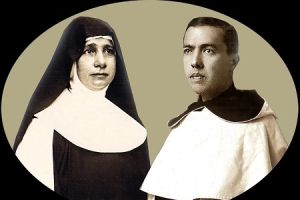
4 July Optional Memorial in the Italian provinces
Centenary of the first exchange of letters between the Founders of the Carmelite Missionary Sisters of St. Therese of the Child Jesus
In the early afternoon of Sunday, June 23, 2024, a meeting was held to commemorate the first exchange of letters between the founders of the Carmelite Missionary Sisters of St. Therese of the Child Jesus, Blessed M. Maria Crocifissa Curcio and Father Lorenzo van den Eerenbeemt, O. Carm.
Their fruitful human and spiritual relationship, in fact, began with a letter that Father Lorenzo sent on June 23, 1924, writing from St. Albert's International College, where he was a professor, at the suggestion of Fr. Alberto Grammatico, a confrere and colleague: it was a proposal to start together a female Institute of "active, religious, Carmelite life" for the missions. Within a few days, on the following June 28, Mother M. Crocifissa responded with great joy from Modica (Ragusa), adhering with enthusiasm to the proposal after many years of suffering fidelity to the vocation of Carmelite religious of active life. Their purpose, which over time became clearer and more refined, was realized about a year later, on July 3, 1925, with the founding of the Congregation in Santa Marinella (Rome).
From what is now CISA and beginning with a short pilgrimage on foot from the church of Santa Maria in Traspontina, not far away, the event re-enacted what happened now a century ago, retracing the places from where the two letters started and delving into their words and contents.
Everything was shared online with the Congregation's communities and lay friends from all parts of the world, while the gathering in the "St. Titus Brandsma" hall of CISA was attended by numerous sisters of the Congregation of various nationalities, a representation of the Sisters of the Institute of Our Lady of Mount Carmel, some friars of the CISA community and a large representation of members of the Third Carmelite Order of Rome. We cordially thank the brothers from the communities of CISA and Santa Maria in Traspontina for their welcome.
This celebration stands as a key moment within the path of the "Year of the Founders" with which the Congregation is continuing the journey undertaken now for a year with the celebration of a year dedicated to St. Therese of the Child Jesus and which will conclude with the celebration of a Jubilee Year on the occasion of the first centenary of the birth of the Congregation.
Sr M. Nerina de Simone cmstgb