



O.Carm
Ancient Carmelite Foundation in Cyprus Located
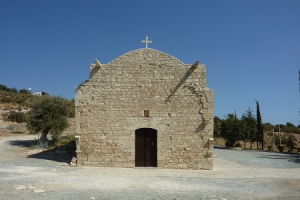
13th Century Carmelite Foundation in Limassol, Cyprus Located
Pottery discovered during an initial excavation at Panagia Karmiotissa in Limassol on Cyprus has been dated back to the 13th century and is thought to be linked to the Carmelites. The Cyprus Department of Antiquities held a conference at the end of the first season at the site.
According to published reports, the site was selected because of historical documents, geographical features, place names, and local lore, all of which suggested it was the location of a Carmelite foundation in the 13th century.
The Carmelite historian, Joachim Smet, wrote in his monumental history of the Order that besides the original foundations of Fortamia (1238) on Cyprus, the Order is known to have had houses in Limassol, Paphos, Famagusta, and Nicosia. These are on a list added to the Constitutions of 1369.
An architectural analysis of the existing church suggests it was dates to the 14th century. This discrepancy necessitates further excavation to explore deeper historical layers. Three exploratory trenches were opened: two on the northern terraces and one behind the current church’s apse.
Besides the pottery from the 13th century, the trenches have revealed evidence of two post-Byzantine habitation phases, including several postholes. Behind the church’s apse, numerous human-sized pits aligned east to west were uncovered, suggesting former grave sites likely associated with the church’s cemetery.
A flight of stairs cut into the natural bedrock and oriented towards a location underneath the church indicates earlier structures than the current church building. In addition, ground-penetrating radar surveys inside the church, hint at significant structures below the church floor.
Lectio Divina February 2024
Opening Prayer
Lord our God, help us to love You with all our hearts and to love all people as You love them.
We ask this through our Lord Jesus Christ, Your Son, who lives and reigns with You and the Holy Spirit, One God, forever and ever. Amen.
Blessed Archangela Girlani, virgin
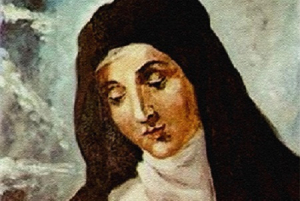
January 29th | Optional Memorial in the Italian Provinces
Bl. Archangela took the Carmelite habit in the monastery of Parma in 1477 at the age of 17 where she took the name Archangela. She eventually became prioress of the monastery at Parma, and then prioress at the new foundation at Mantua from 1492 until her death.
It is written in an old manuscript that Blessed Archangela lived her religious life so intensely that, just as the monastery was entitled "Saint Mary in Paradise", she and the other nuns, even though still here on earth, lived as if already absorbed into heaven.
Read more ...
Presentation of a Book on Fr. Serafino Maria Potenza
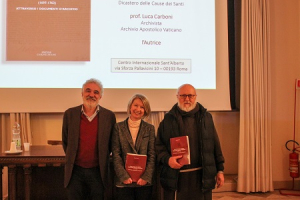
The book L'attività di padre Serafino Maria Potenza (1697-1763) attraverso i documenti d'Archivio, by Simona Durante, published by Edizioni Carmelitane, was presented on Thursday, January 18, 2024, at Centro Internazionale Sant'Alberto (CISA) in Rome.
The presentation was attended by Fr. Vincenzo Criscuolo, ofmcap, former general relator of the Dicastery for the Causes of Saints, Professor Luca Carboni, of the Vatican Apostolic Archives, and the author. Among the many participants were secretary Monsignor Fabio Fabene, undersecretary Bogusław Stanisław Turek and other members of the Dicastery.
Fr. Vincenzo Criscuolo gave opening remarks and thanked the author for her magnificent work in dissecting the figure and work of Potenza within the 395 pages of the volume.
Prof. Luca Carboni also praised the author's work and mentioned how this book is the best example of the archivist's role, which is to trace "a fruitful dialogue between different eras."
The book traces the life of Father Serafino Maria Potenza and his activity as Postulator General of the Carmelite Order, following the causes of beatification and canonization that he worked on and which he presented to the Sacred Congregation of Rites, the dicastery then competent in the matter.
In this regard, Giovanna Brizi, Postulator General of the Order, pointed out that although Potenza did not conclude any of the causes of beatification he dealt with during his mandate as Postulator General of the Order, "he sowed the seed that would later germinate in the activity of the postulators who came after him, because this is also the mission of us as postulators."
To frame the figure of Potenza, the author analyses the historical context of his time as well as "the broad panorama of Carmelite holiness."
In preparing the book, Durante made use of direct access to the various funds of the Carmelite Archives to locate material pertaining to Fr. Serafino. She also turned to the Archives of the Order's General Postulation, where she was able to ascertain that "most of the documentation, relating to the 18th century, refers, in some way, to Fr. Serafino Maria Potenza."
For Fr. Mario Alfarano, Archivist and General Librarian, Durante's book is an example of the importance of the archivist's role for the younger generation, and he emphasized how collaboration between the different funds was a key factor in the research and preparation of the book.
L'Osservatore Romano, the official newspaper of the Holy See, published a review of Simona Durante's book (accessible to subscribers here: https://www.osservatoreromano.va/it/news/2024-01/quo-016/alla-scoperta-di-uno-scopritore.html).
The book can be purchased at the online bookstore of the publisher Edizioni Carmelitane.
Pope Calls on Journalists to Focus on Truth
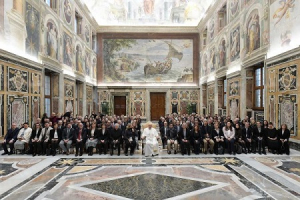
Pope Encourages Journalists to Focus on Communicating the Truth
In a recent meeting in the Sala Clementina with members of the International Association of Journalists Accredited to the Vatican, Pope Francis spoke about communicating the truth as the ultimate job of the journalists. Journalists need to base their work “on the solid rock of responsibility in truth, not on the fragile sands of gossip and idealogical readings,” said Pope Francis.
Although he was directly addressing journalists whose everyday job is to communicate news about the pope and the Vatican bureaucracy, the same might apply to the Order’s communicators in the various parts of the world.
The pope spoke of journalism as a vocation, “a bit like that of a doctor, who chooses to love humanity by curing its illnesses.” A journalist “chooses to touch with their hand the wounds of society and the world” in order to bring them to light. He told the journalists not to “hide reality, even its miseries,” and that while they should not downplay tensions in the Church, neither should they make “unnecessary clamor.”
He suggested that the journalists not stop at the “appearance” of events in the Church but to move to the “substance that does not seek to conform to the superficiality of stereotypes and readily made formulas of information.”
Journalists accredited to the Vatican are commonly referred to as “vaticanisti.” Quoting a long time vaticanista, the pope said, “In so many years of Vaticanism, I have learned the art of seeking and narrating stories of life, which is a way of loving humanity [...]. I have learnt humility. I have encountered many men of God who have helped me to believe and to remain human. So, I can only encourage those who want to venture into this journalistic specialization.”
There are approximately 150 journalists accredited to the Vatican. Many members of the organization travel with the pope when he visits other countries. Other journalists might be accredited in order to cover certain events—like the recent synod. As is his custom, the pope greeted each of the attendees at the end of the audience.
Celebrating At Home - 4th Sunday in Ordinary Time
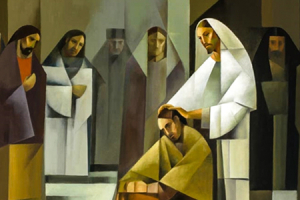
Beginning the journey
(Mark 1:21-28)
Following directly from the call of the first four disciples in last week’s Gospel, this week we are plunged into the ministry of Jesus. The gospels of the 4th, 5th and 6th Sundays detail Jesus’ ministry in Capernaum.
Last Sunday the Gospel highlighted the disciples’ call to live and work in active partnership with Jesus. To become ‘fishers of people’ they left behind all that was known and familiar to them, including their thriving fishing businesses and families. They took ‘a leap of faith’, not knowing where their journey with Jesus would take them.
Over the next three Sundays we get some insight into who Jesus is and what that journey is about.
Today’s gospel finds Jesus and the disciples arriving in Capernaum, a small town on the northern edge of the Sea of Galilee, which will be Jesus’ base for his ministry in Galilee.
On the Sabbath Jesus and the disciples attend the Sabbath service during which Jesus gives a teaching.
His words strike the people as authentic and having the ‘ring of truth’ about them. Jesus’ words not only move the people but also release a man from an unclean spirit. Jesus’ action is in response to the question the man poses, ‘Have you come to destroy us?’ Rather than destroy, Jesus liberates the man from the unclean spirit, restoring him to health and wholeness.
Jesus’ way is not about crushing people with the power and authority of God, but about bringing freedom and liberation from the evil which holds them bound.
Many people are afraid of God, but Jesus keeps saying and showing that we don’t need to be afraid of God.
God is about doing good for his people, not about punishing them. God’s power heals, restores and frees so that we can grow into the people God has always dreamed we might become.
The disciples are learning something new about who God is through the words and actions of Jesus. There is a call here to greater faith and trust in the goodness of God.
- pdf Celebrating At Home - 4th Sunday in Ordinary Time [PDF](2.86 MB)
- default Celebrating At Home - 4th Sunday in Ordinary Time [ePub](3.75 MB)
- pdf Celebrando en Familia - IV Domingo del Tiempo Ordinario(494 KB)
- pdf Celebrando in Casa - IV Domenica del Tempo Ordinario(483 KB)
- pdf Celebrando em familia - IV Domingo Do Tempo Comum(482 KB)
European Leadership Meets on Variety of Issues
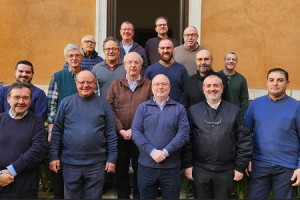
An Assembly of the leaders of the European Area (made up of the provincials, commissaries general, delegates general and their delegates) took place at St Albert’s International Centre in Rome on 15th and 16th January 2024.
The Eucharist to open the Assembly was celebrated by Benny Phang (Vice Prior General) in the chapel of St Albert’s during which he spoke about the need to work in the ministry of vocations. The large variety of cultures and nationalities present at the Assembly were acknowledged by the participants saying the Adsumus, Sancte Spiritus prayer in the various languages of European Area at the beginning of each of the working sessions.
Richard Byrne, General Councillor for Europe, gave a short report regarding forthcoming chapters and visitations, the ongoing formation course on St Thérèse of Lisieux, the retreat for those in simple vows in 2024, and the planned gathering of young adults in Rome for the Jubilee Year at the end of July 2025.
The European Area is divided into three (sub) regions: Italy-Malta, Iberia and North-Europe. Each of the presidents of these regions (Joseph Saliba, David del Carpio Horcajo and Brendan Grady) presented a report on the activities of their region and on any relevant unification or collaboration processes. They also reported on the two meetings of vocational personnel which were held during the last year. At both of these meetings, the Prior General, Míceál O’Neill, had delivered a presentation on vocations.
In September 2023, the North-European Region had held its two-day ‘in person’ course in Dublin (Ireland) in order to promote the prioritisation of the ministry of vocations within the region. Together with a facilitator (Mr Danny Curtin), sixteen participants spent two-days exploring and learning from one another about ways to nurture a culture for Carmelite vocations today.
In December 2023, the Italy-Malta and Iberian Regions had held their meeting online over two afternoons. Twenty-one participants took part in this meeting, sharing with one another their enthusiasm for this ministry and how strongly they believed that the Holy Spirit is still calling people to Carmel.
Overall, it was reported to this Assembly in January 2024 that those who attended both of the meetings for vocation personnel considered them to have been an important support towards those working in this ministry. Most wanted further meetings. After hearing these reports, each European region committed itself to holding further meetings over the coming year for all those involved in the ministry of vocations.
After this, each leader reported to the Assembly regarding four topics for their own reality: (1) the practical steps that had been taken regarding the implementation of the proposals of the encyclical Laudato si’; (2) ongoing formation for the friars; (3) the reality of how community meetings are held; and (4) any other important news or updates regarding the entity.
Eduardo Agosta Scarel OCarm gave a commentary on the leaders’ reports regarding Laudato si’ and on the message from the United Nations Climate Change Conference that took place in Dubai in 2023 (COP 28). Subsequently, each Region agreed a specific goal that could be realistically implemented by January 2025 so as to further implement the Order’s commitment to the proposals of Laudato si’. In addition, each Region and each reality committed itself to considering the issue over the next year.
Tadeusz Popiela, Prior of St. Albert’s, celebrated the Eucharist to begin the second day’s discussions and reflections. Afterwards, the Assembly heard a report from Alejandro López-Lapuente (the director of novices) regarding the European Novitiate in Salamanca. Seven novices had begun this year’s novitiate and were accompanied by another seven brothers in solemn vows within this formation community. Since its establishment, eighty-eight novices had started their novitiate in Salamanca. This was followed by various additional reports regarding the other formation houses within the European Area. The Assembly spent some time preparing for a retreat for those in simple vows in Europe this coming summer in the Italian Province’s retreat house in Nocera Umbra (Italy).
After that, the Assembly then turned its attention to the way in which the European realities of the Order connects with those sections outside of their realities in Africa and South America. Two speakers gave presentations regarding provincial commissariats and provincial delegates and this gave rise to a constructive discussion among the members of the Assembly.
Finally, the assembly discussed the Carmelite Family noting the Constitutions which state that “all individuals and groups, whether institutional or not, which draw their inspiration from the Rule of St Albert, from its tradition and from the values expressed in Carmelite spirituality, constitute the Carmelite Family within the Church today.”[1] It was noted that in a synodal Church, which announces the Gospel, everyone “walks together”. Therefore, the members explored how this “walking together” is carried out today in our own Order noting the experience of the extended Carmelite Family attending some provincial chapters. The members of the Assembly then explored what steps the Spirit invites them to take in order to grow in our “walking together” so that our realities (in their chapters or otherwise) would be more synodal. The members of the European Area agreed to hold another two-day Assembly in January 2025 and concluded with the singing of the Flos Carmeli.
Celebrating At Home - 3rd Sunday in Ordinary Time
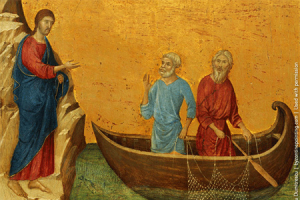
Partners with Christ
(Mark 1:14-20)
The Gospel today begins with the foundational cry of Jesus’ ministry: The Kingdom of God has drawn near; repent and believe the Good News. The call of the disciples follows immediately. This Gospel builds on last Sunday’s readings about vocation, and specifically, about how becoming a follower of Christ leads to transformation and the proclamation of the Good News.
The idea of repentance here is not about turning away from sinfulness, but about leaving a known way of life behind and turning around to face in a totally new direction as a follower of Christ.
We see that played out in the call of the fishermen called away from everything they know and even from their family to set off in a new direction, following Christ.
The fact that Jesus called (and still calls) disciples is not about creating a flock of ‘blind followers’ but a people who live and work in active partnership with Christ to establish the Kingdom and preach the Good News. Becoming ‘fishers of people’ they draw others into the circle of God’s life.
Using the proclamation at the beginning of Jesus’ ministry and the story of the call of the first four disciples, the Gospel invites us to think about our own vocation, our own call, as followers of Jesus and what might need to be left behind in order to enter more fully into the mystery of God’s Kingdom; how we might work in partnership with the Spirit of Jesus in making the Kingdom a living reality in the world.
Note that the Kingdom does not exist apart from human beings – it is to be incarnated (enfleshed) in the new people of God, the disciples of Christ.
- pdf Celebrating At Home - 3rd Sunday in Ordinary Time [PDF](2.96 MB)
- default Celebrating At Home - 3rd Sunday in Ordinary Time [ePub](4.95 MB)
- pdf Celebrando en Familia - III Domingo del Tiempo Ordinario(716 KB)
- pdf Celebrando in Casa - III Domenica del Tempo Ordinario(707 KB)
- pdf Celebrando em familia - III Domingo Do Tempo Comum(705 KB)
Memorial of Bl. Angelo Paoli, “Father Charity”
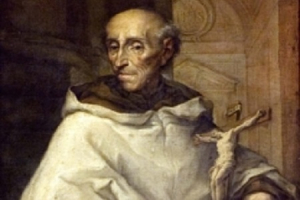
January 20 Optional Memorial (Obligatory Memorial in the Italian Provinces)
In a world known for its callous disregard for the poor and downtrodden, the example of Angelo Paoli is a refreshing breath of air. Angelo cared so well for his unfortunate brothers and sisters that he was known as “Father Charity” or “Father of the Poor.” Fortunately, he did more than just act as one kind individual he was an excellent motivator, who set many wheels of benevolence in motion at the dawn of the 18th century.
Humanity was an assumed way of life for young Paoli. He was born September 1, 1642, in the humble Tuscan town of Argigliano, not far north from the stone quarries of Massa Carrara. His parents, Angelo Paoli and Santa Morelli, decided to baptize their son Francesco, in honor of the benevolent saint of Assisi. They were devout peasants who provided a loving home for their seven children, where care for others was the essential element of life. As a young man, Paoli frequently looked for times when he could go off to remote and beautiful places to be alone in prayer. But he was equally zealous in teaching the Christian beliefs and virtues to the young people of his village. It was no surprise to his parents or anyone else when his devotion to Mary led him at age 18 to join the Carmelites at nearby Fivizzano.
He was sent to Siena for his novitiate year, and professed his vows in 1661, taking the religious name of Angelo to honor his father. After studying philosophy and theology in Pisa and Florence, he was ordained a priest in 1667. The first 20 years of his ministry were spent in the ordinary busy tasks of his Tuscan province. As a versatile and reliable friar, he worked in the communities of his native Argigliano, in Pistoia, and in Siena. He served as novice master in Florence, as pastor in Carniola, taught grammar to young students in Montecatini, and served as organist and sacristan in Fivizzano. Throughout this busy period, he continued his regular prayer in remote and beautiful places, and never lost sight of the poorest people who might need his help. He developed a special devotion to the suffering and death of Jesus on the cross. He dramatized his devotion to the Cross by setting up several large wooden crosses in his favorite prayer settings, often on beautiful mountain tops. He would later place a large cross in Rome’s ruined Coliseum in memory of the martyrs who died there.
In 1687, his life changed dramatically when the Prior General, Paul of St. Ignatius, called him to Rome to join the community of San Martino ai Monti. The Prior General’s original plan was simply to have Angelo give good example to the community by his fervent observance of the religious life. But once he arrived, he was put in charge of the community’s finances. He immediately began to care for the teeming beggars and poor street people who filled Rome, amid the splendors of the glittering Baroque age. Angelo soon amazed his community members with the vast numbers of poor and hungry people who came to the monastery’s courtyard for their daily food. Some days there were as many as 300 people lining up to be fed. Even more remarkable was how Angelo found enough food, money and clothing to care for everyone who came he shyly claimed that there was always something in his pantry. Some Romans compared his largess with Jesus’ loaves and fish; others simply concluded that he had found secret patrons who wanted to remain nameless.
Angelo also found himself rapidly drawn to care for the sick. Not far from San Martino, there was a busy hospital at St. John Lateran, Rome’s cathedral. According to the custom of the time, the hospital cared primarily for the health and basic feeding of the patient, but such things as additional food, blankets, and clothing were often left to family members of the sick. For the poorest people, there was often no one to supply these needs. So, Angelo began to visit the twin wings of the hospital, one for men, and the other for women. He fed the hungriest patients, comforted, and counseled those in need, emptied bedpans, and saw to the most menial services. His visits increased to twice a day, especially when he was able to find other patrons and donors to support his efforts. He eventually found a location near the Coliseum where he organized and ran Rome’s first convalescent home for those discharged from the hospital, but still unable to care for themselves.
Part of Angelo’ s practical genius flowed from the fact that his strong spiritual life attracted many others to help his charitable works. He was a popular confessor and spiritual advisor to the illustrious members of Roman society. He was eagerly sought by cardinals, ambassadors, Roman officials, including the Pope’s own doctor, and countless members of Europe’s noble families. Sometimes the only way that the rich and powerful could get a word with Angelo was to follow him through a hospital ward with a basket of food or help him as he distributed bread at San Martino. Beyond any doubt, these well-fed patricians were also generous in helping his efforts to feed others.
To reward his lavish care for the poor, Pope Innocent XII wanted to make Angelo a cardinal, but he refused on the grounds that he could not maintain his level of charity with such an encumbrance. Another offer of a red hat by Pope Clement XI was also refused. Angelo had no wish to be a prince of the Church, since he was busy enough just being a good friar. He did, however, convince the Popes to halt the pilfering of stone from the ruined Coliseum, and to erect a large cross there in memory of the martyrs. One of the high points of Angelo’s impact occurred in 1708. He raised three wooden crosses on Mount Testaccio, an artificial hill created by a huge quantity of ancient rubble from broken pottery. He celebrated the Way of the Cross with a sermon on Jesus’ passion and death, as a sign of his love for all people. Then he distributed bread and sausage to all present to continue the celebration.
Angelo Paoli died peacefully in 1720 and was buried in the church of San Martino. Many people spoke of his ability to foretell future events, and to cure the sick. But his simple works of mercy spoke even more eloquently of his solid spirituality, and his love of God. He had told his rich patrons, Whoever wants to love God must search for him among the poor. Truly, a fitting epitaph! (by Leopold Gluckert, O. Carm.)
* Burial of Blessed Angelo Paoli, Father of the poor, in the Basilica of Santi Silvestro e Martino ai Monti in RomePivari.com, CC BY-SA 4.0 <https://creativecommons.org/licenses/by-sa/4.0>, via Wikimedia Commons
Causa Nostrae Laetitiae
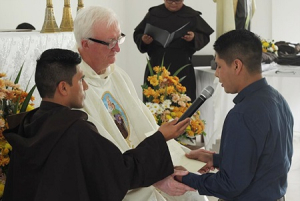
INITIUM NOVITIATUS
06-01-24 Iuliana Ciceu (CAR) Carpinento Romano, Italia
07-01-24 Any Marcela de la Sagrada Familia Gómez Cárdenas (COR) Córdoba, ES
07-01-24. Ma Alejandra del Amor Crucificado Ocampo Murcia (COR) Córdoba, ES
PROFESSIO TEMPORANEA
21-11-23 Mary Josephine of Nativity (MAC) Machakos, Kenya
21-11-23 Mary Neema of St. John of the Cross (MAC) Machakos, Kenya
21-11-23 Mary Margaret of Our Lady of Mount Carmel (MAC) Machakos, Kenya
14-12-23 Mary Agnes Ndinda Mutie (JUJ) Juja, Kenya
04-01-24. Frayman Quiroga (Ita-Col) Lurín, Perú
04-01-24. Ronal Álvarez (Ita-Col) Lurín, Perú
04-01-24 Luis Fernando Lainez Palacio (PCM) Lurín, Perú
04-01-24 Raul Sharley Chafloque Orozco (PCM-Perú) Lurín, Perú
04-01-24 Bernardo Soriano Rosales (PCM) Lurín, Perú
04-01-24. Rafael Flórez (Ita-Col). Lurín, Perú
04-01-24. Jorge Salazar (Ita-Col) Lurín, Perú
04-01-24 Salomón Santana (Ita-Col) Lurín, Perú
ORDINATIO DIACONALIS
15-12-23 Roberto Reyes (PCM) Washington, DC, USA
30-12-23 Itamar dos Santos Neri (Pern) Jaboatão dos Guararapes, Brasil