






O.Carm
Presentation of a book on Fr. Serafino Maria Potenza
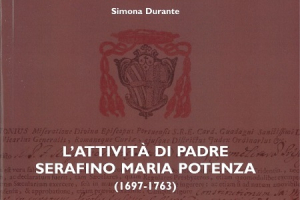
On Thursday, January 18, 2024, at 6 p.m., at the Centro Internazionale Sant'Alberto (Rome), the volume L'attività di padre Serafino Maria Potenza (1697-1763) attraverso i documenti d'Archivio, by Simona Durante, published by Edizioni Carmelitane, will be presented.
Father Serafino Maria Potenza's importance to the Carmelite Order is particularly reflected during his work as postulator general and in having dedicated his life to collecting documents related to the history of the Order.
Fr. Vincenzo Criscuolo, ofmcap, Relator General, dicastery of the Causes of Saints, and Prof. Luca Carboni, archivist, from the Vatican Apostolic Archives, will speak at the presentation.
The author, Dr. Simona Durante, will also intervene.
For further study and purchase of the publication, see the Edizioni Carmelitane website.
Celebrating At Home - 2nd Sunday in Ordinary Time

Called to be a living Gospel
(John 1:35-42)
This Sunday could very well be called ‘Vocation Sunday’. Both the first reading and the Gospel are stories of call and response.
The episode we read in the first reading is well described as ‘Samuel’s Call’. Three times he hears God calling but thinks it is Eli (a Temple priest) and goes to him. Eli finally understands that it is God calling Samuel and tells him that next time he hears the voice to say, “Speak, Lord, your servant is listening”.
The reading concludes with the thought that God was with (dwelt with) Samuel and that Samuel spoke in God’s name.
Taken together with the Gospel, it’s hard to escape the thought that this Sunday is Vocation Sunday for all disciples. Just as God calls Samuel and Eli points the way, Jesus calls Andrew and the other disciple and John the Baptist points the way. Andrew responds (follows) and goes to ‘see’ and ‘dwell with’ Jesus. Next day, he calls Peter and both go to ‘see’ and ‘dwell with’ Jesus.
Andrew’s meeting with Jesus transforms him into both a follower and an evangeliser. Peter’s meeting with Jesus (coming to ‘see’ Jesus) transforms him into the ‘rock’, the ‘foundation’ and the ‘shepherd’ (in John’s Gospel) of the flock.
Using both these readings the church returns to Ordinary Times calling us to reflect on our vocation, our call, to be disciples – to ‘come and see’ Jesus, to ‘dwell with him’ and to become evangelisers and shepherds in our own day.
Spending time in the company of Jesus (dwelling with him) we come to see who Jesus and God really are – often very different from the images we have grown up with.
Christians are called to a ‘mature’ faith in Jesus, a living relationship which is not dependent on rules, threats and fear, and is motivated only by love.
We learn to live in faithful relationship with Jesus.
Eventually, we become the living ‘voice’ of Christ in our thoughts, words and actions.
It is not a passive following to which we are called.
This is not about simply putting our feet in the footprints of Jesus. This is about dwelling with him, making his home ours, making our home his. It’s about making room for him in our hearts and our lives, becoming the dwelling place of God and the voice of Christ – to become a living Gospel of God’s love.
- pdf Celebrating At Home - 2nd Sunday in Ordinary Time [PDF](2.84 MB)
- default Celebrating At Home - 2nd Sunday in Ordinary Time [ePub(3.61 MB) ]
- pdf Celebrando en Familia - II Domingo del Tiempo Ordinario(429 KB)
- pdf Celebrando in Casa - II Domenica del Tempo Ordinario(432 KB)
- pdf Celebrando em familia - II Domingo Do Tempo Comum(429 KB)
Vitam Coelo Reddiderunt
|
01-12-23 |
|
|
|
|
|
06-12-23 |
|
|
|
|
|
15-12-23 |
|
|
|
|
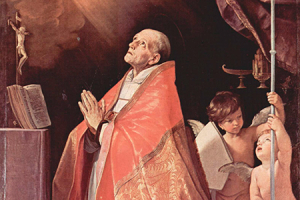
Feast of St. Andrew Corsini, Bishop
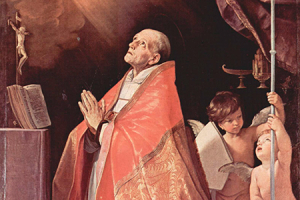
January 9 Feast
The Generous Life of St. Andrew Corsini
"He administered the office entrusted to him like a saint. He is rightly held up to all the pastors of the Church as a model of an outstanding bishop... He was so kind and helpful to the poor and needy that he could only think of them in tears. It is well-known that no poor person ever left him sad." These words of Bishop Francis Venturi (Rome 1629) refer to St. Andrew Corsini. He lived the words of Jesus in an exemplary way: "Inasmuch as you did it to the least of my brothers, you did it to me."
St. Andrew was born in Florence around 1300 as one of twelve children of Niccolò Corsini and his wife Gemma. He was probably of noble birth and as a young man, like his peers, is said to have cultivated a very worldly lifestyle.
However, the warnings of his pious mother caused him to change his mind and Andrea entered the Carmel of his hometown. The date of his profession is unknown, as is the date of his ordination as a priest. In 1338, he is mentioned as a member of the convent in Florence, which at the time comprised fifty-two religious. In 1348, the year of the plague, the General Chapter of the Order in Metz elected him the first provincial of Tuscany.
On October 13 of the following year, Pope Clement VI appointed him Bishop of Fiesole near Florence. According to legend, the Mother of God appeared to Andrew and made him promise to accept the office of bishop. During his first holy mass, the young Carmelite is also said to have had a vision of the Madonna, as indicated by a marble relief in the Corsini Chapel of the Carmelite Church in Florence by G. B. Foggini from the 17th century.
He led his diocese with prudence and zeal. He was a true shepherd of his flock, which flourished under him. He had churches and monasteries renovated, endeavored to restore and embellish the cathedral, which was threatened by collapse, built apartments for the canons and repaired the bishop's house.
But he was not only concerned with external renewal. He strove to settle disputes between the citizens and often pointed out in his sermons the need for good neighborly coexistence and the obligation to Christian charity. People from near and far flocked to hear his words, not only because he was a good preacher, but also because he had a reputation for holiness. He admonished the clergy of his diocese to carry out their official duties, for there was much that was amiss. Andrew was not afraid to remove those unworthy of their office.
He also set himself this strict standard for an exemplary lifestyle: extreme frugality and modesty were a matter of course for him, and even in old age he practiced an ascetic lifestyle despite his sickliness. He was particularly fond of the poor, none of whom ever went away without a gift. The bishop often sat at the gate of his house and handed out bread himself. Not only the people in his diocese experienced his willingness to help, but also the inhabitants of his hometown and its surroundings, where he provided the needy with grain and clothing in particular. Andrew thus embodied the ideal of Christian poverty and testified to a deep faith that was not exhausted in words, but came alive in good deeds.
Andrea Corsini died on January 6, 1374, and was buried in the Basilica of Santa Maria del Carmine, the Carmelite church in Florence, in the so-called Corsini Chapel. His corpse has still not yet been buried.
Pope Eugene IV permitted his public veneration as early as 1440, following the victory of the Florentines at Angiari. Andrew is said to have appeared to the Florentine troops at the time and promised them victory. Corsini has been listed in the Carmelite Breviary since 1462. He was canonized on 29 April 1629.
In 1734, Pope Clement XII (Corsini) built a chapel in S. Giovanni in the Lateran in Rome in honor of the saint, which has since become world-famous. Scenes from the life of the saint are reproduced in marble.
The Carmelite bishop is usually depicted with a wolf or lamb or both, which probably goes back to a legend according to which Andrew was once in danger of being attacked by a wolf. The Mother of God then transformed the wolf into a lamb in order to save him. Another legend tells of Mary announcing the bishop's imminent death on the Christmas Night of 1374 and leading him to God on the night before Epiphany, as the star once led the Magi. A miraculous scent was said to have emanated from his corpse, which healed the sick.
(from Helga-Maria M. Jaeger, Gott lebt! Sie sind seine Zeugen)
Feast of St. Peter Thomas, Bishop
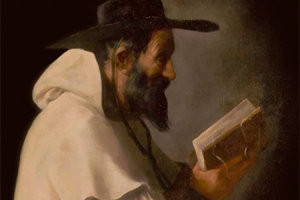
January 8 Feast
Born in Perigod, France, around 1305, Saint Peter Thomas joined the Carmelite Order when twenty years of age. He was Procurator General of the Order at the Papal Curia at Avignon and also an official preacher to the Curia there.
St. Kuriakos Elias Chavara (CMI) Priest
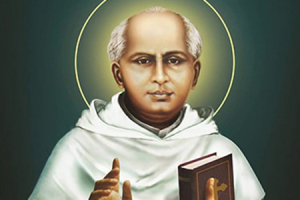
January 3 Optional Memorial in the regions of India
Saint Kuriakos Elias Chavara, co-founder and first prior general of the congregation of the Carmelites of Mary Immaculate, was born at Kainakary in Kerala, India, on 10 February 1805. He entered the seminary in 1818 and was ordained priest in 1829. He made his religious profession in 1855, in the congregation he founded.
Lectio Divina January 2024
Opening Prayer
Lord Jesus, send Your Spirit to help us read the Scriptures the same way that You read them to the disciples on the way to Emmaus. In the light of the Word, written in the Bible, You helped them to discover the presence of God in the disturbing events of Your sentence and death. Thus, the cross that seemed to be the end of all hope became for them the source of life and of resurrection.
Create in us silence so that we may listen to Your voice in Creation and in the scriptures, in events and in people, and above all in the poor and suffering. May Your word guide us so that we too, like the two disciples from Emmaus, may experience the force of Your resurrection and witness to others that You are alive in our midst as a source of fraternity, justice and peace. We ask this of You, Jesus, son of Mary, who revealed to us the Father and sent us Your Spirit. Amen.
- pdf Lectio Divina January 2024 [Pdf](1.01 MB)
- default Lectio Divina January 2024 [ePub](215 KB)
-
default
Lectio Divina January 2024 [Mobi](880 KB)
"Lectio divina," a Latin term, means "divine reading" and describes a way of reading the Scriptures whereby we gradually let go of our own agenda and open ourselves to what God wants to say to us. In the 12th century, a Carthusian monk called Guigo, described the stages which he saw as essential to the practice of Lectio divina. There are various ways of practicing Lectio divina either individually or in groups but Guigo's description remains fundamental.
Celebrating At Home - Christmas - Nativity of the Lord
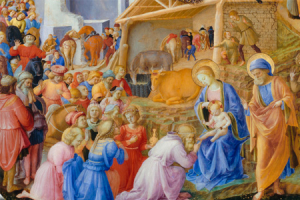
God is with us!
(Matthew 1:18-25)
We began Advent with the cry, ‘Come, Lord Jesus’.
Now we end it with the joyful shout, ‘God is with us!’ Reflecting on the historical birth of Jesus, the Church proclaims the truth that God is, and has always been, with his people. And if God is with us, then God is for us. God is on our side.
God has no desire to live in houses made of wood, stone or gold. God’s deepest desire is to live in human flesh. Just as God did that in the human flesh of Jesus Christ a long time ago, God continues to do so now in us.
Like Mary, we accept God’s invitation, allowing Jesus to become flesh in us, too; to be seen and experienced in good thoughts, good words and good actions, in deeds of loving kindness which bring life, not death, to God’s people.
- pdf Celebrating At Home - Christmas - Nativity of the Lord [PDF](2.38 MB)
- default Celebrating At Home - Christmas - Nativity of the Lord [ePub](6.20 MB)
- pdf Celebrando en Familia - Navidad - La Natividad del Señor(711 KB)
- pdf Celebrando in Casa - Natale - Natività del Signore(750 KB)
- pdf Celebrando em familia - Natal - Natividade do Senhor(761 KB)
Celebrating At Home - 4th Sunday of Advent
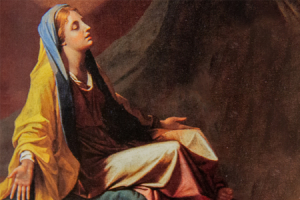
Receive your God!
(Luke 1:26-38)
The great Christmas feast is almost here. As always in Advent, what is promised in the first reading is brought to fulfilment in the Gospel reading. We began Advent with the cry, ‘Come, Lord Jesus’. We will end it with the joyful shout, ‘God is with us!’ In the first reading King David wants to build a house (temple) for God, but God says that, instead, God will build David and his descendants into a great house.
God is not about building temples to himself and it’s not dwelling-places made of wood or stone that God wants. God is about building a dwelling-place in human flesh. God is about building a people among whom and in whom he can live.
In the Gospel, Mary accepts God’s invitation to make herself into a dwelling place for God by receiving Christ and God makes his dwelling-place in her human flesh. Through her God has come to live permanently in humanity.
That is what we, too, are about – making ourselves into a living dwelling place for Christ. The great gift of Jesus to the world is not meant to be frozen in one moment of time. Through us, that Gift is made present in every moment of history so that through us Christ is able to continue to touch, to hold and to heal the world.
- pdf Celebrating At Home - 4th Sunday of Advent [PDF](1019 KB)
- default Celebrating At Home - 4th Sunday of Advent [ePub](3.09 MB)
- pdf Celebrando en Familia - Cuarto Domingo de Adviento(727 KB)
- pdf Celebrando in Casa - Quarta Domenica di Avvento(739 KB)
- pdf Celebrando em familia - Quarto Domingo Do Advento(728 KB)
Experts on John of Saint-Samson Gather in France
Experts Gather in France to Continue Building a Critical Edition of the Works of John of Saint-Samson
On December 15, 2023, the second Atelier Jean de Saint-Samson took place at the University of Rennes 2. Charló Camilleri, O. Carm., project editor for the Order’s publication project of the Complete Works of Jean de Saint-Samson, together with Prof. François Trémolières, Martin de la Croix, O. Carm., Prof. Audrey Duru, Dr Clément Duyck and Prof Guillaume Peureux met to discuss and work on the poems, sonnets and canticles of Jean de Saint-Samson.
Hailing from the Université Picardie Jules Verne, the Université catholique de Louvain, the Université Paris-Nanterre, the Université de Rennes 2 and the Università ta' Malta, with their expertise in mysticism, spiritual theology, French literature and poetry of the 17th century, these scholars are working on volume 9 of the Œuvres complètes of Jean de Saint-Samson. Martin de la Croix, O. Carm., is authoring this upcoming volume. Simultaneously Drs Giovanna Brizi, postulator general of the Carmelite Order, is working on volume 11 in the series, containing historical and hagiographical documents related to the cause of John of Saint-Samson.
The next Atelier is planned for May 2024 at the Centre d'Études d'Histoire de la spiritualité (CEHS) in Nantes, France.