





O.Carm
Celebrating At Home - Second Sunday of Easter
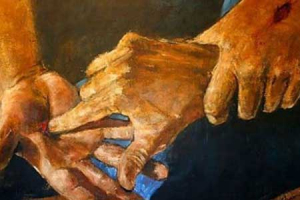
An empty tomb, lives changed for ever,
enduring presence
(John 20:1-9)
The great Easter feast of last Sunday began the Church’s fifty-day celebration of the Resurrection which concludes with the feast of Pentecost in six weeks.
The Gospel of each Sunday is a meditation on Jesus as: the resurrected Christ, made known in the scriptures and the breaking of the bread, the bearer of life in all its fullness, our way, truth and life, pledge of God’s love.
In today’s Gospel reading there are two stories of transformation through encounter with the risen Jesus.
Firstly, Jesus appears to a group of frightened and bewildered disciples hiding in a room. His first words are, ‘Peace be with you’. Fear and bewilderment turn into joy as the disciples recognise the presence of the Risen Jesus with them. But that’s not all. He then sends them out to be missionaries of peace and forgiveness. In receiving the Holy Spirit they are transformed from a group of frightened people, hiding in a room to bold proclaimers of God’s love and mercy. We already know that fear breeds isolation and loneliness. We are living with that each day.
While taking necessary steps to keep ourselves and each other safe, we are trying not to let our hearts go into lockdown, too. There is something inherently good in human nature. People are finding new ways to care for each other. Like top-class restaurants turning out hundreds of meals for poor, elderly or isolated people. There are many other examples of people transforming fear and bewilderment into moments of hope and joy. Do we not also recognise the presence of the risen Jesus in these saving actions?
The second story in today’s Gospel is the one we all know as doubting Thomas, though, really, it should be known as believing Thomas - doubt is only the beginning of the story.
Jesus doesn’t scold or rebuke Thomas. If Thomas is looking for proof, he has only to touch Jesus to see he is real. But Thomas doesn’t do that. It is his personal encounter with Jesus which transforms him from doubter to believer.
It is yet another Gospel reminder that faith is not about believing with our minds or in looking for proof. It is found only in our living relationship with Jesus.
Perhaps these extraordinary days give us a bit more time just to sit and chat with Jesus, to recognise him already present in our hearts, to allow our fears and doubts to be overcome by love, to find new, creative ways of transforming the darkness of these days into light, peace and joy for others.
May the new life we celebrate over the next fifty days bring us the creativity of Spirit we need to be the living heart of God in our world today.
Meeting with the Carmelite leaders of the Caribbean
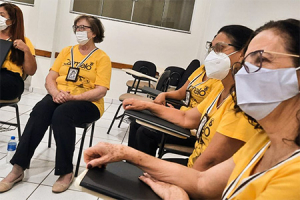
On February 9, 2022, the leaders of the Carmelite presences in the Caribbean region met online. Present were: Santos Martinez (Venezuela), Juan Evangelista Castellano (Delegation of Titus Brandsma), Sergio Mantilla (Colombia. Italian Prov.), Jorge Rivera (Puerto Rico and Dominican Republic), Felix Avendaño (Venezuela) and Luis Maza.
Each one expressed the socio-political situation and the situation of the Order in their respective countries. In spite of the difficulties, new vocations are emerging.
At present, this Region in the initial formation stage has 19 postulants, 6 novices and 15 simply professed.
Possible future actions:
- Help each other in initial formation with the realization of on-line formation meetings.
- Reciprocal collaboration in different areas and,
- Dreaming of the possibility of forming a unique reality in the Caribbean region.
Easter Greeting to Order
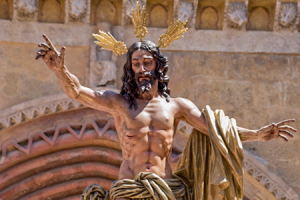
Hodie Christus resurrexit. Cotidie nostra agamus!
17.IV.2022
MÍCEÁL, PRIOR GENERALIS
DOMUSQUE GENERALIS COMMUNITAS
Celebrating At Home - Easter Sunday
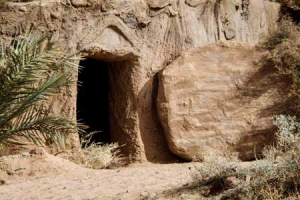
An empty tomb, lives changed for ever,
enduring presence
(John 20:1-9)
When someone dies, one of the things we often feel is their absence. The rooms where they lived with us, the places where they sat are now empty and our hearts ache.
Its not hard for us to share Mary’s sense of emptiness and bewilderment when she arrives at the tomb. This is an Easter like we have never had before. Without our usual celebrations with family and friends it can feel very empty indeed.
If we were to read the next few verses from John’s Gospel, we would read a story of overwhelming joy as Mary Magdalen meets the risen Jesus. When Jesus speaks her name, Mary recognises him and sadness and emptiness give way to joyful reunion.
It’s a story of transformation - how things can change when we meet the risen Jesus.
In a way, we are all caught in tombs which hold loved ones, our experiences of hurt and harm, our fears and anxieties, especially now.
What we seem to need above all at this time is presence. Yet, this is the time when we experience absence most of all - being apart from loved ones, family and friends.
The practice of the presence of God can help us - just frequently reminding ourselves that we always in the presence of God, that we can talk to God as one friend to another, that God is in this moment with us, that God is on our side no matter what comes our way, that God is our constant companion.
Eventually, we will begin to feel more deeply God’s presence, not just beside us, but within us.
Eventually, the fears and anxieties, the past hurts, and disrupted relationships begin to melt away. Where once there was only absence, now there is calm, loving, healing Presence and we know we are not alone. Our tombs begin to empty and joy becomes possible again.
Resurrection is all about death giving way to life, the impossible becoming possible, absence becoming presence.
May all your tombs be empty!
Celebrating At Home - Good Friday
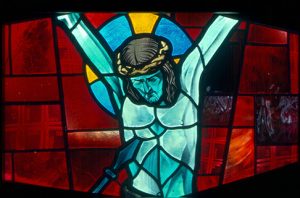
Love revealed in the passion
(John 18:1 - 19:42)
Beginning
The Lord is here, present among us.
We are gathered with the whole Church in this moment of prayer.
Preparing to hear the Word
Now the hour has come
for the Son of Man to be glorified.
“I tell you solemnly:
unless a grain of wheat falls to the ground and dies,
it remains only a single grain;
but if it dies,
it yields a rich harvest.”
Eternal God,
we are the harvest
yielded by the death of your Son.
As we gather around the cross of Jesus,
remembering his great love for us,
bring us to new life in Christ
for he is Lord for ever and ever.
Amen.
The Passion of Jesus according to John
Celebrating At Home - Holy Thursday
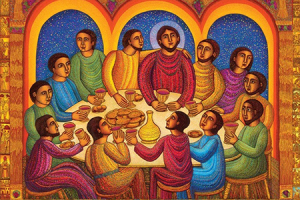
Washing feet, sharing bread and wine:
Love poured out in service
On this night we recall Jesus’ commandment to love one another, his washing of the disciples’ feet and the breaking of the bread of his own life, not just at table, but also on the altar of the Cross, for the healing and nourishment of the world.
The liturgy on Holy Thursday is a meditation on the essential connection between the Eucharist and Christian love expressed in serving one another.
Christ is not only present in the Eucharist but also in the deeds of loving kindness offered to others through us.
We are the ones who make ‘real’ the presence of Jesus in every smile, kind word and loving action.
Celebrating At Home - Palm Sunday
Love revealed
(Luke 23:1-49)
The Passion of Jesus according to Luke
Reader 1 The elders of the people and the chief priests and scribes rose, and they brought Jesus before Pilate.
They began their accusation, ‘We found this man inciting our people to revolt, opposing payment of tribute to Caesar, and claiming to be Christ, a king.’ Pilate put to him this question, ‘Are you the king of the Jews?’ ‘It is you who say it’.
Pilate then said to the chief priests and the crowd, ‘I find no case against this man.’ ‘He is inflaming the people with his teaching all over Judea; it has come all the way from Galilee, where he started, down to here.’ When Pilate heard this, he asked if the man were a Galilean; and finding that he came under Herod’s jurisdiction he passed him over to Herod who was also in Jerusalem at that time.
Reader 2 Herod was delighted to see Jesus; he had heard about him and had been wanting for a long time to set eyes on him; moreover, he was hoping to see some miracle worked by him. So he questioned him at some length; but without getting any reply. Meanwhile the chief priests and scribes were there, violently pressing their accusations.
Then Herod, together with his guards, treated him with contempt and made fun of him; he put a rich cloak on him and sent him back to Pilate. And though Herod and Pilate had been enemies before, they were reconciled that same day.
Reader 3 Pilate then summoned the chief priests and the leading men and the people. ‘You brought this man before me as a political agitator. Now I have gone into the matter myself in your presence and found no case against the man in respect of all the charges you bring against him. Nor has Herod either, since he has sent him back to us. As you can see, the man has done nothing that deserves death, so I shall have him flogged and then let go’.
But as one they howled, ‘Away with him! Give us Barabbas!’ (This man had been thrown into prison for causing a riot in the city and for murder.)
Reader 1 Pilate was anxious to set Jesus free and addressed them again, but they shouted back, ‘Crucify him! Crucify him!’ ‘But why? What harm has this man done? I have found no case against him that deserves death, so I shall have him punished and then let him go.’ But they kept on shouting at the top of their voices, demanding that he should be crucified. And their shouts were growing louder.
Pilate then gave his verdict: their demand was to be granted. He released the man they asked for, who had been imprisoned for rioting and murder, and handed Jesus over to them to deal with as they pleased.
Reader 2 As they were leading him away they seized on a man, Simon from Cyrene, who was coming in from the country, and made him shoulder the cross and carry it behind Jesus. Large numbers of people followed him, and of women too, who mourned and lamented for him. But Jesus turned to them and said, ‘Daughters of Jerusalem, do not weep for me; weep rather for yourselves and for your children. For the days will surely come when people will say, ‘Happy are those who are barren, the wombs that have never borne, the breasts that have never suckled!’ Then they will begin to say to the mountains, ‘Fall on us!’, to the hills, ‘Cover us!’ for if you use the green wood like this, what will happen when it is dry?’ Now with him there were also leading out two other criminals to be executed.
Reader 3 When they reached the place called the Skull, they crucified him there and the two criminals also, one on the right, the other on the left. Jesus said, ‘Father forgive them; they do not know what they are doing.’ Then they cast lots to share out his clothing.
Reader 1 The people stayed there watching him. As for the leaders, they jeered at him. ‘He saved others; let him save himself if he is the Christ of God, the Chosen One.’ The soldiers mocked him too and when they approached to offer him vinegar they said, ‘If you are the king of the Jews, save yourself.’ Above him there was an inscription: ‘This is the King of the Jews.’ Reader 2 One of the criminals hanging there abused him. ‘Are you not the Christ?’ he said. ‘Save yourself and us as well.’ But the other spoke up and rebuked him. ‘Have you no fear of God at all? You got the same sentence as he did, but in our case we deserved it; we are paying for what we did. But this man has done nothing wrong. Jesus, Remember me when you come into your kingdom.’ ‘Indeed, I promise you, today you will be with me in paradise.’ Reader 3 It was now about the sixth hour and, with the sun eclipsed, a darkness came over the whole land until the ninth hour. The veil of the Temple was torn right down the middle; and when Jesus had cried out with a loud voice, he said, ‘Father, into your hands I commit my spirit.’ With these words he breathed his last. [All pause for a moment] Reader 1 When the centurion saw what had taken place, he gave praise to God and said, ‘This was a great and good man.’ And when all the people who had gathered for the spectacle saw what had happened, they went home beating their breasts. All his friends stood at a distance, so also did the women who had accompanied him from Galilee, and they saw all this happen.
Consecration of Russia and Ukraine to Mary
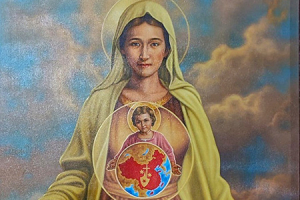
On March 25, in communion with Pope Francis and the entire Church, Carmelites and laity from around the world joined together to consecrate Russia and Ukraine to the Immaculate Heart of Mary.
The ceremony in the Carmelite basilica in Naples, Italy, was called for by the Archbishop Domenico Battaglia. He chose the Carmelite church as the place to celebrate the rosary and to consecrate Russia and Ukraine to Mary. The Archbishop himself led the prayer. He was assisted in the liturgy by the young men at the archdiocesan seminary. All the various groups of the diocese participated.
The sanctuary was crowded and reached its capacity with of around 500 people. Among those participating were the civil authorities and various other dignitaries. There were many intense reactions to the moments to the prayer. Those participating agreed that the beautiful Mother of Carmel looked down on her children with tender affection and that all those present felt enveloped by her maternal protection.
The sanctuary of Carmine Maggiore is the center of Neapolitan Marian devotion, the place of particular preference for the people who have invoked Our Lady down through the centuries, in all of their lives’ circumstances, calling Mary by the caring title “Mamma del Carmine.”
“We Carmelites were honored to have celebrated this important moment for the diocese under the loving gaze of the Madonna La Bruna,” said Alfredo Cerbo, commissary general. “We are confident that she will listen to our prayers at this very difficult moment in the entire world.”
At St. Agnes Parish and School in Phoenix, Arizona (USA)--where Carmelites have served since 1972--the whole community has been very concerned since the war began in Ukraine. At Sunday and weekday Masses the faithful have been encouraged to pray for peace. At the regular Friday School Masses, the children are asked to pray to God who loves everyone in the world to pray peace for the children and the parents of Ukraine. “The children from pre-school to eighth grade have taken this prayer in the church and their classrooms very seriously,” said Bradley Peterson, Carmelite pastor of the active parish.
When word came that Pope Francis would be consecrating all of humanity and especially Russia and the Ukraine to the Immaculate Heart of Mary and asking her to obtain for us the grace of peace, this seemed like a very concrete way for the children to join in prayer with the Pope and the Church throughout the world. The pastor shared the text of the consecration with the principal, Mrs. Kelly Aranowski, asking that the teachers use it prepare the students by praying a portion of prayer that Pope Francis would use as their daily meditation.
On the Solemnity of the Annunciation, many parishioners joined with all the students and teachers for Mass at 8:30 AM, with Jorge Monterroso, O. Carm. presiding. After Holy Communion, turning to the statue of Our Lady of Mount Carmel, Fr. Bradley led everyone present in the prayer of consecration.
When the students returned to their classrooms, their teachers joined the livestream from St. Peter’s Basilica in Rome and were able to pray along with Pope Francis. The 5th-8th grade students were together in the parish hall, each with the text of the consecration prayer so they could pray with the Pope on the big screen up above.
“We have continued to afford the children more time to pray by having them come to the church one day a week for silent prayer and adoration during Exposition of the Blessed Sacrament while the older children are participating the sacrament of reconciliation in preparation for Easter,” said Fr. Bradley.
On Friday, March 25, during the celebration of the feast of Annunciation, the Indonesian Carmelites participated in the consecration of Russia and the Ukraine to Mary. As the Indonesian Bishop Conference urged the Indonesian Catholics to participate in the consecration, all Carmelite houses and parishes in the province dedicated the day to the consecration. In the Eucharistic celebration in every Carmelite house and parish, the prayer of the consecration was said.
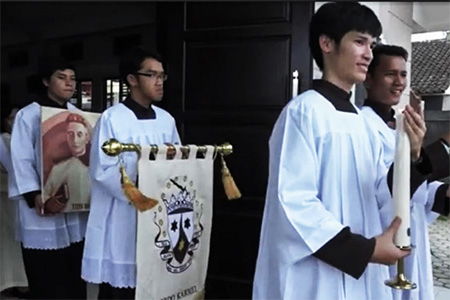
The Indonesian province also had a special celebration of the Annunciation which was combined with the consecration. It took place at the Carmelite Prayer Garden in Malang. The celebration was started with the Via Dolorosa Devotion with the intention for peace in Russia and the Ukraine. After finishing the devotion, the Carmelites and the people walked to the hall to have a Eucharistic celebration. Beside the altar, they had put a painting of Our Lady of Mount Carmel with baby Jesus in front of her womb. At the opening of the Eucharistic celebration, the people offered candles to Mother Mary and prayed for the peace of Russia and Ukraine. The celebrants of the Eucharistic celebration were F.X. Hariwan Adji, the prior provincial of the Indonesian Province and Alexander Agung Prasetyo O. Carm.
At the end of the celebration, the prayer of the consecration was said together. Many people and Carmelites took the opportunity to participate in the celebration.
Learning Fraternity from Titus’s Life
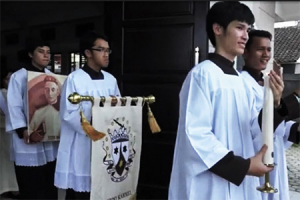
 Titus Brandsma left many writings, either in the form of books, articles or letters, but he never wrote about his teachings on fraternity. In spite of that, he lived a fraternal life.
Learning Fraternity from Titus’s Life
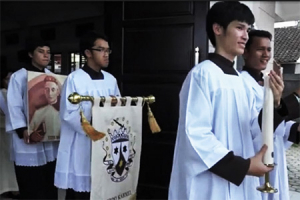
Titus Brandsma left many writings, either in the form of books, articles or letters, but he never wrote about his teachings on fraternity. In spite of that, he lived a fraternal life. We can learn how he valued fraternity from his life journey. For Titus, love is the foundation of fraternity. Fraternity is impossible without love. Titus' love for others grew from his close relationship with God. Titus realized that God loved him and that he loved God. This experience of love with God made Titus love his fellow human beings. When dealing with others, Titus realized that his main task was to love them. Titus lived the second Law of Love, namely: Love your neighbor as you love yourself. Titus believed that God was present in his fellow human beings. To love and serve them means to love and serve Jesus. His love is also shown in the form of generosity. Titus always told his brothers and sisters in the Order to share with those in need. He warned them not to be stingy in giving food and money to the poor, because they had the right to the food and money. He urged the brothers and the sister to live on charity. For him, the poor are God's friends. In order for us to be friends of God, we must be friends to his friends.
Titus's fraternity is not limited to certain circles or to his own group (ad intra) but penetrates group boundaries (ad extra). He never discriminated against people because of their religion, ethnicity, race, class, or nationality. Titus made friends with people regardless of their background. Titus also fought for equal rights for his neighbors regardless of their ethnicity, race, religion, and social class. True fraternity always transcends the boundaries of fit and unsuitability. True fraternity does not look at whether someone has the same views or backgrounds.
Fraternity for Titus not only includes being together in physical terms, although that is also important, but also being together in spiritual terms. Being together in the presence of God is no less important than doing something together and working together. Titus also paid attention to the spiritual development of his brothers. When Titus heard that there was a nursing home for the elderly people that needed a priest to celebrate the weekly mass, but was unable to provide the stipends, he asked permission from his prior to give them spiritual services. Likewise, when Titus was imprisoned by the Nazis, Titus always tried to provide spiritual service to other prisoners.
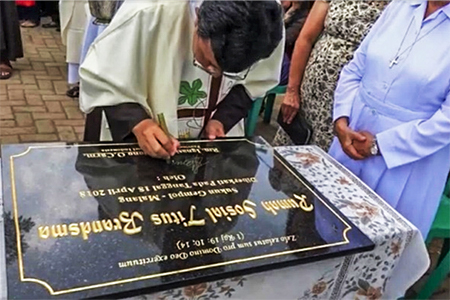
One of the shelters run by the Indonesian Carmelite NGO is dedicated to Titus Brandsma. The shelter was blessed on April 18, 2018. It is located in one of the slum areas in Malang. This shelter functions as a shelter for homeless poor people. These unfortunate people are taken care with love by the volunteers. Any person, regardless their religious background, ethnicity and affiliation, may live in the shelter but, of course, it depends on bed availability. The requirements to be accepted in those houses are that they are really poor and have nobody to takes care of them.
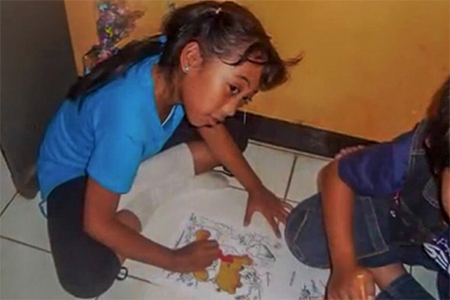
The shelter also functions as an informal school for children from poor families to develop their knowledge. Students with different religious backgrounds participate actively in this school. The subjects offered by this informal school are the usual subjects (mathematics, English, and general knowledge). The difference between this informal school and formal schools is the process of teaching is founded on love. Students are accepted as they are, with their strengths and weaknesses. Each student is taken care of without any judgement being made. Their competence is developed individually since we believe that every child is created uniquely. The students are happy to study here because they are respected as individuals. Thanks to God, most of the students studying in this informal will be successful when they go to a formal school. Moreover, this informal school offers character building and the Christian value of love. Students are invited to respect themselves, be open to others, accept differences and love their neighbors without knowing their backgrounds. Finally, this informal school also offers performance and creativity classes. The students are encouraged to develop themselves and to be independent.
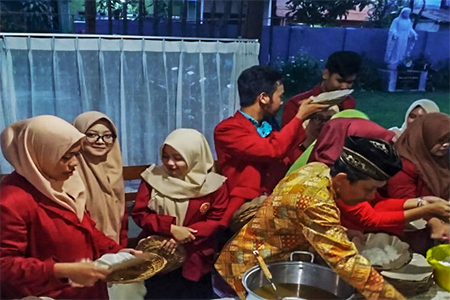
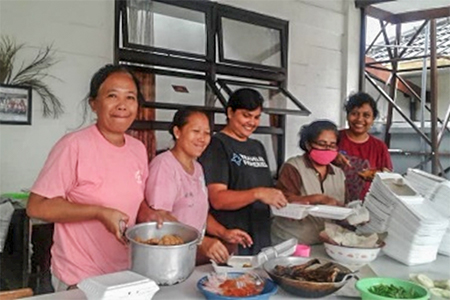
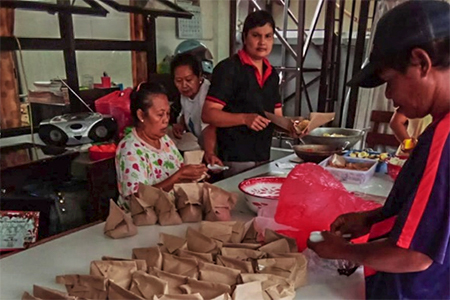
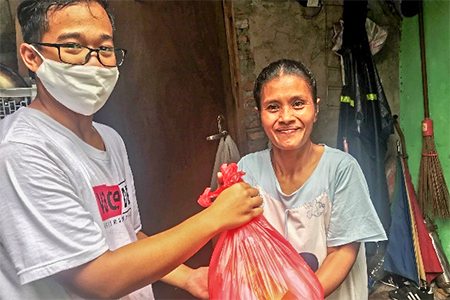
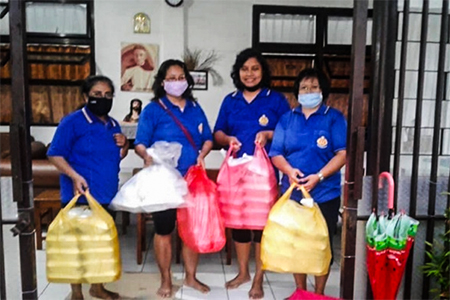
There are some other done by the volunteers together with the local people. They cook together and share the meal with people living on the streets and poor people in the area. On certain occasion they cooperate with donors to get daily needs and then share them with the poor families who are affected by the Covid 19 pandemic.
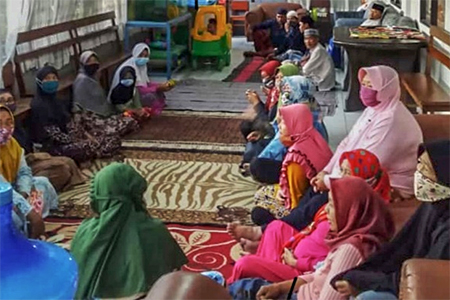
Many people with different backgrounds love to come to that place since they may experience the love shared by the volunteers, the patients, the teachers and the students. Students from Islamic university in Malang often come to visit the patients and the students. They also become volunteers in some of the programs. The spirit of fraternity of Titus Brandsma really fills the atmosphere of this shelter. This place becomes a meeting place for people to celebrate fraternity.
Below are some pictures of the activities done in the Titus Brandsma Shelter, Malang.
The Carmelite NGO in Indonesia established Mercy House — dedicated to Blessed Titus Brandsma — in Malang in April 2018 to serve the elderly and children from families of all faiths. The elderly are provided a dignified place to live with food and care. The children are provided education and enrichment. It is a living example of Blessed Titus’ words “He who wants to win the world for Christ must have the courage to come in conflict with it."
You can see a short video on the Indonesian Mercy House Dedicated to Blessed Titus Brandsma below.
* Fr. Hariwan Adji, O. Carm., the author of this article, is the current prior provincial of the Indonesian Province of the Carmelite Order. He is a member of the Carmelite NGO and chair of the Indonesian Carmelite NGO. He holds a doctorate and is a lecturer on the Faculty of Humanities at Airlangga State University.
|
|
|
|
The blessing of the shelter |
The inauguration of the shelter |
|
|
|
|
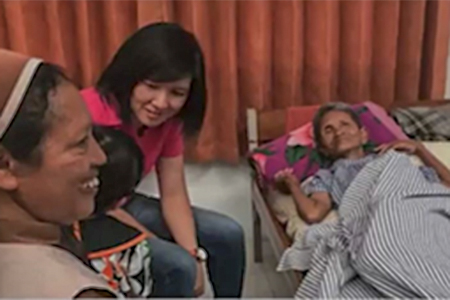
One of the patients |
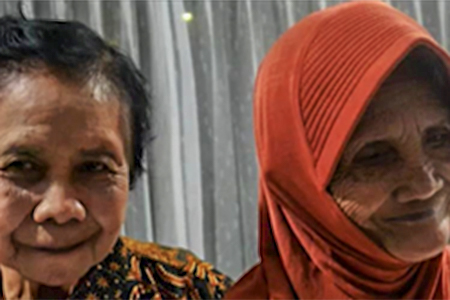
Patient with different religious backgrounds |
|
|
|
|
Students learning art |
Student with Islamic backgrounds |
|
|
|
|
Local people visit the house |
Volunteering Islamic university students |
|
|
|
|
Cooking for sharing with the poors |
Cooking for sharing with the poors |
|
|
|
|
Distributing free daily needs to the poors |
Distributing free meals to the poors |